The night sky has always invited questions that reach far beyond human imagination. Every point of light carries the possibility of another world, another history, and perhaps conditions unlike anything known on Earth. Today, artificial intelligence is helping astronomers search that immense cosmic landscape with remarkable speed and precision.
Researchers in the United States have used advanced artificial intelligence models to analyze enormous volumes of astronomical observations, identifying more than one hundred potential exoplanet candidates. The technology allows scientists to process data far more efficiently than traditional manual methods.
The candidate planets were identified by examining subtle variations in the brightness of distant stars. These tiny fluctuations may occur when a planet passes between its host star and Earth, temporarily reducing the amount of light detected by space telescopes.
Artificial intelligence helps distinguish genuine planetary signals from background noise or instrumental interference. While every candidate still requires additional scientific verification, AI significantly reduces the time needed to locate promising targets for further investigation.
Astronomers believe that machine learning will become an increasingly valuable tool as next-generation observatories collect even larger volumes of astronomical data. Future missions are expected to produce information far beyond what human researchers could analyze manually within reasonable timeframes.
The discovery of additional planet candidates also expands opportunities to study planetary formation, orbital behavior, atmospheric composition, and the diversity of planetary systems throughout the Milky Way galaxy.
Researchers emphasized that artificial intelligence does not replace scientific expertise. Instead, it serves as a powerful assistant that enables astronomers to focus their efforts on interpreting results, confirming discoveries, and developing new scientific questions.
As technology continues advancing, the partnership between human curiosity and artificial intelligence promises to reveal even more hidden worlds across the universe. Each newly identified candidate represents another opportunity to better understand humanity's place among the stars.
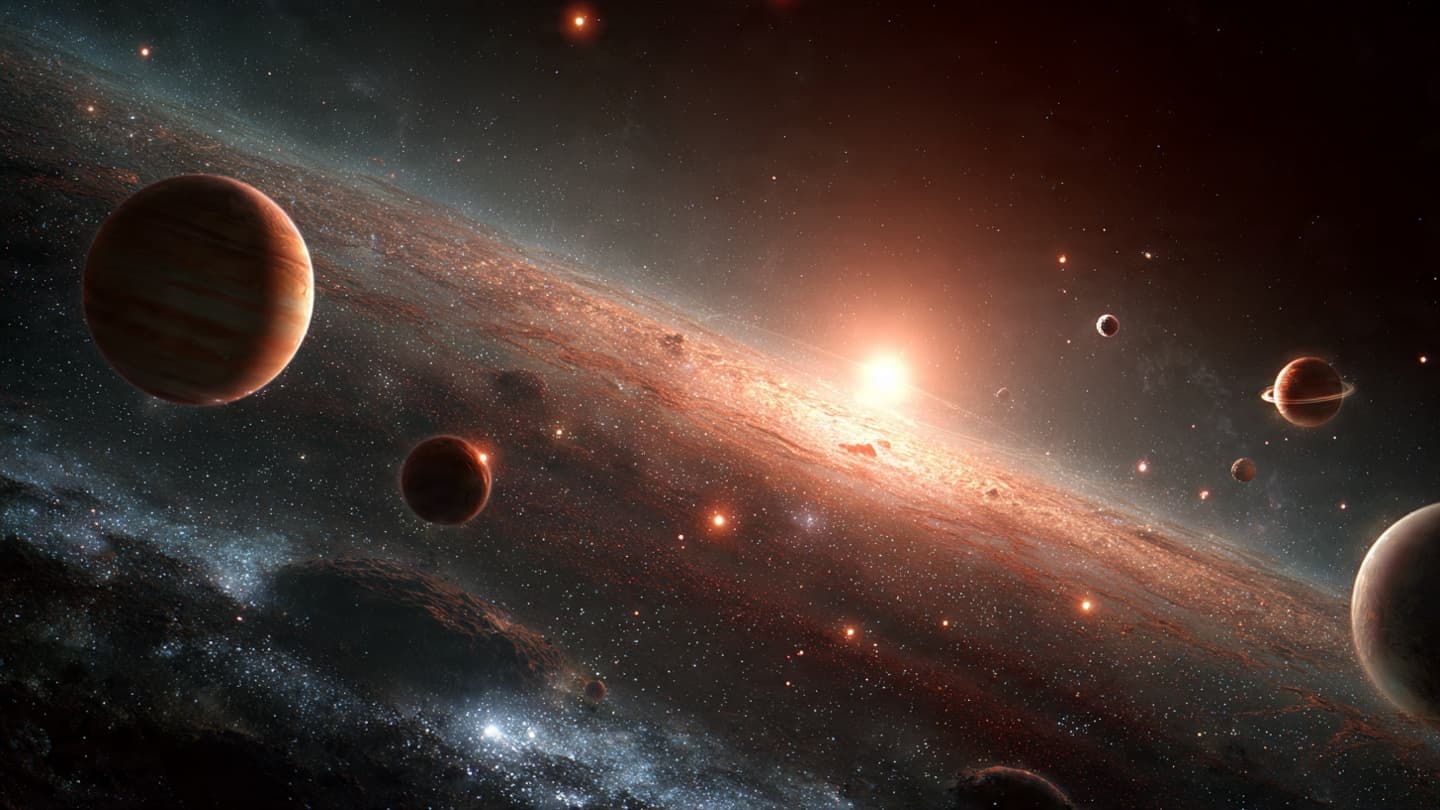
AI Image Disclaimer: This illustration was created using artificial intelligence for editorial visualization and does not depict an actual telescope observation.
Source Verification Check: NASA, Nature Astronomy, University of Warwick, Space.com
Published by Banx Network. This article is part of the Banx decentralized media programme, powered by the BXE token on the XRP Ledger.