
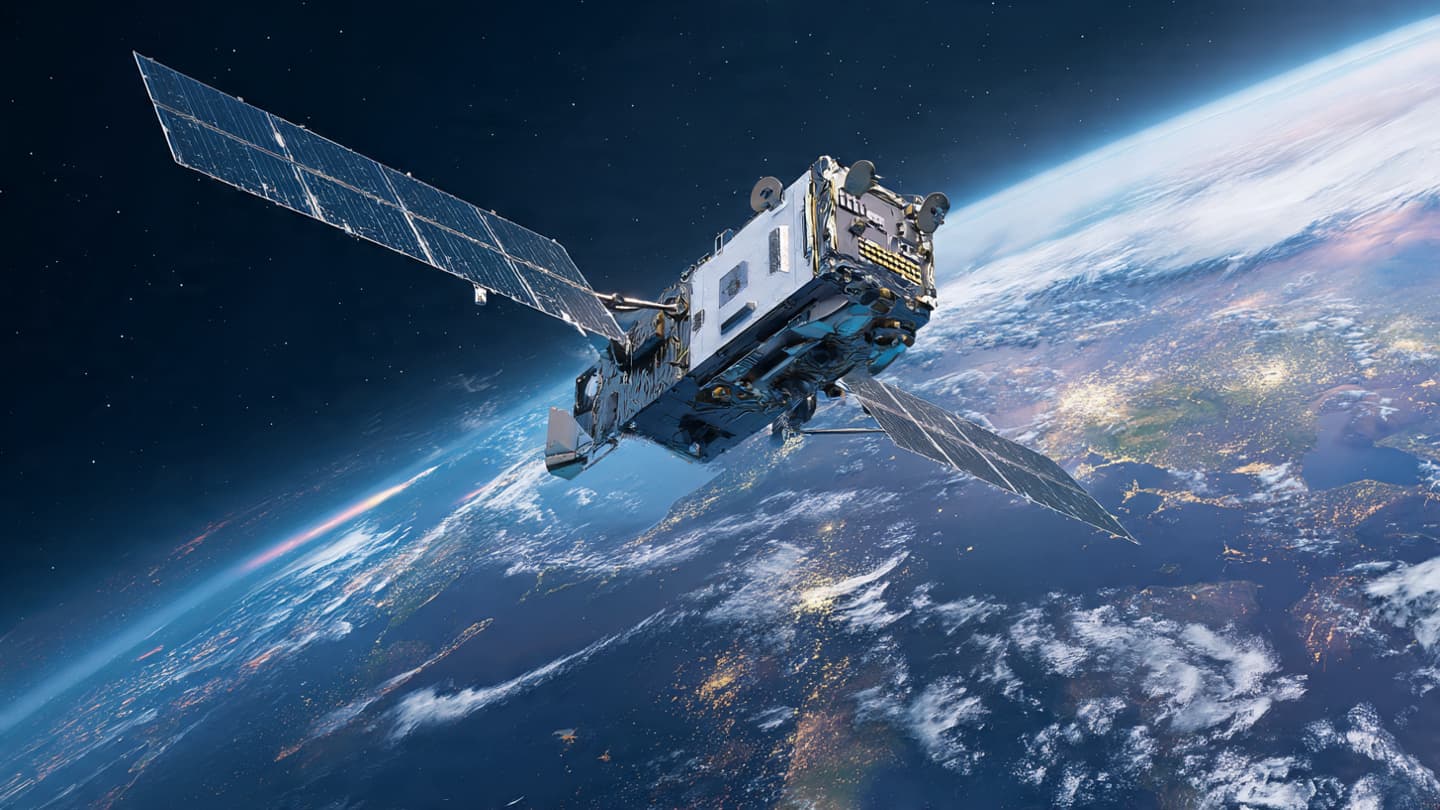
Scientific progress is often associated with new discoveries, yet many breakthroughs emerge from improving existing tools. In space research, even minor technical adjustments can significantly enhance the quality of information available to scientists. Recent improvements to the SWOT satellite provide an example of this process in action.
The Surface Water and Ocean Topography mission, commonly known as SWOT, was launched to provide highly detailed measurements of Earth's water systems. The satellite has become an important resource for oceanographers and climate researchers.
Scientists recently reported a substantial improvement in measurement accuracy after addressing technical issues related to underwater wave interference. The correction allows researchers to obtain clearer and more reliable observations.
Ocean monitoring is essential for understanding sea-level changes, currents, and climate-related processes. Accurate data helps scientists build better models and improve forecasts.
The challenge involved distinguishing meaningful signals from background disturbances. Such obstacles are common in complex scientific missions where instruments must operate under demanding conditions.
Researchers used advanced analytical techniques to isolate unwanted effects and refine data interpretation. The resulting improvements significantly enhanced measurement precision.
The mission's success highlights the importance of international cooperation in scientific exploration. Large-scale satellite programs often involve contributions from multiple research institutions and government agencies.
Improved ocean observations may benefit a wide range of fields, including climate science, environmental monitoring, disaster preparedness, and water resource management.
As the SWOT mission continues, scientists expect the enhanced data quality to support new discoveries about Earth's oceans. The achievement demonstrates that scientific progress often depends not only on innovation but also on the careful refinement of existing technologies.
AI Image Disclaimer: The illustration accompanying this article is AI-generated and intended to visualize satellite-based Earth observation.
Source Verification Check: NASA, CNES, Phys.org, Nature, ScienceDaily
Published by Banx Network. This article is part of the Banx decentralized media programme, powered by the BXE token on the XRP Ledger.



