
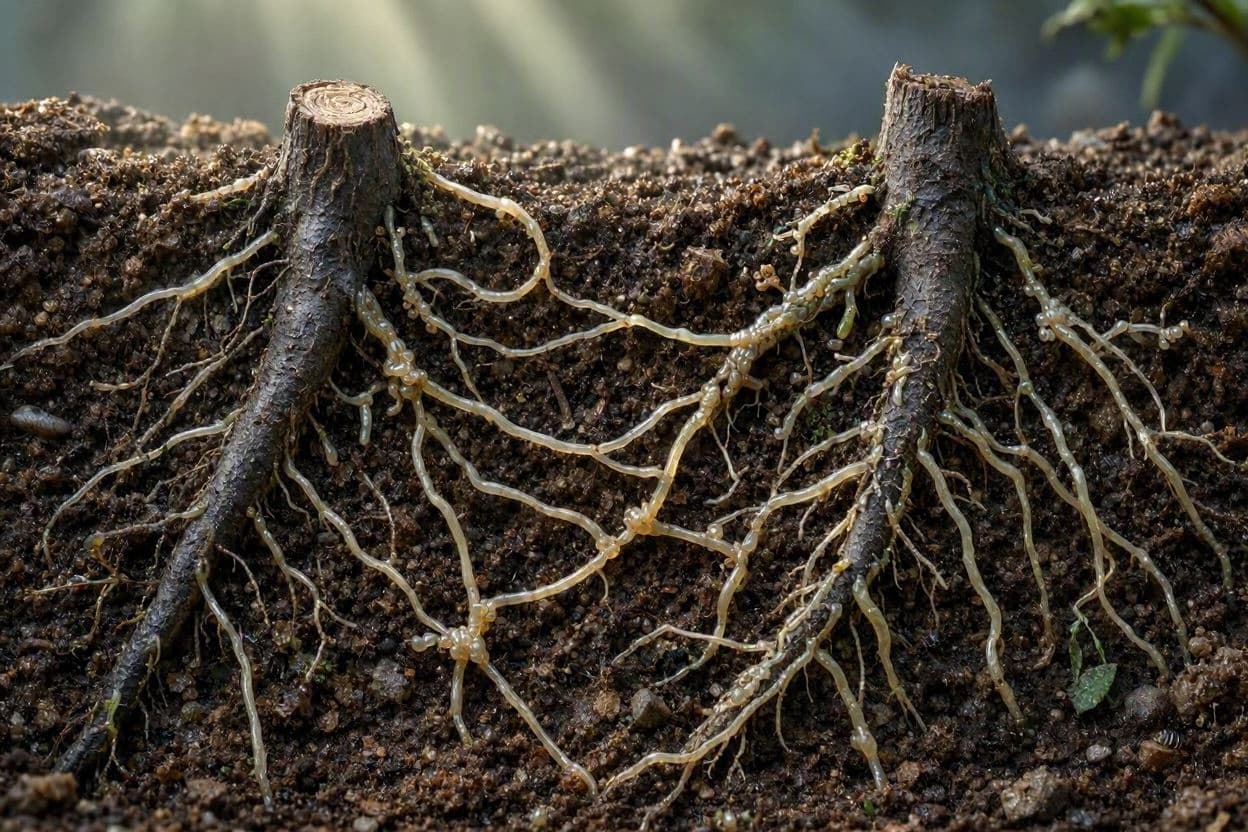
Beneath our feet lies a vast, hidden infrastructure that sustains life on Earth. Arbuscular mycorrhizal fungi form intricate networks of threads, connecting plant roots and facilitating the exchange of nutrients and carbon. Recent estimates suggest these networks stretch over 100 quadrillion kilometers, a distance that dwarfs even the scale of our galaxy. This discovery invites reflection on the interconnectedness of ecosystems and the quiet power of microscopic organisms. It is a reminder that the most critical systems are often the ones we cannot see.
The study, published in the journal Science, mapped the global distribution of these fungi, revealing their immense biomass and carbon storage capacity. By transporting carbon from plants into the soil, these networks play a crucial role in mitigating climate change. Silence holds strength.
For plants, the fungi provide essential nutrients like phosphorus and nitrogen, enhancing their ability to withstand stress and drought. In return, plants supply the fungi with sugars produced through photosynthesis. Cooperation drives survival. Mutualism defines nature.
As climate change alters weather patterns, the resilience of these fungal networks becomes increasingly important. They help stabilize soils, prevent erosion, and support biodiversity. Protection is a shared duty. Stability ensures continuity.
However, these underground webs are threatened by industrial agriculture, deforestation, and urbanization. Disrupting these connections can weaken ecosystem health and reduce carbon sequestration. Fragility hides in plain sight. Conservation is urgent.
Scientists urge greater protection for soil health, advocating for farming practices that preserve fungal diversity. Recognizing the value of these hidden partners is the first step toward a more sustainable future. Awareness inspires action.
Global mapping reveals that arbuscular mycorrhizal fungal networks extend over 100 quadrillion kilometers, playing a vital role in carbon storage and plant health. Protecting these networks is essential for climate resilience. The hope is for increased awareness and conservation efforts.
AI Image Disclaimer: The images provided are AI-generated to visually represent the environmental and biological aspects of the story.
Sources: Science Journal The Guardian EurekAlert
Published by Banx Network. This article is part of the Banx decentralized media programme, powered by the BXE token on the XRP Ledger.



