
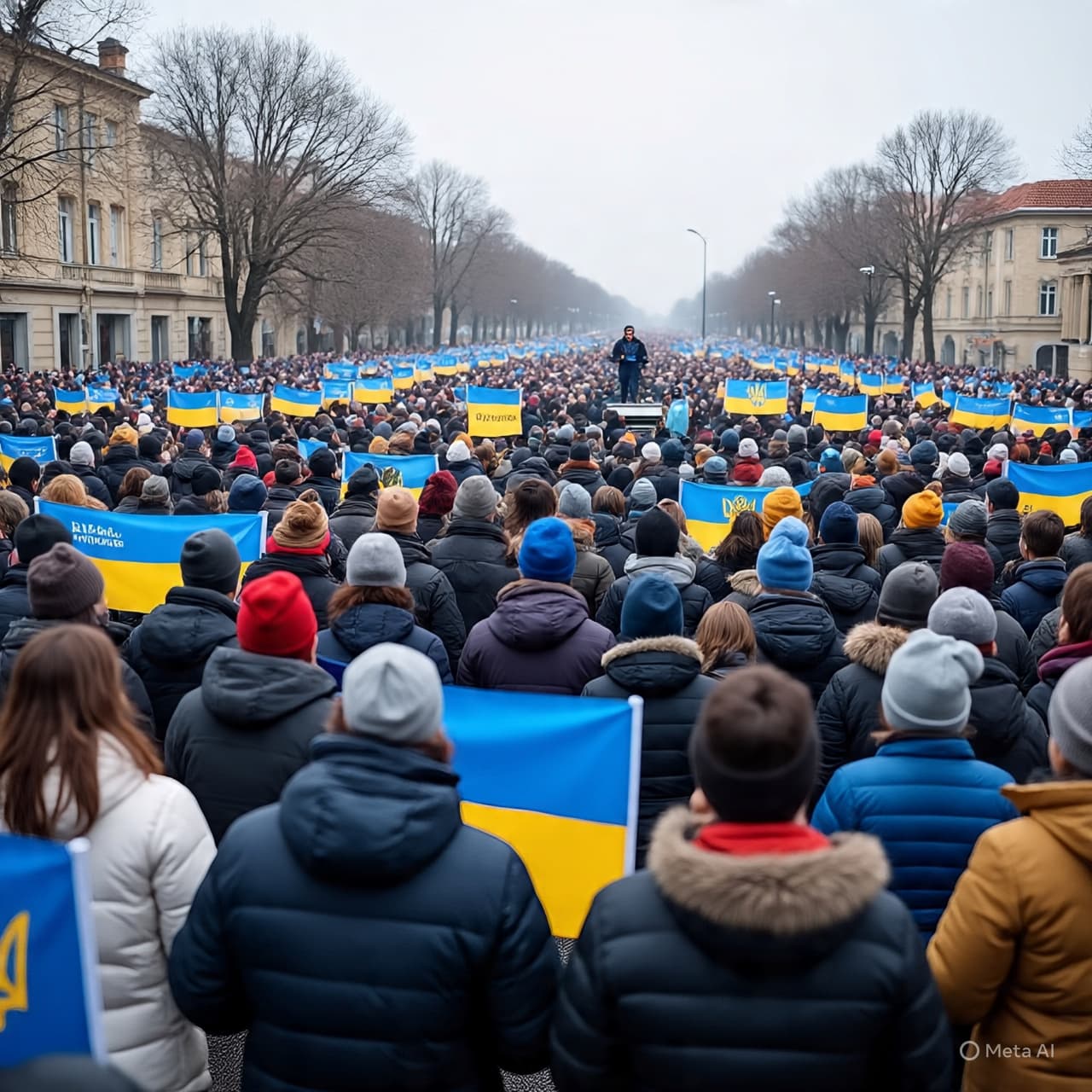
Key Highlights
- Proposal:President Zelensky considers a national referendum on a U.S.-crafted peace plan.
- Ceasefire:A 60-day ceasefire is proposed as a prerequisite for the referendum.
- Territorial Concerns:The referendum would address contentious territorial issues in Eastern Ukraine.
Amidst the swirling snow and smoke over Kyiv, the prospect of peace in Ukraine hangs delicately in the balance. President Volodymyr Zelensky is contemplating a significant shift in how the nation approaches the ongoing conflict with Russia. He has indicated a willingness to take a U.S.-crafted peace plan, supported by former President Donald Trump, to a national referendum. This move would empower the Ukrainian people to directly voice their opinions on the future of their country, marking a pivotal moment in the ongoing war.
Zelensky's proposal is not merely a political maneuver; it represents a fundamental change in the relationship between the government and its citizens. By suggesting that the decision on peace should rest with the people, Zelensky is acknowledging the weight of public sentiment in a conflict that has deeply affected every Ukrainian. However, he has made it clear that such a referendum would only be viable under specific conditions, primarily a ceasefire lasting at least 60 days. This pause in hostilities is deemed essential to ensure that the voting process can occur in a safe and secure environment, free from the threats of violence and coercion.
The territorial disputes that have arisen during the conflict are at the heart of this potential referendum. Regions in Eastern Ukraine, which have been contested since the war's inception, are not just lines on a map; they represent homes, histories, and the scars of conflict. Zelensky's approach suggests that if negotiators cannot secure favorable terms for Ukraine regarding these territories, the decision should ultimately rest with the citizens who will bear the consequences of any agreements made.
Reactions to Zelensky's proposal have varied widely. In Washington and other global capitals, some view this move as a bold affirmation of democratic principles, allowing citizens to participate in the most consequential decisions regarding their future. Others interpret it as a strategic tactic, a way for Zelensky to share the burden of difficult concessions with the public. Regardless of the interpretation, the notion of involving the populace in such a critical decision resonates with a deep-seated belief that any legitimate peace must be rooted in the consent of those most affected.
As Zelensky prepares for a crucial meeting with Donald Trump this Sunday, the atmosphere is charged with both hope and uncertainty. The potential referendum, if realized, would not only serve as a political instrument but also symbolize Ukraine's resilience and its unwavering desire to determine its own fate. In this fragile moment, the balance between diplomacy and the realities on the ground remains precarious, with the future of peace still a distant horizon.
As the situation continues to evolve, the Ukrainian narrative unfolds, highlighting the complexities of war, peace, and the enduring spirit of its people. The path forward is fraught with challenges, but the possibility of a referendum offers a glimmer of hope in a landscape still marked by conflict.
Published by Banx Network. This article is part of the Banx decentralized media programme, powered by the BXE token on the XRP Ledger.



