At this time of year, frost and cold often arrive in whispers — a change in wind, the first brittle breath of morning air, an early taste of winter. But sometimes the atmosphere chooses a different language, one of force and urgency. In recent days, the United States has felt that language: a sweeping Arctic blast descended upon the Midwest, the Great Lakes, and the Northeast, painting familiar streets in white and reminding many how fragile the bridge between comfort and cold can be.
From Chicago to New York, and beyond into the Appalachian highlands and Mid-Atlantic corridors, people woke to a world transformed. In parts of Minnesota and Wisconsin, thermometers plunged and wind chills plunged even lower — records tumbled as frigid air pushed far south of the Arctic’s usual reach. Roads slicked over, commutes slowed, and travel warnings were issued for millions as the cold wrapped the nation in a brittle, icy cloak.
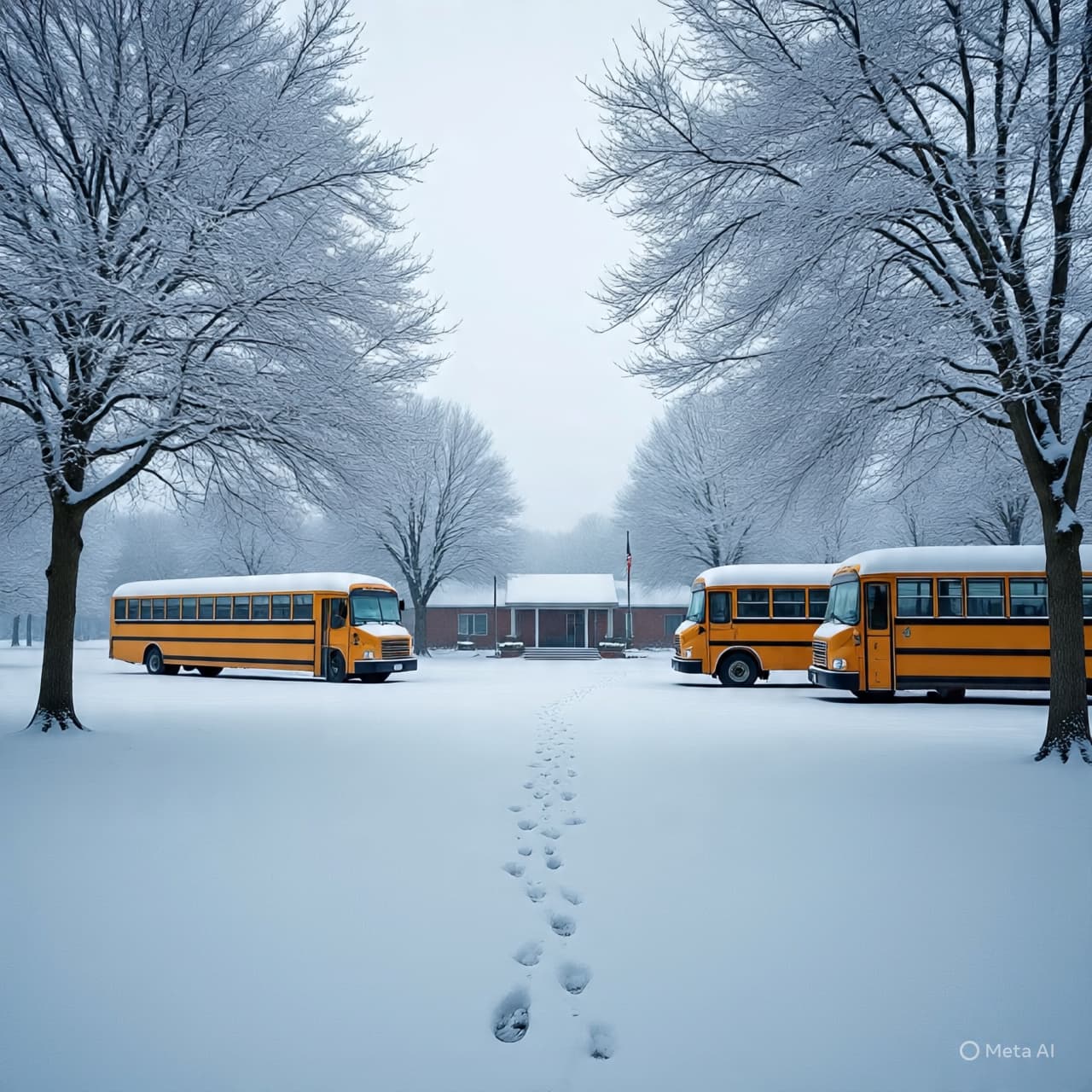
As the blast marched eastward, sky-white sheets of snow and ice swept across the Northeast and Mid-Atlantic. Some regions received several inches; a handful — particularly higher-elevation or inland zones — saw totals reaching a foot or more. In cities and towns from Pennsylvania to Maine, and in parts of Virginia and Maryland, roads grew treacherous, power lines groaned under weight, and the usual hum of morning life quieted. Snowplows spun, salt trucks rolled, but still — sidewalks were blanketed, lawns disappeared under crusted layers, and the hush of snow settled over driveways and doorsteps.
In response, countless schools — from urban districts in Washington, D.C.-adjacent counties to remote rural towns — announced closures or delayed openings. For families and educators alike, it was a pause: a moment to recalibrate. Teachers rearranged schedules, parents scrambled for childcare, and children, perhaps unsurprisingly, greeted snow-day notices with a kind of wide-eyed wonder.
Still, the cold and snow brought more than disruption. They brought reflection. In a world increasingly shaped by rapid change, these storms remind us of nature’s quiet power — its ability to humble, to hush, and to reconnect us, however briefly, to the rhythm of seasons. For some, a snow-day is a welcome interruption, a chance to breathe. For others, it’s a sobering signal: that despite our modern comforts, we remain at nature’s mercy, reliant on heaters, plows, and shared vigilance.
And as the Arctic blast loosens its grip, the memory of this winter’s first major storm lingers — in salt-stained sidewalks, in classrooms rescheduled, in stories of frozen commutes and community care. It leaves behind a kind of cold clarity: that even as we build, we must stay ready — and we must remember that half the world outside is still shaped by seasons we only pretend to master.
AI Image Disclaimer: “Illustrations created with AI tools are for conceptual representation only and are not actual photographs.”
Sources: ABC News, Reuters, Fox Weather, Newsweek, The Guardian
Published by Banx Network. This article is part of the Banx decentralized media programme, powered by the BXE token on the XRP Ledger.