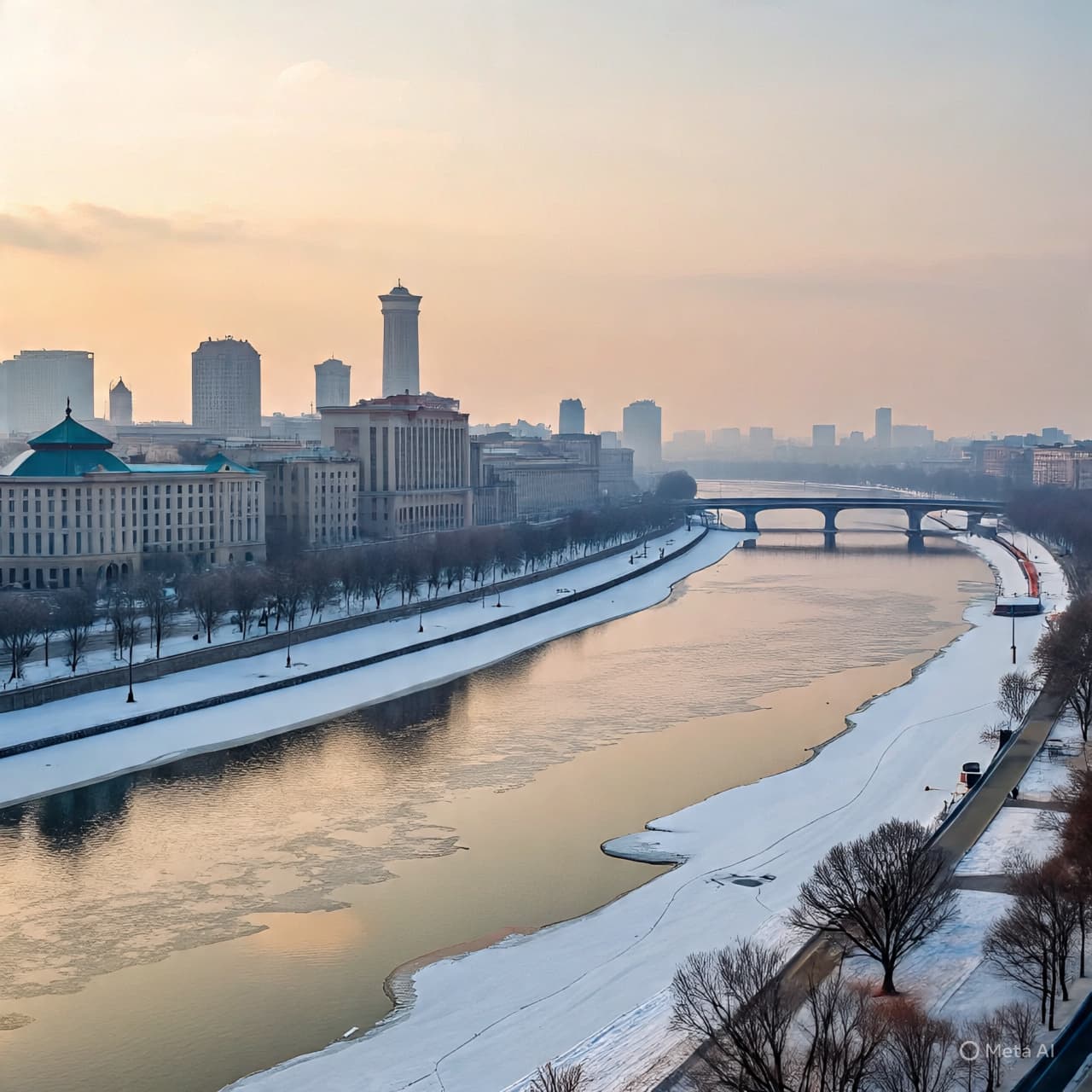
In Pyongyang, winter lingers with a particular stillness. The Taedong River moves slowly beneath pale skies, and the broad avenues—so often arranged for spectacle—hold a kind of rehearsed quiet. Inside the vast assembly halls where banners hang in careful symmetry, applause carries differently, echoing upward into chandeliers and portraits that watch from the walls.
When the Workers’ Party congress drew to a close, the choreography did not end with speeches alone. In a gesture both ceremonial and unmistakably practical, Kim Jong Un presented rifles to selected officials—objects of polished metal and dark wood, held upright like emblems rather than tools. Among those present was his daughter, Kim Ju Ae, whose appearances at state events have become more frequent, her presence woven into the imagery of continuity and inheritance.
State media described the rifles as tokens of trust and responsibility, gifts marking loyalty to the party and the nation’s defense. In a country where symbolism often carries as much weight as policy, the gesture resonated beyond the hall. The rifle, long a fixture of revolutionary iconography, has occupied a central place in North Korea’s self-narrative—an image of vigilance, of self-reliance, of a state perpetually alert.
The congress itself unfolded against a familiar backdrop of strategic emphasis. Speeches reiterated commitments to strengthening defense capabilities and advancing weapons development, including the continued expansion of missile programs that have drawn scrutiny from neighboring countries and the United Nations. References to deterrence and sovereignty appeared alongside calls for economic resilience, a pairing that has come to define much of the country’s public messaging.
In recent years, North Korea has conducted a series of missile tests, refining both range and payload capacity. Analysts note that such demonstrations serve multiple audiences: domestic, where they reinforce narratives of strength; regional, where they signal capability; and international, where they complicate diplomatic efforts. The congress reaffirmed this trajectory, underscoring defense as a cornerstone of national identity.
Yet within the ceremony of rifles and rhetoric, another image lingered—the daughter standing beside her father. Kim Ju Ae’s public appearances at missile launches and military parades have prompted quiet speculation about succession, though no official statements have addressed the matter directly. In a political system shaped by lineage, visibility itself becomes a message. A child’s presence in halls of power suggests not only family but future.
Beyond the capital’s grand interiors, daily life continues in measured cadence. Markets operate within constraints; factories follow production targets; students rehearse songs that echo themes of unity and vigilance. Information flows inward more readily than outward, and the state’s narrative moves with disciplined coherence. The rifle, in this context, is both literal and metaphorical—an instrument of defense and a symbol of continuity.
International responses to the congress have been restrained but watchful. South Korea and Japan continue to monitor developments closely, mindful of the peninsula’s fragile equilibrium. The United States has reiterated calls for dialogue, even as sanctions remain in place. Diplomacy, like winter light, appears thin but persistent.
As the congress hall empties and the banners are folded away, the image remains: rifles cradled in careful hands, applause fading into memory. The gesture is clear in its intent, if not in its ultimate consequence. It speaks of loyalty affirmed, of vigilance renewed, of a lineage subtly framed.
In Pyongyang’s winter, symbols often carry forward longer than speeches. Steel reflects the chandelier’s glow; portraits remain fixed; the river moves as it always has. The facts are simple: a party congress concluded, rifles were presented, a daughter stood beside her father. What they signify will unfold more slowly, like snow settling across a city accustomed to watching its own reflection in carefully polished glass.
AI Image Disclaimer These images are AI-generated illustrations intended for conceptual use only.
Sources Korean Central News Agency (KCNA) Reuters Associated Press BBC News The Diplomat
Published by Banx Network. This article is part of the Banx decentralized media programme, powered by the BXE token on the XRP Ledger.