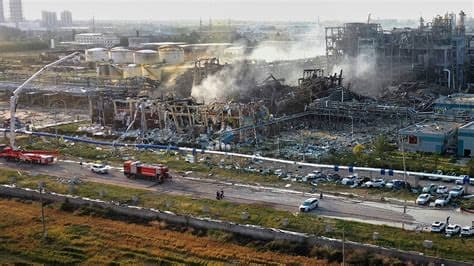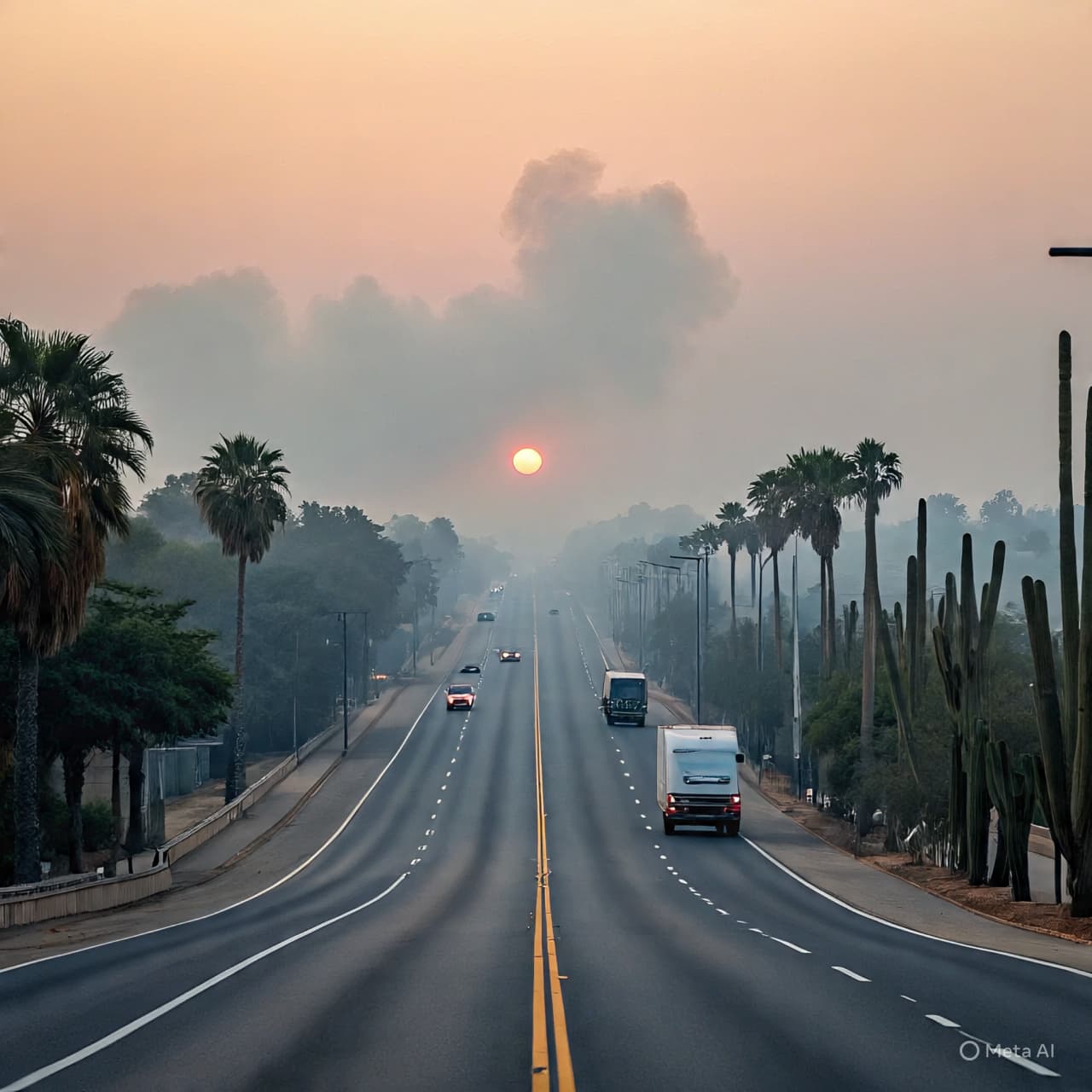
Dawn in western Mexico arrived through a haze that did not belong to weather. Roads that usually carry the pulse of commuters and cargo seemed subdued, as if the landscape itself were holding its breath. In the states of Jalisco, Michoacán, and Guanajuato, the night had left behind scorched facades, shuttered terminals, and a toll that now rests heavily in official counts.
According to media reports, at least 18 people have been killed in the unrest, among them members of the National Guard. The fatalities were recorded across several regions, reflecting how swiftly instability can travel when it takes root. Each number marks a life interrupted, a family recalibrating to sudden absence.
In Guadalajara, the city’s airport — typically a place of motion and reunion — became a symbol of interruption. The seizure of the facility disrupted operations and altered the ordinary rhythm of departures and arrivals. Aircraft stood grounded, terminals quieted, and the sense of connection that airports embody gave way to uncertainty.
Further down the Pacific coast, at the port of Manzanillo, operations were suspended. Through this gateway passes up to 45 percent of the country’s maritime traffic, a steady flow of goods that binds Mexico to global trade routes. The pause there was not only logistical but symbolic — a reminder of how closely economic lifelines are woven into the broader fabric of national stability.
The unrest also reached financial institutions. More than 20 branches of Banco del Bienestar were set on fire, their blackened exteriors standing in contrast to their role as points of service for communities. Banks are often quiet places, defined by routine transactions and the measured pace of everyday commerce. To see them burned is to witness the disruption of something ordinarily mundane yet essential.
Across the affected states, daily life has been reshaped, at least temporarily. Roads once busy have carried fewer vehicles. Public spaces have felt more cautious. Authorities continue to assess the situation as communities take stock of what has been lost and what must be restored.
Mexico is no stranger to moments when calm gives way to turbulence. Yet each episode unfolds with its own geography, its own texture, its own human cost. The events in Jalisco, Michoacán, and Guanajuato now join that wider narrative — one marked by resilience as much as strain.
As operations gradually resume and damaged buildings are surveyed in daylight, the immediate facts remain clear: lives have been lost, infrastructure disrupted, and communities unsettled. What lingers beyond the headlines is the quieter question of recovery — how cities reclaim their rhythm after a night when movement stopped and smoke defined the horizon.
Published by Banx Network. This article is part of the Banx decentralized media programme, powered by the BXE token on the XRP Ledger.