In southern Lebanon, the hills fold into one another like pages of an old manuscript, olive groves stitched between villages of pale stone. Morning here often begins with the lowing of goats and the distant call to prayer, the air carrying both salt from the Mediterranean and dust from inland fields. Yet in recent days, another sound has cut through the quiet — the sudden thunder of strikes that ripple across the borderlands.
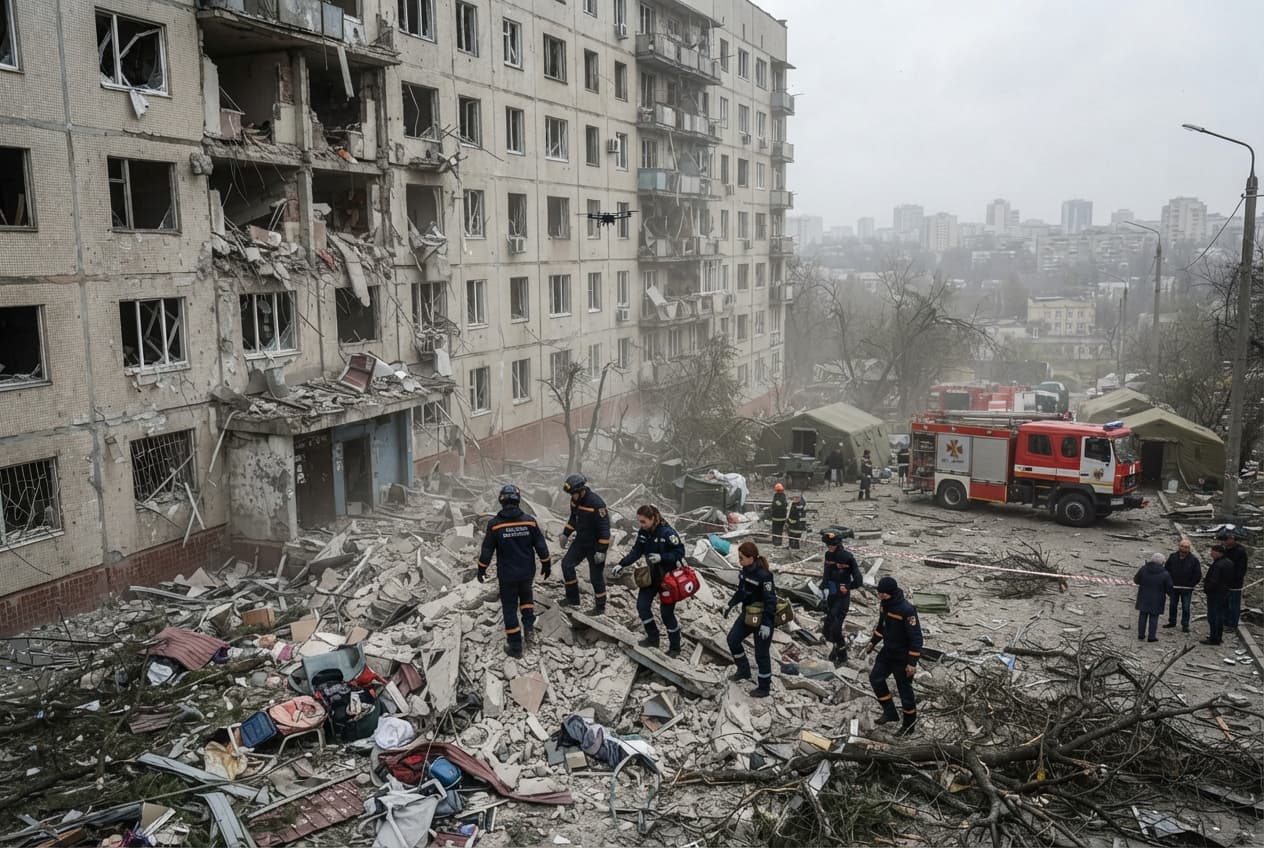
Lebanese officials said Israeli airstrikes killed at least 10 people in the country’s south, in what Israel described as operations targeting militant infrastructure. The figures were reported by local authorities and emergency services as rescue crews moved through damaged neighborhoods, pulling survivors from rubble and counting the cost in lives interrupted.
The Israeli military has said its actions are aimed at degrading the capabilities of Hezbollah, the Iran-backed armed group that operates in southern Lebanon and has exchanged cross-border fire with Israel for months. Since the outbreak of the war in Gaza, tensions along the Israel-Lebanon frontier have intensified, with rockets, drones, and artillery traveling in both directions. What was once a contained deterrence has become a pattern of near-daily confrontation.
In Beirut, officials condemned the strikes as violations of sovereignty, while emergency responders, including teams from the Lebanese Red Cross, worked in damaged villages to transport the wounded. Some of the casualties were reported to be civilians, though the precise identities and affiliations of those killed have not been fully detailed.
For communities along the border, the escalation feels both sudden and familiar. The memory of the 2006 war between Israel and Hezbollah lingers in cracked facades and rebuilt homes. Many families have already moved northward in recent months, seeking safety in larger cities or with relatives further from the frontier. Schools have closed intermittently, and fields once cultivated with tobacco and olives now stand untended in some areas.
Israel has framed its operations as defensive, aimed at preventing further attacks and ensuring security for its northern residents. Israeli communities near the border have also experienced evacuations and rocket alerts, their own routines reshaped by sirens and uncertainty. The frontier, long defined by uneasy deterrence, has grown more volatile as regional dynamics shift.
Diplomatic efforts to contain the spillover continue quietly. The United Nations Interim Force in Lebanon remains deployed along the Blue Line, monitoring violations and urging restraint. International actors have called for de-escalation, wary that sustained exchanges could widen into a broader conflict drawing in additional regional powers.
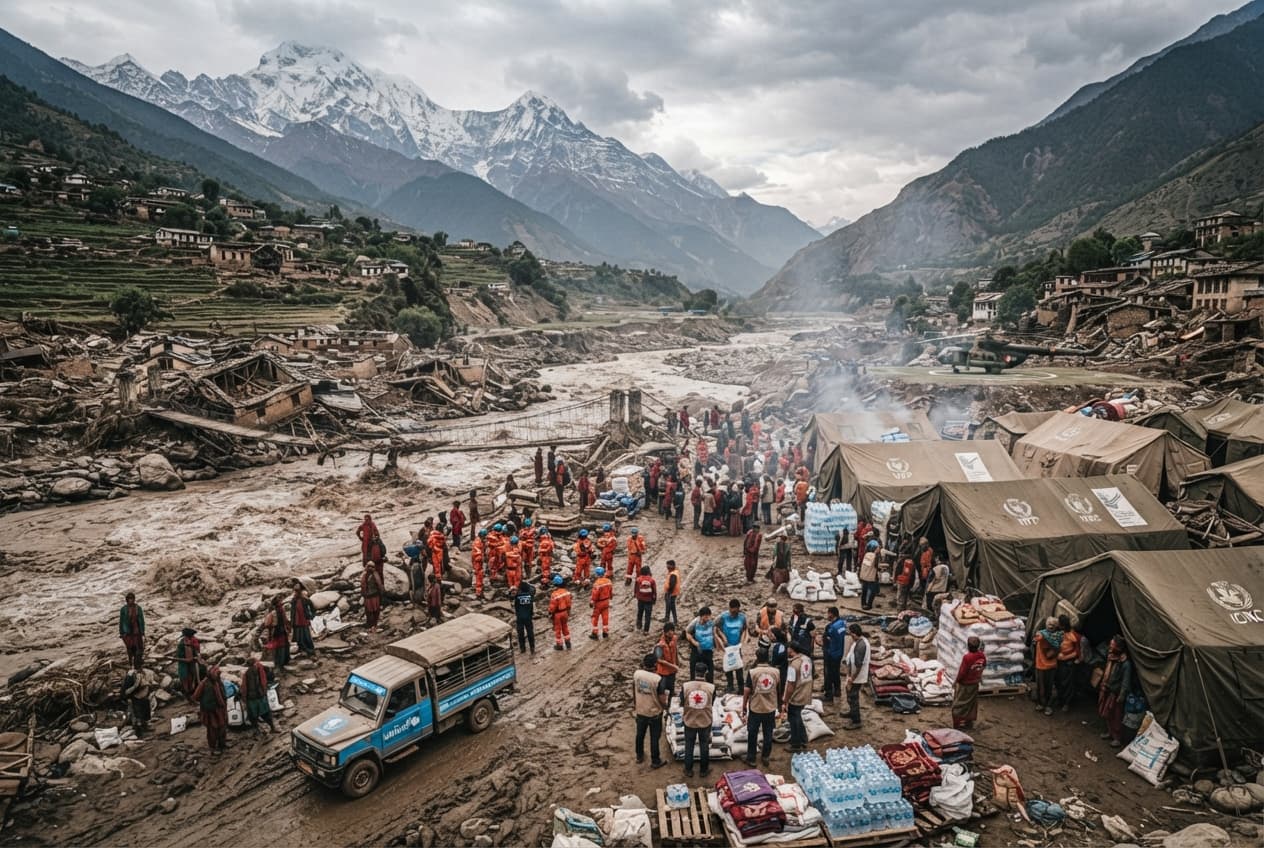
Yet for those living beneath these hills, diplomacy often feels distant. What remains immediate are shattered windows, the smell of smoke in the air, and the knowledge that each strike redraws the emotional map of home. Aid organizations assess damage and coordinate assistance, even as the security situation complicates access.
As dusk settles over southern Lebanon, the call to prayer rises once more, softer now against a horizon marked by smoke. Official statements will follow, investigations may clarify details, and negotiations may attempt to cool the air. But for the families of the dead — at least ten, according to local officials — the loss is not measured in strategy or geopolitics. It is counted in empty chairs at dinner tables and in the long silence that follows an explosion. Along this narrow strip of land, the line between border and battlefield remains thin, and the night carries both memory and apprehension.
AI Image Disclaimer Illustrations were created using AI tools and are not real photographs.
Sources Reuters Associated Press BBC News Al Jazeera United Nations Interim Force in Lebanon
نُشر بواسطة Banx Network. هذا المقال جزء من برنامج الوسائط اللامركزية من Banx، مدعومًا برمز BXE على شبكة XRP Ledger.