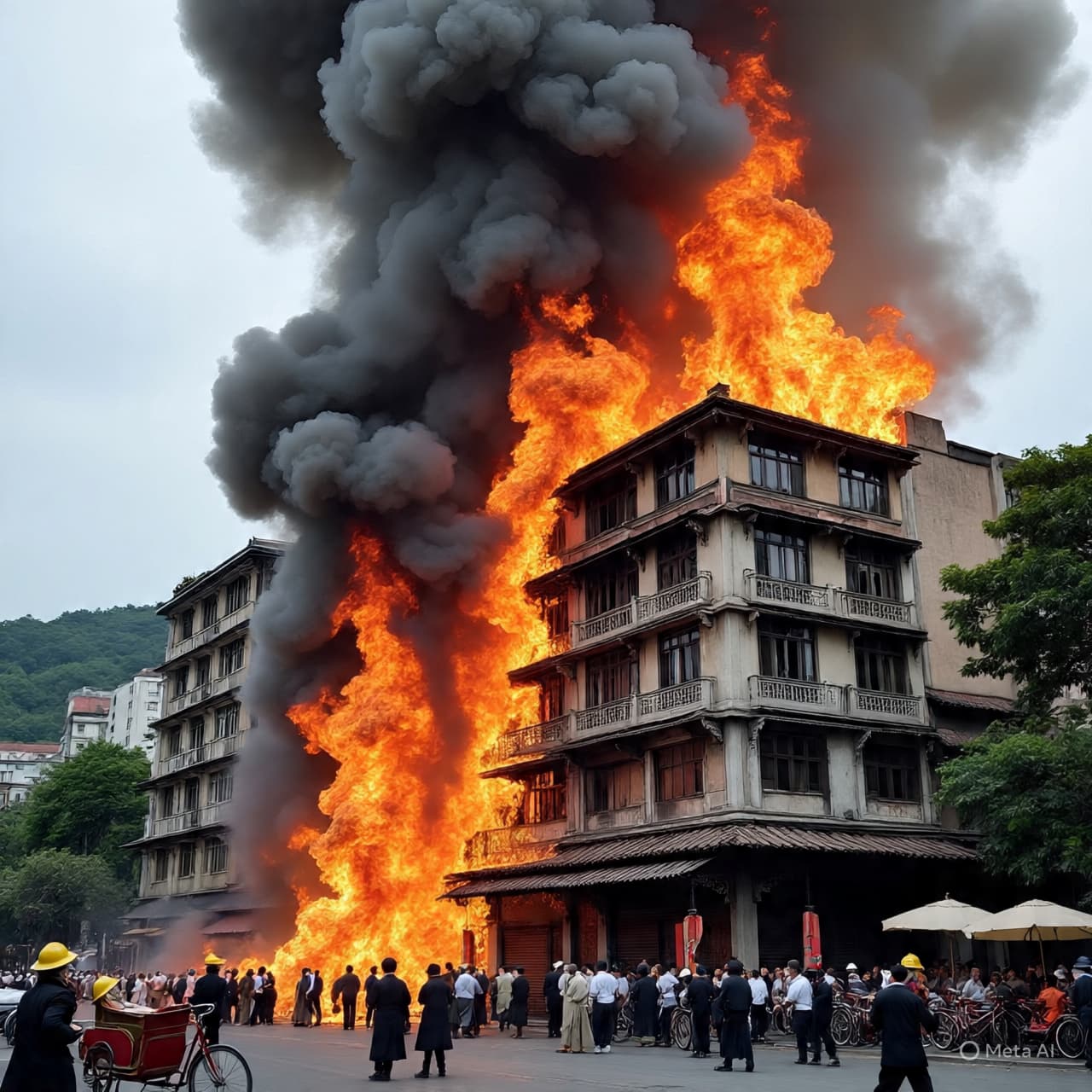
In the fading light of a bustling city, a cloud of black smoke rose above the rooftops of Wang Fuk Court. What minutes before had been just another cluster of tall, unassuming apartment towers suddenly transformed into a scene of dread — as though a long-dormant ghost had flicked a match and turned home into hazard. For the people inside, roofs and walls blurred into flames; life as they knew it dissolved into frantic calls for help, among the hiss of fire and the scent of terror.
On Wednesday afternoon, fire broke out in one of the buildings of Wang Fuk Court — a residential estate in the Tai Po District of Hong Kong. The flames reportedly began on bamboo scaffolding erected for renovation work, and from there raced upward and across adjacent towers. What followed was rapid and merciless: seven of the complex’s eight high-rises became engulfed.
By the next morning, authorities confirmed at least 75 people had perished. Hundreds more remain unaccounted for — with over 250 residents still missing. Dozens were injured; many suffered burns and smoke inhalation, including first responders.
In the chaos that erupted, residents fled, some with only what they could grab in a heartbeat. Firefighters climbed ladders into encroaching heat and smoke, hoses spewing water skyward; still the blaze advanced. Rescue crews moved with urgency through collapsing scaffolding, peeling back blackened walls that once sheltered families, memories, the ordinary life of a community.
As the city reels, law enforcement turned swiftly from rescue to reckoning: three men from the construction firm overseeing the renovation — two directors and an engineering consultant — were arrested on suspicion of manslaughter. Officials alleged “gross negligence,” pointing to flammable materials — foam-sealed windows, plastic claddings, and non-compliant exterior coverings — as catalysts in the fire’s rapid spread.
The tragedy has cast a harsh light on building-safety practices in a city where high-rise living is the norm. The very scaffolding meant to protect and refurbish homes may have turned them into tinderboxes. And for now, the city grieves — for the lives lost, the homes destroyed, the community ripped by smoke, shrapnel, and uncertainty.
As firefighters continue painstaking search operations in smoldering towers, and displaced families huddle in temporary shelters, Hong Kong stands at a crossroads: between reconstruction and reckoning; between mourning and demanding accountability.
In that silence between sirens, smoke, and ashes, the world is reminded once more — safety is not just concrete and steel. It is the care we take in what wraps around them.
AI Image Disclaimer “Graphics are AI-generated and intended for representation, not reality.”
Sources: Reuters The Guardian CBS News AP Al Jazeera
Published by Banx Network. This article is part of the Banx decentralized media programme, powered by the BXE token on the XRP Ledger.