Key Highlights
- Alberta Premier Danielle Smith defends proposed electoral boundary changes.
- NDP Leader Naheed Nenshi claims the changes are unconstitutional.
- The proposal includes hybrid ridings that could impact the 2027 election.
Alberta Premier Danielle Smith announced on Tuesday that her government is prepared to defend new electoral boundaries proposed by an advisory panel, amid threats of a legal challenge from the Opposition NDP. Speaking at the Rural Municipalities of Alberta convention, Smith expressed hope that the matter could be resolved through legislative debate rather than court intervention. "I hope it doesn't come to that," she stated, emphasizing the importance of dialogue in the legislature.
The advisory panel's report, released on Monday, suggests increasing the number of ridings in Alberta from 87 to 91. A key point of contention is the proposal for Lethbridge, which is currently divided into two urban ridings. The panel recommends consolidating these into one urban seat and creating three hybrid ridings that extend into the surrounding rural areas. This approach has sparked debate, with proponents arguing that southern Alberta's economy is closely tied to agriculture and food processing, while critics, including constitutional law expert Gerard Kennedy, warn of potential legal challenges.
NDP Leader Naheed Nenshi has been vocal in his opposition, declaring the report illegal and unconstitutional, particularly criticizing the Lethbridge proposal. The NDP has accused the United Conservative Party (UCP) of gerrymandering, asserting that the changes are designed to benefit Smith's party in the upcoming 2027 election. Smith, however, defended the concept of hybrid ridings, citing her own representation of a hybrid riding in Brooks-Medicine Hat as a valid example of their effectiveness in certain contexts.
The process leading to these boundary changes has been contentious. Earlier this year, Smith's government dismissed the recommendations of an independent commission and initiated a new review with a politically appointed advisory panel. Keith Archer, a former member of a previous commission, criticized the current process, suggesting it reflects partisanship rather than an impartial review of electoral boundaries. Brian O'Ferrall, the panel's chair, stated he does not believe the proposals are unconstitutional, yet the divided opinions within the report have raised concerns about the integrity of the process.
While some stakeholders have expressed satisfaction with the proposed changes, others have voiced concerns. Jurgen Preugschas, reeve of Lac Ste. Anne County, praised Smith for maintaining a rural riding that was previously slated for elimination. Conversely, Kara Westerlund, president of Rural Municipalities of Alberta, cautioned that hybrid ridings could dilute the rural voice, as rural areas represent a significant portion of Alberta's land but a small fraction of its population.
The proposed electoral boundaries are now awaiting approval from the legislature. Should the legislature pass the proposal, the NDP has indicated it will pursue a court ruling to challenge the changes. If the proposal fails, the process of redrawing Alberta's electoral lines will restart, a task that has already generated considerable conflict and debate. As the situation unfolds, Smith's legal team remains on standby, while the NDP prepares its constitutional arguments, leaving the future of Alberta's electoral map uncertain.
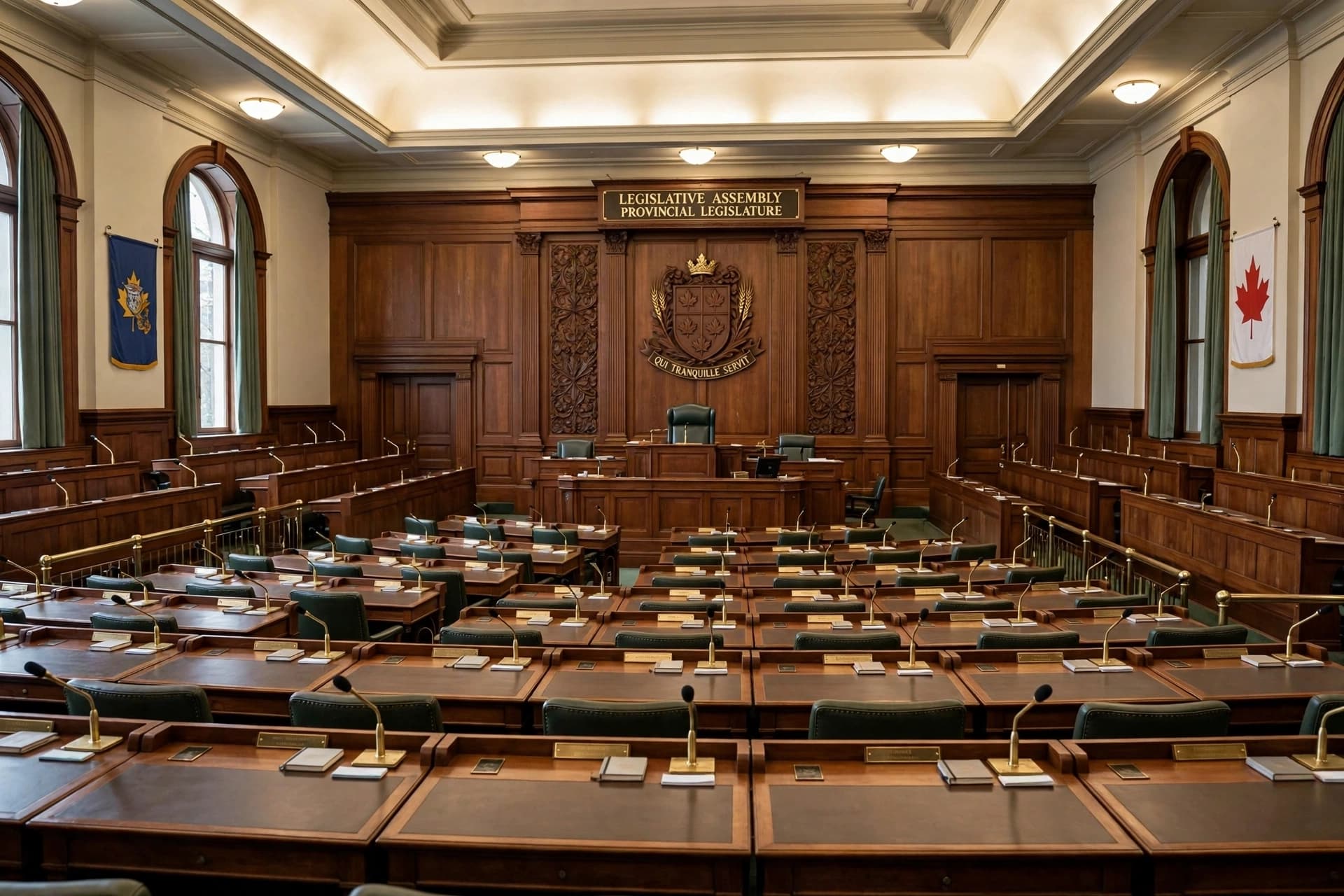
AI Image Disclaimer: The images accompanying this article are generated by artificial intelligence and are intended for illustrative purposes only; they do not depict the actual individuals, the legislature, or the specific electoral maps proposed.
Published by Banx Network. This article is part of the Banx decentralized media programme, powered by the BXE token on the XRP Ledger.