
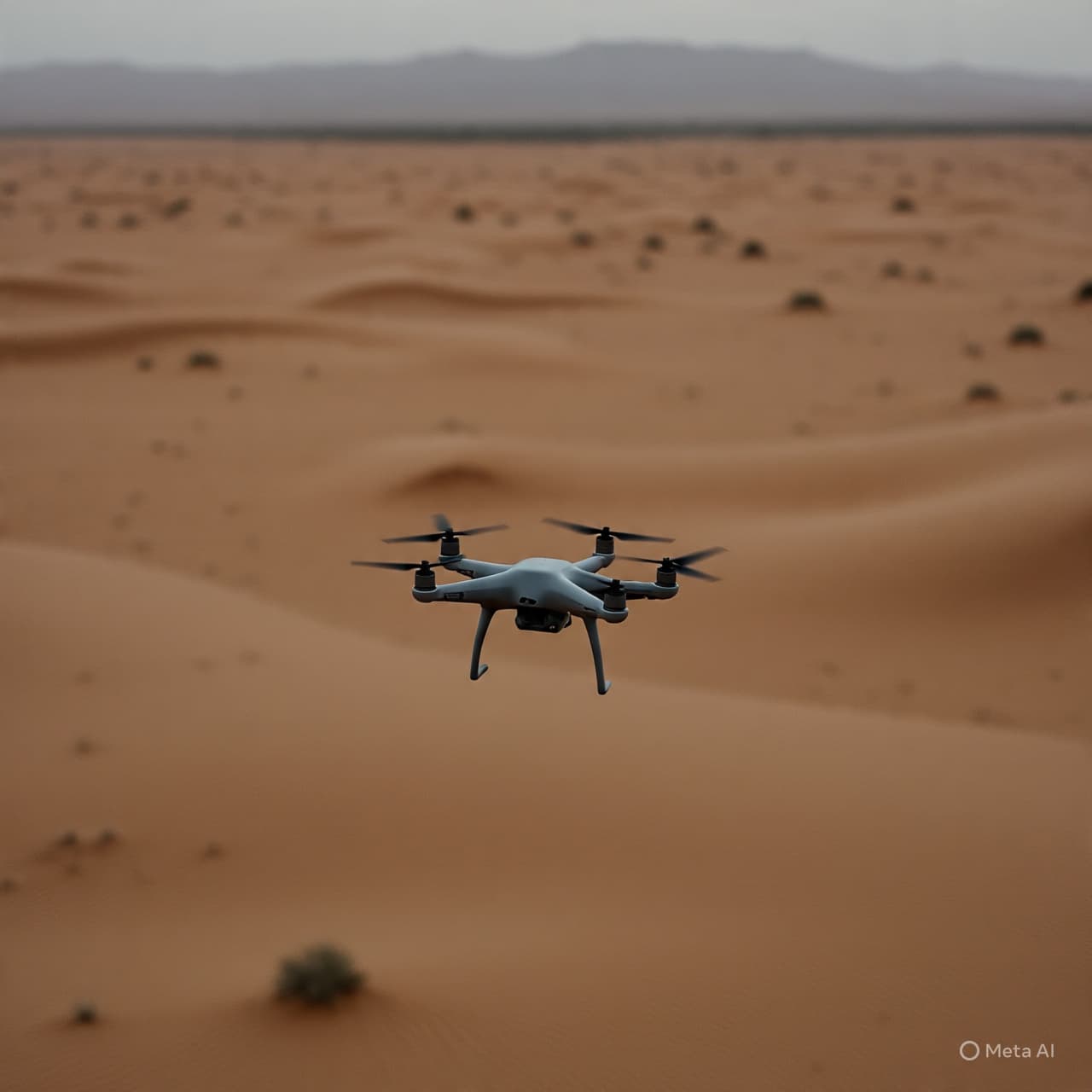
There are tools of war that arrive with spectacle—loud, visible, and unmistakable. And then there are those that move more quietly, almost unnoticed at first, until their presence reshapes the field entirely. They do not demand attention; they accumulate it. Over time, their simplicity becomes their strength, and their persistence becomes their story.
In the unfolding dynamics surrounding Iran and the broader regional tensions, low-cost drones have emerged as one of these quiet variables. Often small, relatively inexpensive, and adaptable, these devices are increasingly seen not merely as supplementary tools, but as unpredictable elements capable of influencing outcomes in ways that traditional systems cannot easily counter.
What makes these drones particularly notable is not just their accessibility, but their flexibility. They can be deployed in swarms, used for surveillance, or adapted for offensive purposes. Unlike larger, more complex systems, their lower cost allows for repeated use, even in high-risk scenarios where losses might otherwise be prohibitive. In this sense, they shift the calculation—not by overpowering, but by enduring.
Reports indicate that such drones have been used across various theaters in the region, contributing to a pattern where attribution, scale, and response become more difficult to define. Their presence blurs the line between isolated incidents and coordinated strategy, raising questions about how conflicts are measured and understood.
For Iran, and for other actors in the region, these tools represent both opportunity and challenge. They offer a way to project capability without relying on traditional, more visible forms of engagement. At the same time, their widespread use by multiple groups introduces uncertainty—what one side deploys, another may replicate or adapt.
The broader implication lies in how these technologies alter the rhythm of conflict. Instead of singular, decisive moments, there is a gradual accumulation of actions—small, frequent, and often difficult to trace. This pattern can stretch responses, complicate defense systems, and create an environment where clarity is harder to achieve.
At the same time, efforts to counter such drones continue to evolve. Defense systems are being adapted, detection methods refined, and strategies reconsidered. Yet the balance remains delicate, as the very qualities that make these drones effective—their cost, size, and adaptability—also make them difficult to fully contain.
There is also a wider reflection embedded in this development. Technology, once centralized and controlled, is becoming more distributed. Capabilities that were once limited to a few are now accessible to many, reshaping not only how conflicts are fought, but how they are perceived.
In the end, the role of these drones remains uncertain—not because their impact is unclear, but because it continues to change. They are not the defining feature of the conflict, but they are an influential one, capable of altering trajectories in subtle yet significant ways.
For now, analysts and officials continue to monitor their use closely, recognizing that in a landscape already marked by complexity, even the smallest elements can carry considerable weight.
AI Image Disclaimer Visuals are created with AI tools and are not real photographs.
Source Check Credible coverage of this development exists. Key outlets reporting on it include:
Reuters The New York Times BBC News Al Jazeera Financial Times
Published by Banx Network. This article is part of the Banx decentralized media programme, powered by the BXE token on the XRP Ledger.


