For a century, physics has been divided into two majestic realms: the vast, curving spacetime of General Relativity and the probabilistic, discrete world of Quantum Mechanics. Bridging these domains has been the holy grail of modern science. Now, scientists report observing gravitational effects in a quantum system, a feat that brings us closer to unifying these disparate theories. This observation invites reflection on the fabric of reality, suggesting that gravity, too, plays a role in the smallest scales of existence, weaving itself into the quantum tapestry.
The experiment involved measuring the effect of Earth’s gravity on the internal energy states of atoms. Using atom interferometry, researchers split atomic waves and allowed them to travel along different paths at slightly different heights. Due to gravitational time dilation, a prediction of Einstein’s theory, the atoms experienced time at different rates. This difference manifested as a shift in their quantum phase, which could be precisely measured.
This observation is significant because it demonstrates that gravity affects quantum superpositions. Previously, such effects were too small to detect or were masked by other forces. The ability to isolate and measure this interaction confirms that General Relativity holds true even at the microscopic level. It validates the equivalence principle, which states that gravitational mass and inertial mass are identical, in a new quantum context.
The technology behind this breakthrough is remarkable. Atom interferometers use the wave-like nature of matter to make incredibly sensitive measurements. By cooling atoms to near absolute zero, scientists can control their motion with extreme precision. This control allows them to detect minute changes in phase caused by gravity, turning atoms into highly accurate clocks and rulers.
Implications for fundamental physics are profound. If gravity interacts with quantum systems in predictable ways, it may provide clues on how to quantize gravity itself. While a full theory of quantum gravity remains elusive, each experimental confirmation helps constrain theoretical models. It narrows the search for a unified framework that can describe both the very large and the very small.
Practical applications may also emerge from this research. Quantum sensors based on these principles could lead to more precise navigation systems, geological surveys, and tests of fundamental constants. By leveraging the sensitivity of quantum mechanics to gravity, we can develop tools that surpass classical limitations. This synergy between theory and application drives innovation.
The collaboration among physicists from various institutions highlights the global effort to solve these deep mysteries. Sharing data and techniques accelerates progress, fostering a community dedicated to understanding the universe’s deepest secrets. It is a testament to the power of collective intellectual pursuit.
As the results are scrutinized and replicated, confidence in the findings will grow. Each successful experiment builds a bridge between the two pillars of physics, bringing us closer to a coherent picture of reality. The observation is a milestone, marking a step forward in the long journey toward unification.
Scientists have observed gravitational effects in a quantum system using atom interferometry, confirming that Einstein’s General Relativity applies at microscopic scales. This breakthrough advances the quest for a unified theory of physics and enhances the precision of quantum sensing technologies.
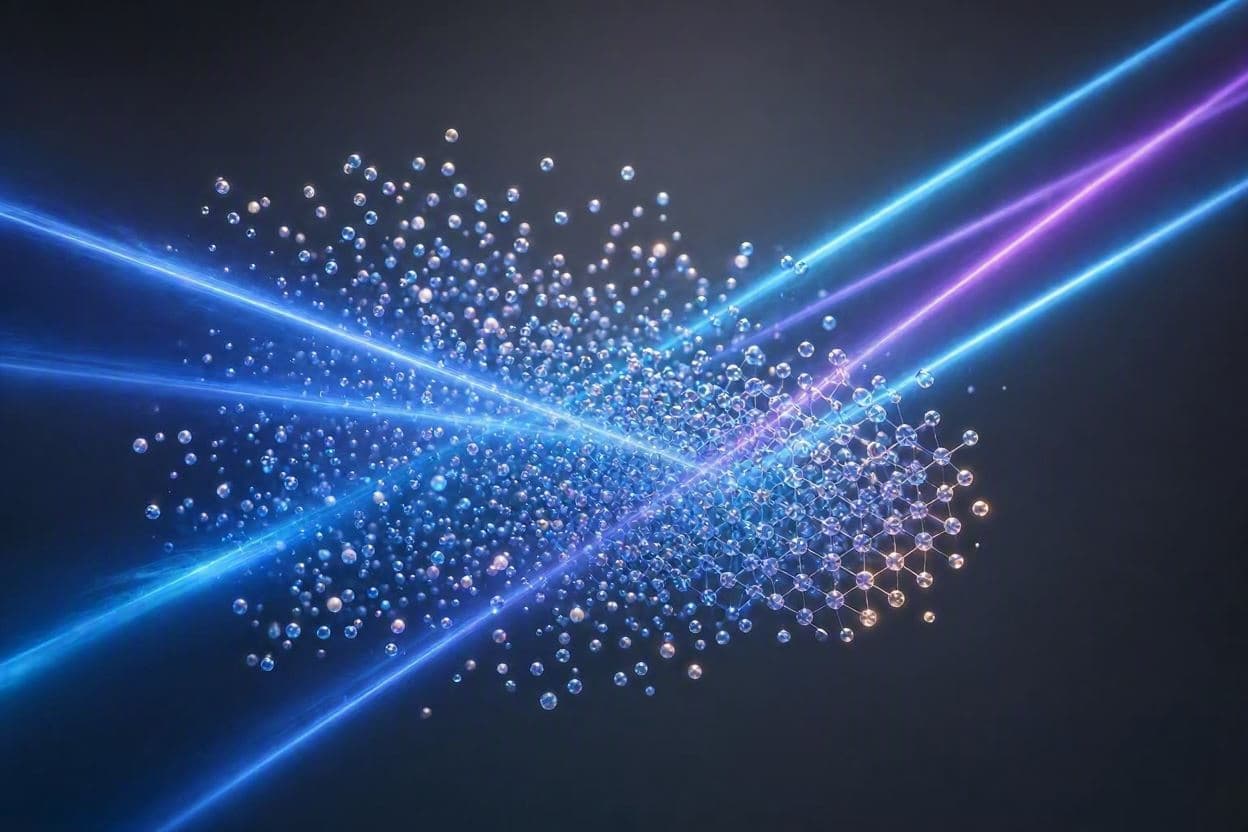
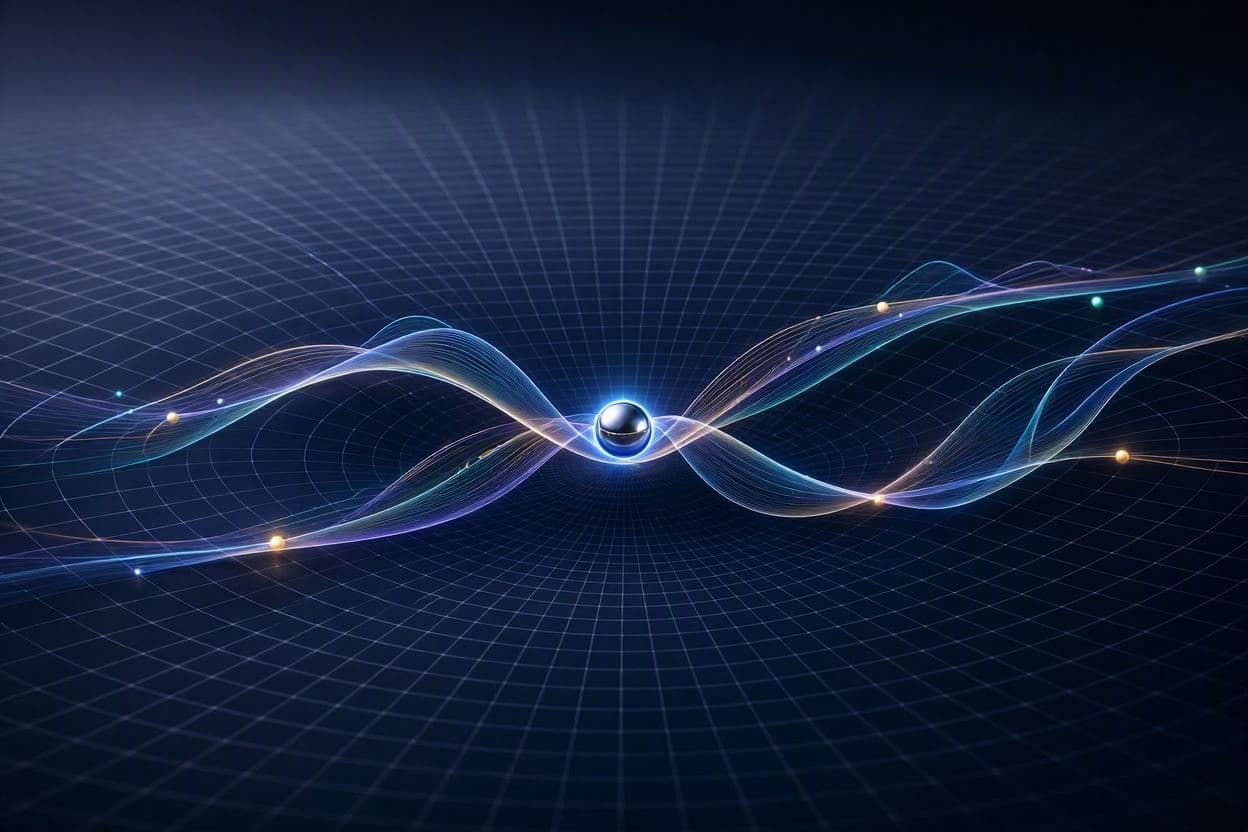
AI Image Disclaimer: The images associated with this article are AI-generated visualizations intended to symbolize the intersection of quantum mechanics and gravity, using respectful and abstract imagery.
Sources: Nature Science Magazine
Published by Banx Network. This article is part of the Banx decentralized media programme, powered by the BXE token on the XRP Ledger.