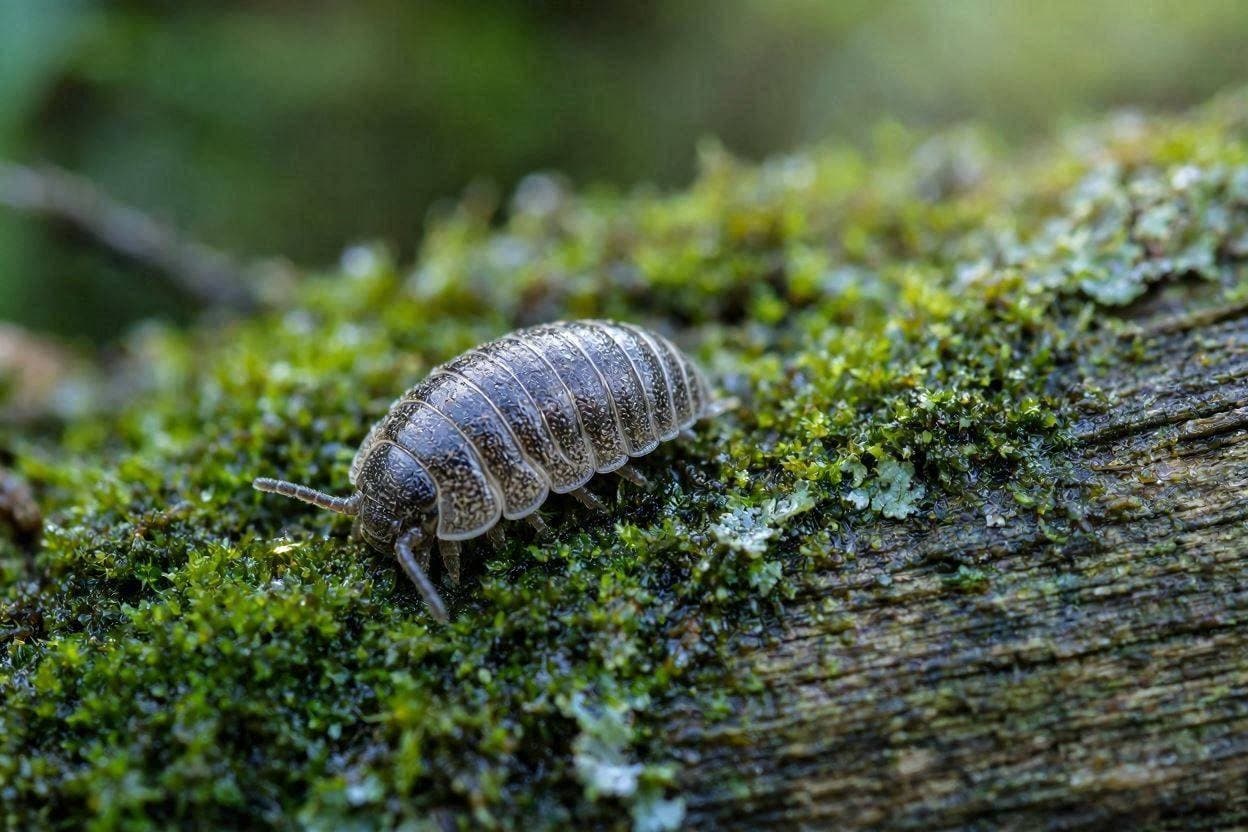
Beneath the damp shelter of a rotting log or the cool shadow of a garden stone, a quiet industry thrives. The common woodlouse, often dismissed as a mere pest or a curious curiosity for children, is in fact a marvel of evolutionary engineering. These small, armored crustaceans scuttle through the leaf litter with a purpose that belies their diminutive size. Recent scientific appreciation has begun to highlight their "superpowers"—from remarkable resilience to vital ecological roles—inviting us to look closer at these neat, busy little folk who work tirelessly to keep our ecosystems balanced.
Unlike most of their terrestrial cousins, woodlice are not insects but crustaceans, closely related to crabs and lobsters. This lineage explains their unique need for moisture and their ability to breathe through gill-like structures. Yet, they have adapted to life on land with surprising ingenuity. Some species can curl into a perfect sphere, protecting their vulnerable undersides from predators and desiccation. This defensive posture, known as conglobation, is a simple yet effective survival strategy that has served them well for millions of years.
Beyond their physical defenses, woodlice play a crucial role in nutrient cycling. As detritivores, they consume decaying plant matter, breaking it down into smaller particles that microbes can further decompose. This process releases essential nutrients back into the soil, supporting plant growth and maintaining soil health. Without these humble recyclers, forests and gardens would be buried under layers of unprocessed organic waste, slowing the cycle of life itself.
Recent studies have also revealed their unexpected resilience to environmental stressors. Woodlice have been found to tolerate higher levels of heavy metals and pollutants than many other soil organisms, making them potential bioindicators for soil health. Their presence or absence can signal the quality of the environment, offering scientists a natural tool for monitoring ecological changes. In this way, they serve as silent sentinels of the earth beneath our feet.
Their social behavior is another area of growing interest. While not complex like ant colonies, woodlice exhibit aggregative behaviors that help them conserve moisture and regulate temperature. By clustering together, they create a microclimate that reduces water loss, demonstrating a basic form of cooperation. This collective wisdom allows them to survive in conditions that would be lethal to solitary individuals, highlighting the power of community even in the smallest creatures.
For gardeners, woodlice are often misunderstood. While they can occasionally nibble on soft seedlings, their primary diet consists of dead and dying material. Encouraging their presence by providing damp hiding spots can actually benefit the garden by accelerating decomposition and improving soil structure. Shifting the perception of woodlice from pests to partners requires a change in perspective, one that values their contribution to the broader web of life.
The phrase "neat, busy little folk" captures the charm and diligence of these creatures. They go about their work without fanfare, unnoticed by most, yet their impact is profound. In a world that often overlooks the small and the slow, the woodlouse stands as a testament to the importance of every link in the ecological chain.
As we continue to explore the complexities of our natural world, the common woodlouse reminds us that significance is not always measured by size or visibility. Their quiet industry sustains the soil, supports plant life, and maintains the balance of our gardens. In appreciating these tiny crustaceans, we gain a deeper respect for the intricate mechanisms that keep our planet thriving.
AI Image Disclaimer: The visuals accompanying this article are AI-generated illustrations designed to represent the themes of soil ecology and invertebrate biology.
Sources: The Guardian, BBC Earth, Royal Society of Biology, Entomological Society of America
Published by Banx Network. This article is part of the Banx decentralized media programme, powered by the BXE token on the XRP Ledger.