
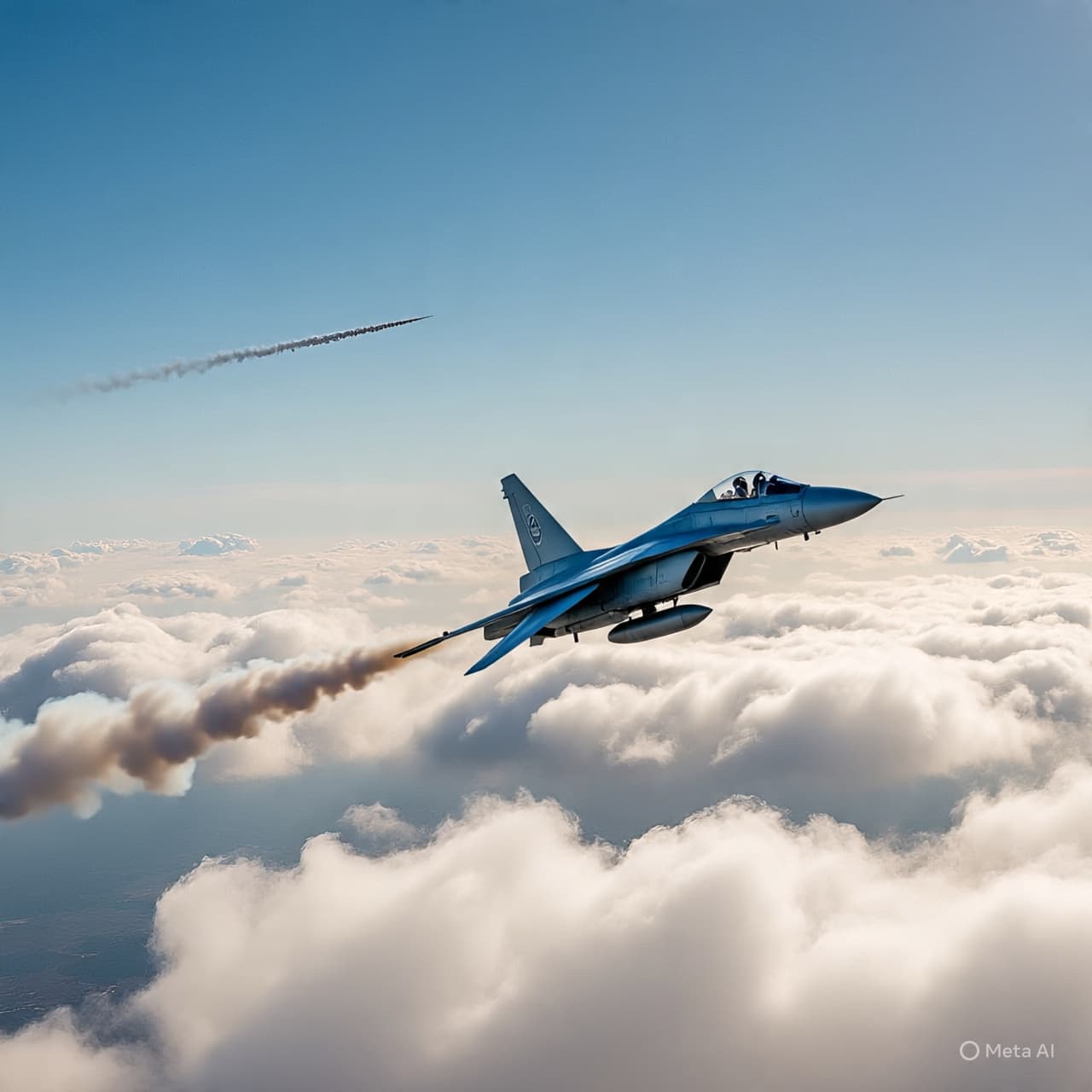
At dusk over the shifting sands and troubled waters of the Middle East, a single F-16 jet cut through the sky — not in triumph, but in survival. The air above was heavy, tense, full of danger: missiles streaking, explosions erupting, enemy fire closing in. In that charged space between earth and heaven, a pilot pressed his foot to the metal and held on — hoping to outrun death, and bring his comrades home.
On March 27, 2025, Lt. Col. William Parks commanded a 21-aircraft strike package into hostile territory, leading four F-16 Fighting Falcon jets on a suppression-of-enemy-air-defenses (SEAD) mission targeting air defenses tied to ballistic-missile production facilities. As enemy missiles and anti-aircraft fire erupted around him — warheads detonating only feet from his canopy — Parks did not pull away. Instead, he drove deeper into the zone.
For fifteen minutes, the sky became a gauntlet. Parks performed extreme high-G maneuvers, twisted and turned his F-16 with skill and resolve, and released countermeasures as flak and missile fire blossomed around him. Even as the jet burned fuel rapidly, dangerously low, he stayed aloft — knowing that turning back too early would doom the mission ... and perhaps his flight.
With fuel below minimum safety levels and still over enemy territory, Parks made a bold call: he coordinated an emergency mid-air rendezvous with not one, but two tanker aircraft — securing life-saving fuel for himself and his wingman. Because of this, what could have ended in tragedy instead ended in survival — and mission success.
The risk he accepted — a conscious decision to “enter threat range,” as the official citation states — enabled allied forces to destroy enemy missile-production facilities. The mission, while cloaked in the dust of conflict, may very well have helped avert broader dangers to naval and civilian assets in the region.
In recognition of that courage under fire, Lt. Col. Parks was awarded the Silver Star Medal, one of the U.S. Air Force’s highest honors for combat valor — a distinction reserved for only the rarest acts of heroism. In doing so, he reminded the world that aerial combat remains a chilling, human-driven dance — of metal and instinct, danger and resolve, life hanging by a thread.
Perhaps most of all, his flight resurrects a timeless truth: in war, survival is more than reflex. It is a choice. A choice to stay in the storm when others might flee. And sometimes, that choice changes everything.
AI Image Disclaimer Visuals are created with AI tools and are not real photographs.
Sources Air & Space Forces Magazine Business Insider Air Force Times Yahoo / aggregated news outlets summarizing the incident
Published by Banx Network. This article is part of the Banx decentralized media programme, powered by the BXE token on the XRP Ledger.
.jpg&w=3840&q=75 "US Declares Drought Disaster for Parts of Puerto Rico as Dry Conditions Persist")

