
Key Highlights
- Discovery:Six skeletons found beneath Hermann Göring's residence.
- Investigation:Authorities confirm remains likely predate World War II.
- Condition:Skeletons show signs of possible mutilation and decomposition.
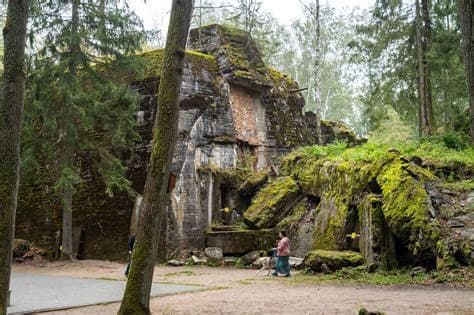
Amateur archaeologists from Poland’s Latebra Foundation have made a startling discovery beneath Hermann Göring’s former residence at the Wolf’s Lair, a notorious Nazi command complex located in northeast Poland. Initially, the excavation was intended for plumbing repairs, but it quickly escalated into a significant archaeological find when human remains, including a skull, were uncovered. This prompted further investigation, leading to the discovery of five additional skeletons.
Upon alerting local authorities, police and a medical examiner were dispatched to the site to assess the remains. Preliminary examinations suggest that the burials likely occurred before the end of World War II, with experts estimating the remains date back to a period between World War I and the onset of World War II. However, due to the poor condition of the bones, officials have stated that it is currently impossible to ascertain a definitive cause of death.
The condition and arrangement of the remains have raised numerous questions among investigators. Notably, no clothing or personal effects were found alongside the skeletons. Furthermore, several of the skeletons were discovered missing hands and feet, while at least one retained some toes. This has led experts to explore various theories, including natural decomposition processes and potential mutilation prior to death. Despite the unsettling nature of the findings, police have indicated that there is no evidence to suggest a modern crime has taken place, leading them to close their investigation for the time being.
Calls for continued excavation and identification efforts are likely to persist as researchers aim to uncover more about the victims and the circumstances surrounding their burials beneath a structure associated with one of history's most infamous figures. The Wolf’s Lair, where Adolf Hitler spent significant time during the war, remains a site of historical intrigue, and this discovery adds another layer to its complex narrative.
As the investigation unfolds, the Latebra Foundation and other archaeological teams are expected to push for further excavations in hopes of uncovering more information about the individuals whose remains were found. Understanding the historical context of these skeletons could provide valuable insights into the lives and deaths of those who lived during a tumultuous period in European history.
The implications of this discovery extend beyond mere historical curiosity; they touch on the broader themes of war, loss, and the human cost of conflict. As researchers delve deeper into the past, they hope to shed light on the stories of those who have long been forgotten beneath the remnants of a wartime residence.
Published by Banx Network. This article is part of the Banx decentralized media programme, powered by the BXE token on the XRP Ledger.



