
Key Highlights
- Recent military exchanges between Israel and Hezbollah have escalated tensions along the border.
- Sirens sounded in northern Israel as rockets were launched from southern Lebanon.
- International calls for restraint have intensified amid fears of broader conflict.
In the hours before dawn, the southern horizon of Lebanon glowed faintly, not with sunrise but with the brief, unnatural flare of impact. Villages that had grown used to the distant rumble of uncertainty once again felt the sky tremble above them. In the fragile quiet that follows such moments, doors open slowly, phones light up in darkened rooms, and the old questions return: how far, how long, how much more?
The latest exchange began with rockets launched by Hezbollah toward northern Israel, according to Israeli officials, who said the projectiles targeted military positions and communities near the border. Sirens echoed through towns in the Galilee, sending residents toward shelters as interceptors streaked into the air. The frontier, a narrow ribbon of hills and olive groves, once again became a line of fire.
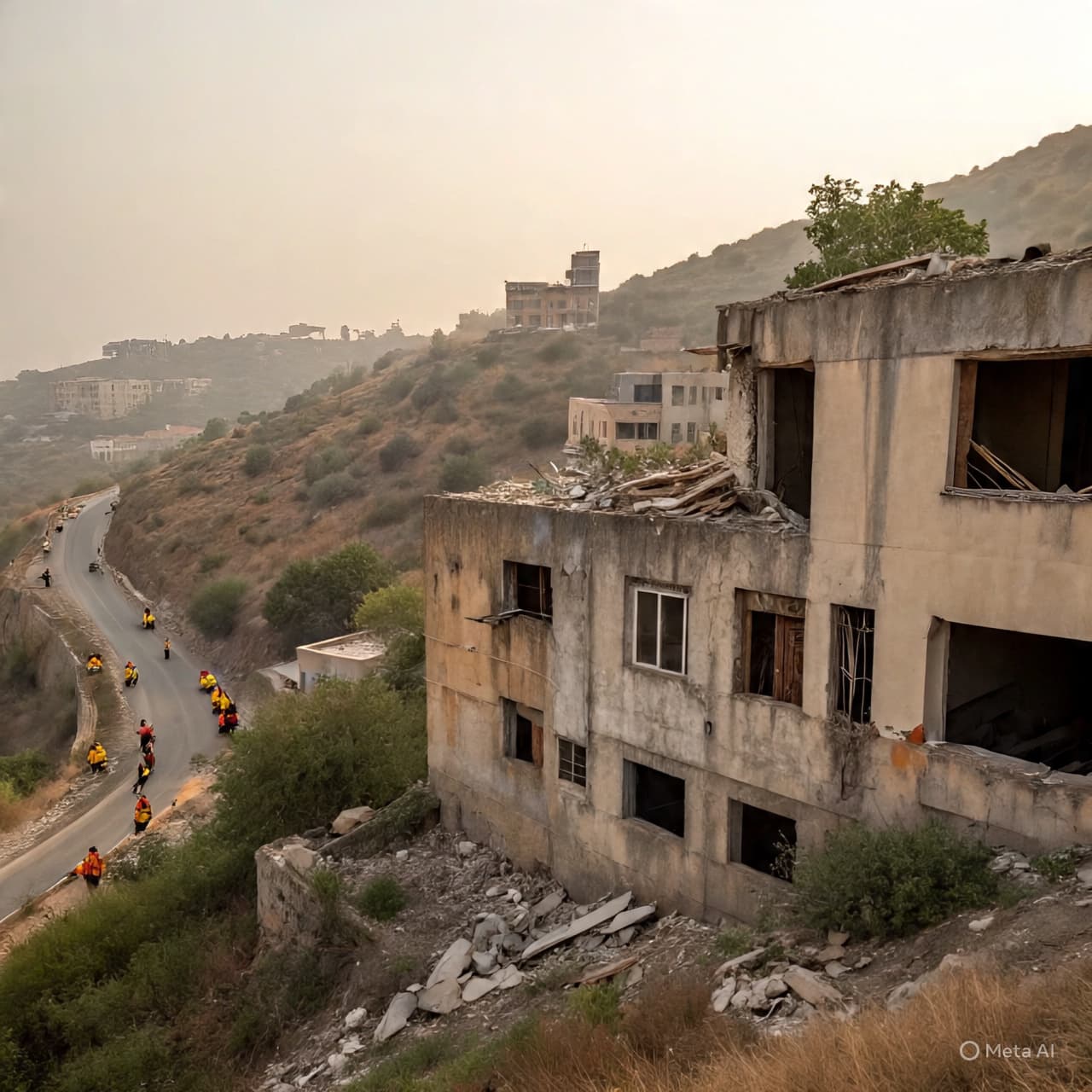
Israel responded with airstrikes on what it described as Hezbollah infrastructure and launch sites in southern Lebanon. Military spokespeople said the strikes were aimed at degrading the group’s operational capacity and deterring further attacks. Lebanese state media reported explosions across several districts, with damage to buildings and fears of casualties still being assessed. As in previous rounds, each side framed its actions as defensive, necessary, and measured — even as the cumulative effect felt anything but.
For communities along both sides of the border, the escalation carries a familiar rhythm. Farmers pause mid-harvest. Schools reconsider whether to open their doors. Roads that wind between stone houses and citrus groves grow suddenly empty. In northern Israel, municipal authorities have periodically reinforced shelters and emergency procedures; in southern Lebanon, families who once rebuilt after earlier conflicts keep documents and essentials within reach.
The tensions between Israel and Hezbollah trace back decades, shaped by occupation, withdrawal, sporadic war, and a precarious deterrence. The 2006 conflict remains a touchstone, a reminder of how quickly exchanges can widen into sustained confrontation. Since then, the border has oscillated between uneasy calm and sudden flare-ups, with both sides testing boundaries while avoiding — or attempting to avoid — a full-scale war.
Regional dynamics complicate the present moment. Hezbollah, backed by Iran, has long positioned itself as both a political actor within Lebanon and an armed force aligned against Israel. Israeli officials argue that allowing cross-border attacks to go unanswered would embolden further aggression. Lebanese leaders, already grappling with economic crisis and political paralysis, face the added strain of instability along a border that many citizens cannot afford to see erupt.
International voices have urged restraint. Diplomats from the United States and European nations have reiterated calls for de-escalation, warning that miscalculation could draw in broader regional actors. The United Nations peacekeeping mission stationed in southern Lebanon has emphasized the importance of maintaining the cessation of hostilities framework that, while imperfect, has helped prevent larger war for years.
Yet in the lived experience of border residents, frameworks and statements translate into something simpler: whether the night will remain quiet. In towns on both sides, generators hum in case power fails. Parents measure distance not in kilometers but in seconds to shelter. The landscape — green in spring, sun-bleached in summer — holds the memory of previous scars, even as children continue to play in courtyards when the air clears.
Military analysts note that such exchanges often serve as calibrated signals, attempts to assert deterrence without crossing a threshold neither side may truly desire. Still, deterrence is a fragile architecture. It depends on interpretation, on restraint, on the hope that the other side reads intent correctly. History shows how easily that reading can falter.
As dawn finally breaks over the hills, smoke thins into the pale morning sky. Officials on both sides continue to issue statements, tally damage, and assess next steps. The border remains where it has always been — a line drawn across terrain and memory — but its meaning shifts with each strike and response.
For now, the cycle has resumed: attack and reply, statement and counterstatement. Whether it settles back into uneasy quiet or gathers into something heavier will depend on choices made far from the fields and rooftops that feel each tremor of conflict.
Published by Banx Network. This article is part of the Banx decentralized media programme, powered by the BXE token on the XRP Ledger.



