Air routes are rarely just lines drawn between two cities. Behind each flight is a network of aircraft, passengers, capital, partnerships, and long-term expectations. For Singapore Airlines, that wider network now places its investment in Air India under renewed attention as the Indian carrier continues its difficult transformation.
Singapore’s government defended Singapore Airlines’ 25.1% stake in Air India, arguing that international expansion remains important to the carrier’s long-term growth. The government also emphasized that Singapore Airlines makes investment decisions within its own financial framework rather than relying on additional shareholder capital.
The discussion comes as Air India seeks fresh funding from its owners, Tata Sons and Singapore Airlines. Air India has faced substantial financial losses as it works through fleet modernization, operational changes, and the broader effort to rebuild its position in a highly competitive aviation market.
For Singapore Airlines, the investment forms part of a broader strategy to develop an international network beyond Singapore itself. The carrier has described Air India as part of a multi-hub approach, allowing it to participate more deeply in one of Asia’s largest and fastest-growing aviation markets.
That strategy carries a different rhythm from quarterly financial reporting. Airline partnerships can require years before their full commercial potential becomes visible. Networks need time to mature, passenger flows need to develop, and operational integration can involve complex adjustments.
Air India’s transformation also takes place against a demanding backdrop. The carrier has been rebuilding its fleet and operations while facing financial pressure and leadership changes. Those challenges make the investment more complicated in the short term, even as the Indian aviation market remains strategically important.
Singapore Airlines has nevertheless maintained its commitment to the partnership. The company has indicated that any future investment decisions would be considered through its own internal processes, rather than representing an automatic obligation to provide additional capital.
The debate also illustrates the different ways an airline investment can be viewed. From one perspective, the immediate financial performance of the partner matters greatly. From another, access to new markets, passenger networks, and future connectivity can hold value that extends beyond a single reporting period.
For Singapore, aviation has long been closely connected to its position as a global transport and business hub. International routes, partnerships, and airline networks form part of the wider infrastructure through which people and commerce move across Asia.
The Air India partnership therefore remains a long-distance proposition. Its results will not be determined by one funding request or one difficult financial year, but by whether the two airlines can gradually turn their combined networks into a stronger presence across the region. For now, Singapore Airlines appears prepared to continue watching that horizon from a considerable distance.
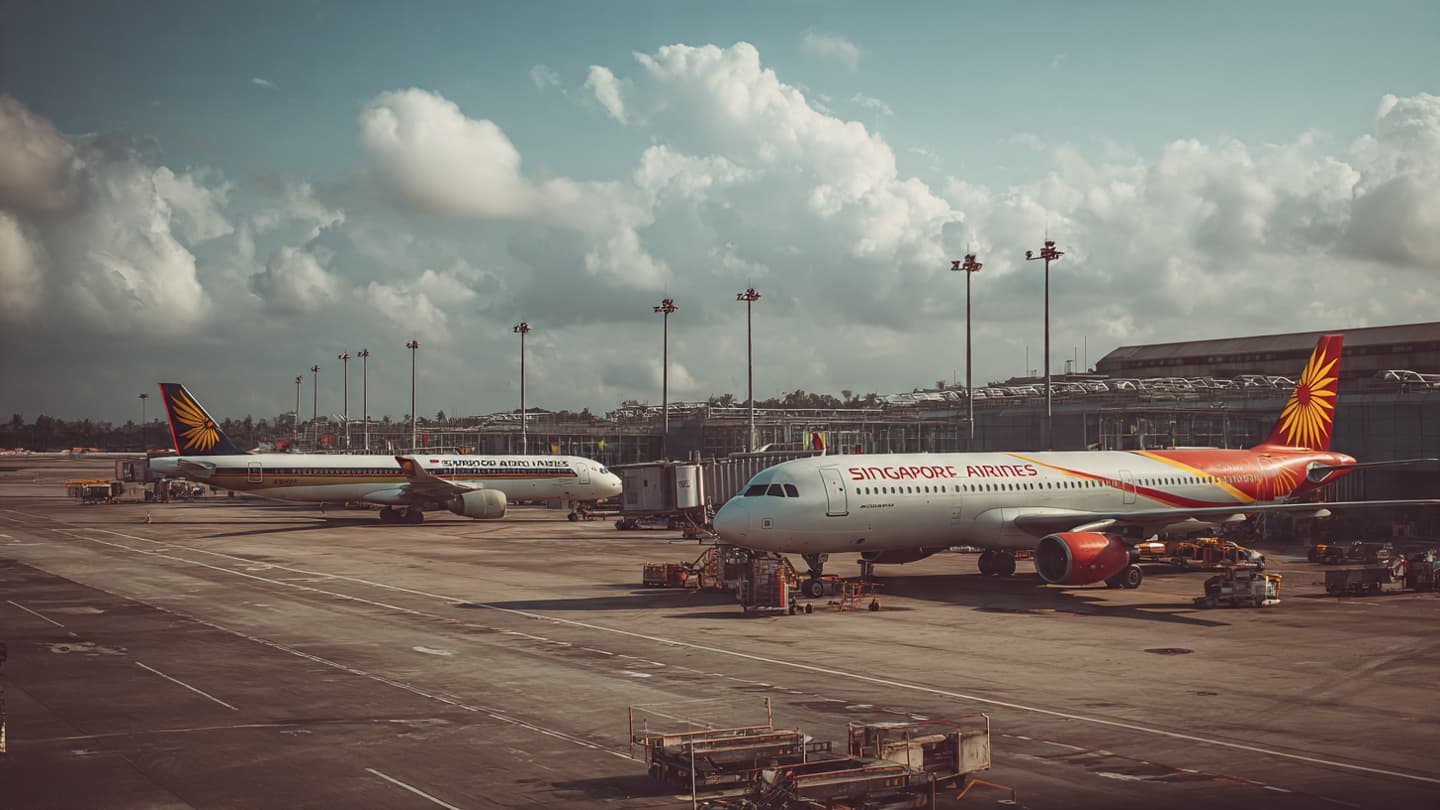
AI Image Disclaimer The illustrations accompanying this article were generated with AI and are conceptual representations of the aviation industry rather than photographs of actual airline operations.
Sources Reuters Financial Times
Published by Banx Network. This article is part of the Banx decentralized media programme, powered by the BXE token on the XRP Ledger.