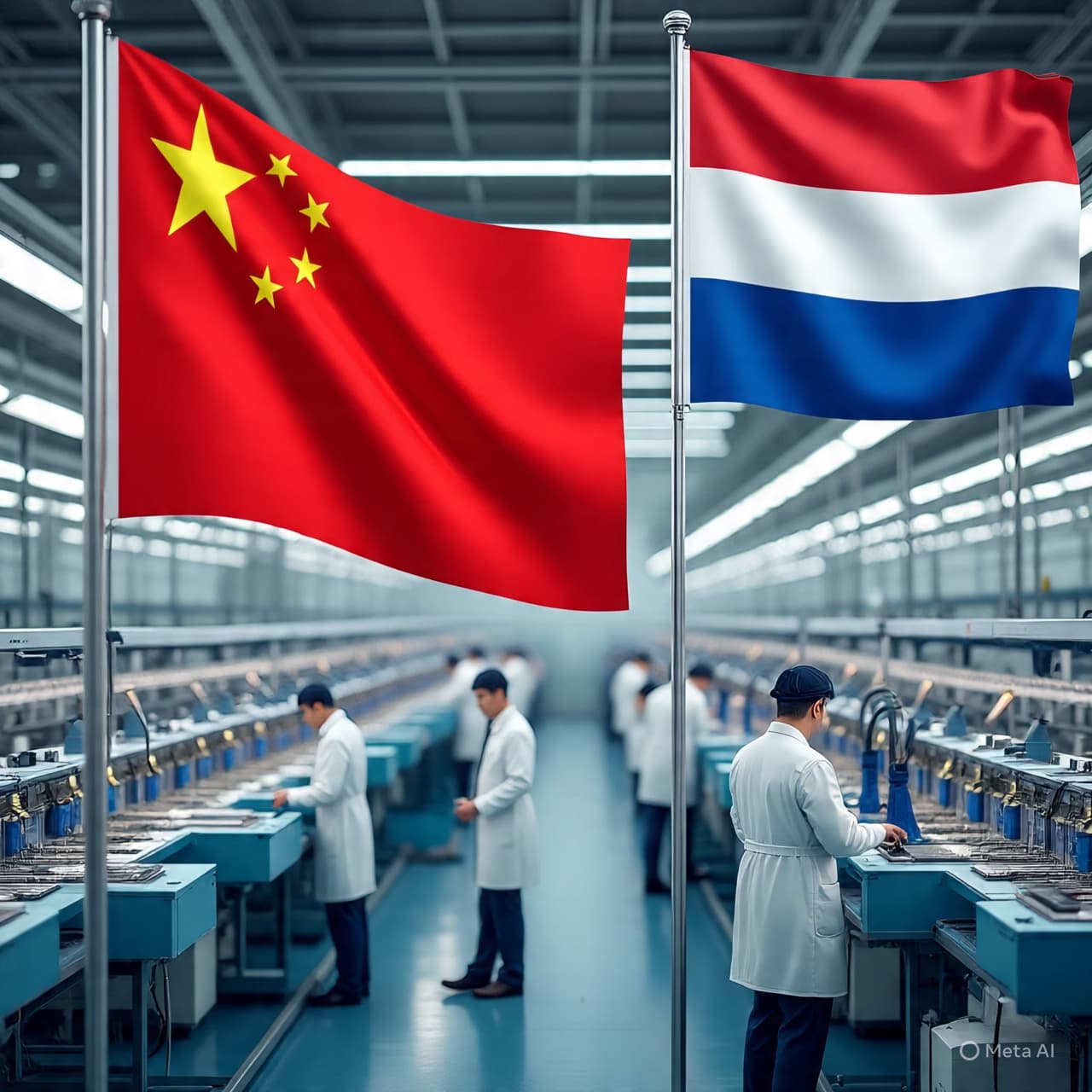
China has publicly criticized the Netherlands over actions involving the chipmaker Nexperia, framing the dispute as a series of “mistakes” with potential implications for the global semiconductor industry. The tension highlights the delicate balance between technology, trade, and geopolitics in a sector increasingly seen as critical to national security and economic competitiveness.
Nexperia, a semiconductor firm with operations spanning multiple countries, has become a focal point for competing priorities. The Netherlands’ regulatory oversight, according to Chinese authorities, appears to have affected supply chain decisions and investment flows in ways Beijing views as disruptive. While officials stopped short of threatening specific measures, the language of critique reflects broader concerns over how Western nations manage technology with dual-use potential — both commercial and strategic.
The incident underscores how semiconductors have become more than industrial inputs; they are now instruments of diplomatic leverage. For companies like Nexperia, navigating regulatory environments, national security considerations, and international market expectations has become increasingly complex. Firms must balance compliance with host countries while maintaining operational continuity and investor confidence.
European observers note that the Netherlands, home to key semiconductor infrastructure and expertise, is now navigating a path between upholding regulatory norms and managing diplomatic sensitivities with Beijing. The situation illustrates the intersection of commercial interests and geopolitical strategy, particularly as nations vie for influence in high-tech sectors crucial to defense, AI, and advanced manufacturing.
While the immediate impact on production or exports is limited, the dispute contributes to an atmosphere of uncertainty in the semiconductor market, where supply chains are already stretched by global demand and strategic realignments. Companies and governments alike are closely monitoring developments, understanding that even seemingly localized decisions can have ripple effects across international technology networks.
Published by Banx Network. This article is part of the Banx decentralized media programme, powered by the BXE token on the XRP Ledger.