
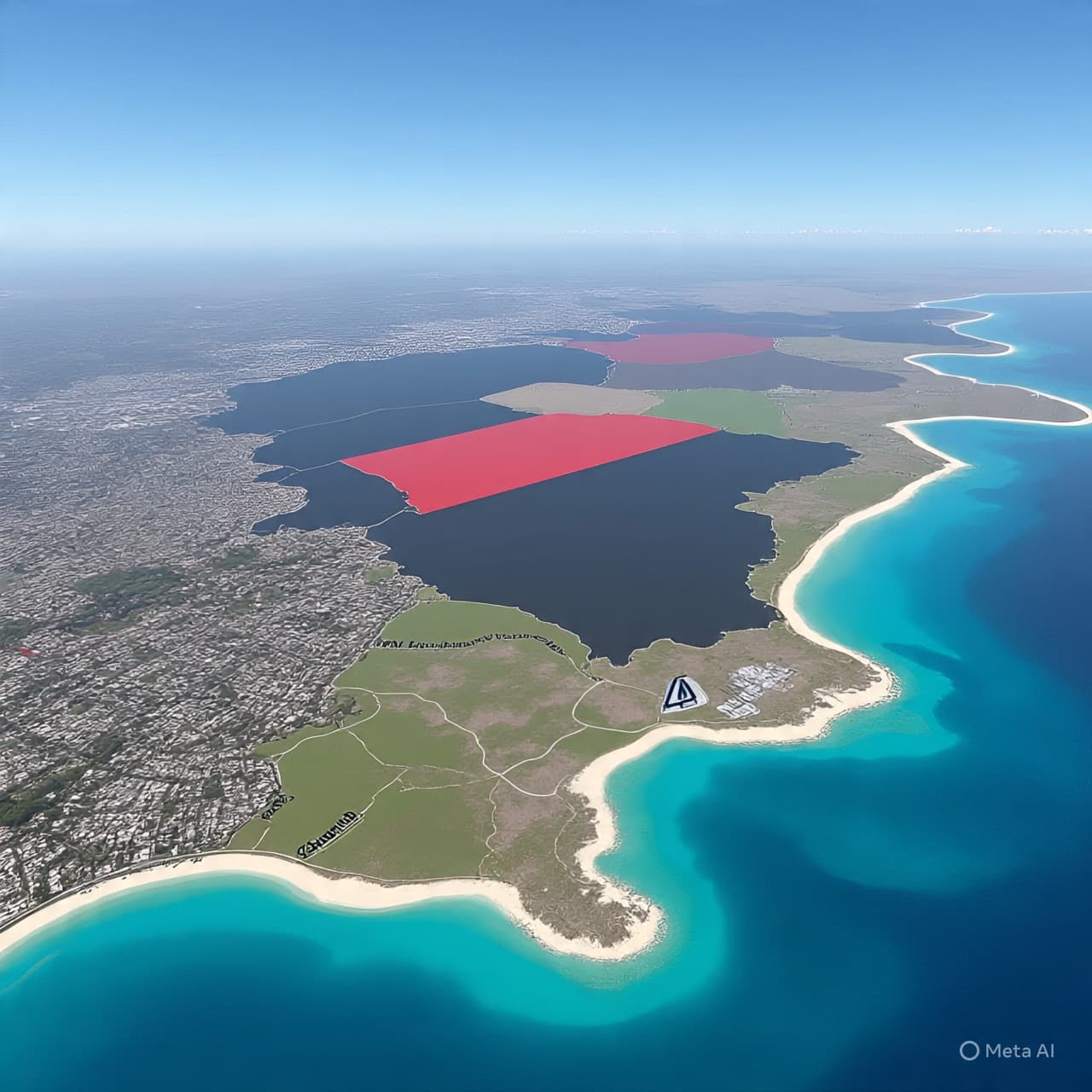
As dawn broke over the Caribbean, the usual murmur of distant engines, the gentle hum of commercial flights crossing borders, was replaced by an echoing silence. The sky stretched, vast and unmarked — an empty canvas waiting for the next stroke of fate. In that moment, with one terse declaration, the air over Venezuela seemed to pause: stillness where motion once reigned.
In a post shared on social media, President Donald J. Trump asked airlines, pilots—and those he described as drug dealers and human traffickers—to treat the airspace above and surrounding Venezuela as “closed in its entirety.” The statement came amid mounting U.S. military deployments in the Caribbean and a hardening rhetoric toward the Venezuelan leadership.
For many around the world, this was not just a bureaucratic notice; it felt like the quiet before a storm. Airlines had already begun to suspend flights — some heeding prior advisories from the Federal Aviation Administration (FAA) warning of increased risk due to heightened military activity. Then came the revocation of operating rights for several international carriers by the Venezuelan authorities, deepening the sense of disruption.
The imagery is stark: a sky emptied of civilian wings, airports unnaturally quiet, people left waiting — or stranded. In the world of geopolitics, airspace is often more than lines on a map. It becomes a symbol: of sovereignty, of control, of looming danger. By ordering the closure, Trump placed a silent but heavy hand on the region’s skies — a message to governments, to citizens, to the world.
Yet, beneath the pronouncement lies ambiguity. The White House and Pentagon offered no immediate clarification on what enforcement would look like. Was this a legal decree recognized under international aviation law? Or a unilateral warning rooted in strategic leverage? The lack of transparency invites more questions than answers. Meanwhile, ordinary travelers, Venezuelan diaspora, and international airlines find themselves navigating uncertainty.
Whether this act becomes a full-blown no-fly zone or remains a tense message in the sky depends on what comes next — the decisions, conversations, and events yet unseen.
At the same time, the public pronouncement marks a new chapter in what many describe as a campaign of pressure by the U.S. on Venezuelan authorities, framed around accusations of drug trafficking and illicit networks.
Only time will tell whether silence in the skies will lead to calm — or to conflict.
In the meantime, skies remain empty, watchers remain vigilant, and the world waits.
AI Image Disclaimer Visuals are created with AI tools and are not real photographs.
Sources Reuters, The Guardian, Al Jazeera, The Washington Post, Business Standard
Published by Banx Network. This article is part of the Banx decentralized media programme, powered by the BXE token on the XRP Ledger.


