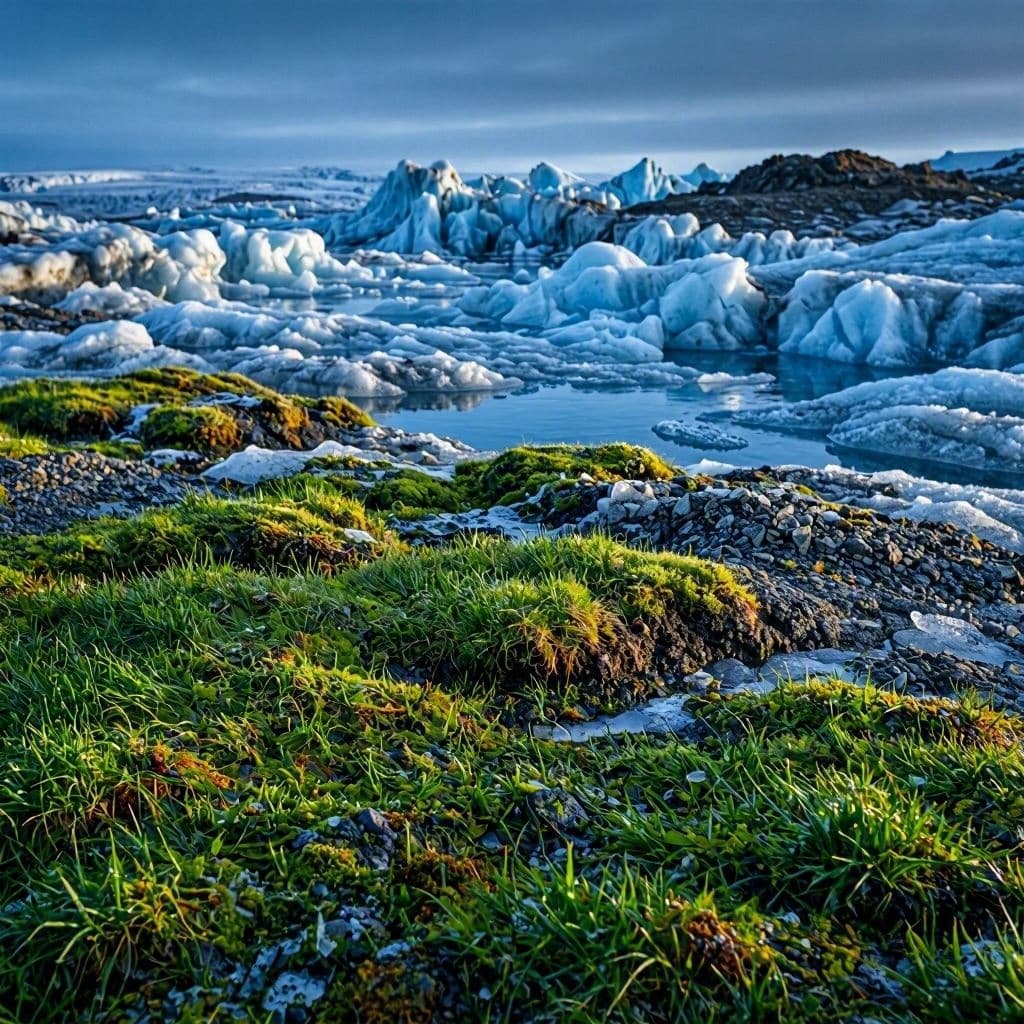
The Antarctic is often imagined as a frozen fortress, a white expanse where life clings to existence in the harshest conditions. Yet, beneath the ice and snow, a quiet transformation is taking place. Scientists have observed that native grasses, such as Antarctic hairgrass and pearlwort, are spreading at unprecedented rates, driven by warming temperatures and longer growing seasons. This phenomenon invites reflection on the fragility of polar ecosystems and the far-reaching impacts of climate change, even in the most remote corners of the planet. It is a moment where green defies white.
Recent studies indicate that these flowering plants have grown five to ten times faster in the past decade compared to previous periods. The retreat of ice cover has exposed more soil, providing a fertile ground for these hardy species to thrive. Ice retreats. Life advances.
The spread of vegetation is not just a botanical curiosity but a potential catalyst for further environmental change. Darker plant matter absorbs more solar radiation than reflective ice, potentially accelerating local warming and creating a feedback loop that favors more growth. Color changes heat. Heat changes landscape.
Furthermore, the presence of dry grass increases the risk of wildfires, a phenomenon previously rare in Antarctica. Recent fires on sub-Antarctic islands like Amsterdam Island and Bird Island highlight the growing vulnerability of these regions to combustion events. Dryness fuels fire. Fire alters ecology.
For researchers, this shift serves as a visible indicator of broader climatic trends. The Antarctic, once seen as insulated from global warming, is now showing clear signs of biological response to rising temperatures. Response reveals trend. Trend signals change.
The implications for native wildlife, such as penguins and seals, are still being studied. Changes in vegetation could alter habitat structures and food webs, affecting species that have adapted to a largely barren environment. Habitat shifts. Webs tremble.
As the grass continues to spread, the hope is for greater awareness of the interconnectedness of global climate systems. The Antarctic is not isolated; it is a mirror reflecting the health of our planet. Mirror shows truth. Truth demands action.
Native grasses in Antarctica are spreading rapidly due to warming temperatures, raising concerns about increased wildfire risks and ecosystem changes. Scientists view this as a significant indicator of climate change impacts in polar regions. The hope is for continued monitoring and global efforts to mitigate warming.
AI Image Disclaimer: The visual elements accompanying this report are AI-generated interpretations designed to reflect the environmental and ecological context of the story.
Sources: Sydney Morning Herald Current Biology BBC Nature Climate Change
Published by Banx Network. This article is part of the Banx decentralized media programme, powered by the BXE token on the XRP Ledger.