The earth has a way of keeping secrets, holding onto the remnants of lives interrupted until the slow passage of time or the intervention of inquiry brings them to light. In the quiet corners of our communities, land—often seen merely as a measure of wealth or property—can become a catalyst for the most profound human tragedies. When the Criminal Investigation Department finally unearthed the truth behind the disappearance of a mother and her son, it did not just reveal a crime; it laid bare the fractured nature of kinship when pitted against the unyielding desire for possession.
For a long time, the absence of the two individuals was a silence that hung over their surroundings, a void that local rumors struggled to fill. Disappearances in such contexts often settle into a strange, uneasy normalcy, where questions are asked in hushed tones but rarely pursued to their conclusion. The land in question, a modest plot that should have been a source of stability, had instead become the epicenter of a long-standing contention. It was here, beneath the surface, that the narrative of a family’s descent into violence was finally interred.
As investigators began to peel back the layers of deception, they found a reality far grimmer than the initial reports of a simple departure. The act of burial, secretive and desperate, was an attempt to erase not just the people, but the very existence of the conflict that had sparked their end. It was an effort to reclaim the land by purging it of those who held a legitimate claim to it. The tragedy speaks to a darker impulse, where the value placed on a piece of geography eclipses the inherent worth of human life.
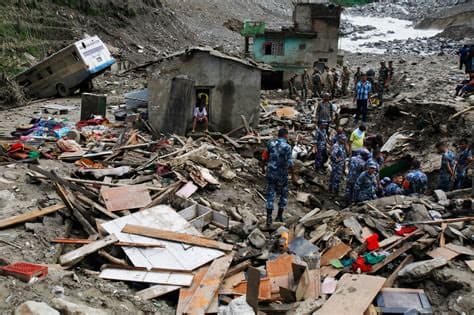
The involvement of the Criminal Investigation Department marked a transition from a local mystery to a systemic pursuit of accountability. Each piece of evidence recovered from the site served as a grim punctuation mark in a story that had been written in isolation. The process of excavation was, in its own way, an act of restoration—not of the land, but of the truth. It forced those who had sought to bury the past to confront the reality that secrets, no matter how deeply placed, remain tethered to the consciousness of a community.
There is a reflective heaviness in the way such cases unfold, where the discovery of the physical remains forces a collective pause. One is compelled to consider the moments leading up to the final act, the conversations that must have turned into confrontations, and the absolute collapse of empathy that allowed such a deed to occur. It serves as a reminder that the most dangerous disputes are often those that occur in the intimacy of a household, where the familiarity of the participants hides the growing distance between them.
The judicial path forward is now clear, yet it cannot undo the finality of the act itself. The legal machinery will move to determine the culpability of those involved, ensuring that the shadow cast over the family is addressed with the rigor of the law. Yet, beyond the courtrooms and the filings, there remains a need for a broader understanding of why such disputes escalate with such devastating consequence. It is a question that requires an examination of the social fabric that governs our relationship with property and with one another.
As the investigation concludes and the process of justice begins, the land itself may remain, but it carries a new, somber history. It is no longer just a piece of earth, but a site of memory and accountability. The transition from the secrecy of the crime to the clarity of the conviction is a necessary step for those left behind, providing a measure of closure to a chapter that had been cruelly and prematurely shuttered.
The discovery serves as a catalyst for reflection on the broader implications of unresolved property disputes within rural and semi-urban settings. It highlights the urgent need for mediation and legal frameworks that can step in long before the discord reaches a terminal point. The recovery of the remains is a final, quiet testament to the cost of greed, and a signal that even in the most obscured of circumstances, the truth possesses a weight that eventually forces its way to the surface.
The Criminal Investigation Department (CID) has officially resolved the case involving the disappearance of a mother and her son, whose bodies were recovered from a burial site linked to an ongoing land dispute. Investigative efforts led to the arrest of several suspects who confessed to the premeditated killing to secure possession of the contested property. The remains have been sent for forensic examination, and the authorities have confirmed that the case will proceed through the legal system as a primary priority for regional justice.
Published by Banx Network. This article is part of the Banx decentralized media programme, powered by the BXE token on the XRP Ledger.