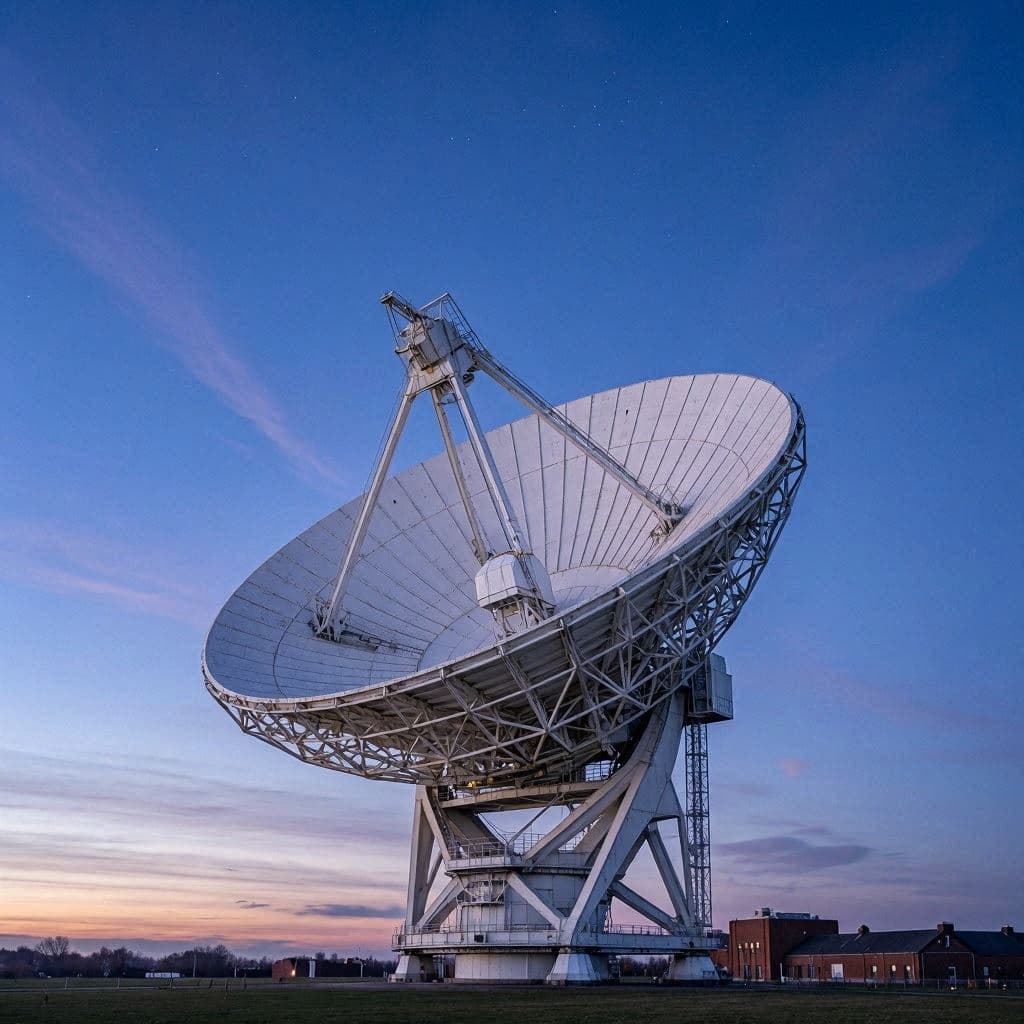
In the quiet countryside of Cheshire, where the giant dish of the Lovell Telescope has long listened to the whispers of the cosmos, a shadow of uncertainty has fallen. The UK’s prestigious Jodrell Bank Observatory, a beacon of astronomical discovery for decades, now faces a potential closure as funding is withdrawn amidst broader cuts to the nation’s science budget. This decision marks a poignant moment for British astronomy, raising questions about the future of scientific heritage and exploration.
The loss of support from the Science and Technology Facilities Council (STFC) is not just a financial adjustment but a significant blow to the community of researchers and enthusiasts who have called Jodrell Bank home. It serves as a reminder that even the most iconic institutions are vulnerable to the shifting tides of political and economic priorities.
Body: The STFC confirmed that Jodrell Bank was among nine physics and space projects "not prioritised for further funding," a move that follows a proposed 30 percent reduction in the budget for astronomy, particle, and nuclear physics. For an observatory that has played a pivotal role in major discoveries, including the first images of black holes and the tracking of early space missions, the cut represents a dramatic shift in national strategy.
Scientists and educators have expressed deep concern over the implications of this decision. The observatory is not only a research facility but also a vital educational hub, inspiring thousands of students each year to pursue careers in STEM fields. Its potential closure would leave a gap in both scientific capability and public engagement that may be difficult to fill.
The broader context of these cuts reflects a challenging period for UK science. With inflation rising and government budgets tightening, difficult choices have been made across various sectors. However, critics argue that slashing funding for world-leading facilities like Jodrell Bank undermines the country’s reputation as a global leader in scientific research.
Efforts to save the observatory are underway, with campaigns launched by alumni, local communities, and international supporters. They highlight the unique value of Jodrell Bank’s infrastructure and its contribution to global collaborative projects. The hope is that alternative funding sources or a reversal of the decision can be secured before operations cease.
The impact on current research projects is immediate, with many studies facing disruption or termination. Researchers who have dedicated years to specific observations now find themselves in limbo, unsure of how to continue their work without the necessary resources. This uncertainty affects not just individuals but the broader network of international collaborations.
Historically, Jodrell Bank has survived previous financial crises through innovation and public support. Its resilience has become part of its identity, but the scale of the current cuts presents a new level of challenge. The coming months will be critical in determining whether this iconic site can adapt to a new financial reality.
For the local community, the observatory is a source of pride and economic activity. Its potential closure would affect jobs and tourism, adding a social dimension to the scientific loss. The debate over its future is thus not just about astronomy but about the value placed on knowledge and culture in society.
Closing: The threat to Jodrell Bank stands as a test of the UK’s commitment to science and education. It invites a broader conversation about how we prioritize our investments in the future, ensuring that the tools for understanding the universe remain accessible to generations to come.
AI Image Disclaimer: The visuals accompanying this article are AI-generated illustrations designed to reflect the historic and scientific significance of the observatory.
Sources: Research Professional News Space.com The Guardian Times Higher Education
Published by Banx Network. This article is part of the Banx decentralized media programme, powered by the BXE token on the XRP Ledger.