
Key Highlights
- Kim Jong Un observed a military drill involving rocket launchers.
- The exercise aimed to enhance North Korea's artillery capabilities.
- State media reported the launches as successful, emphasizing defense readiness.
In the rugged terrains of the Korean Peninsula, military exercises often unfold away from the public eye, where the sounds of controlled tests resonate against the backdrop of quiet hills. Recently, North Korean state media reported that leader Kim Jong Un supervised the test-launch of multiple rocket launchers during a military drill, highlighting the country's ongoing efforts to bolster its artillery capabilities.
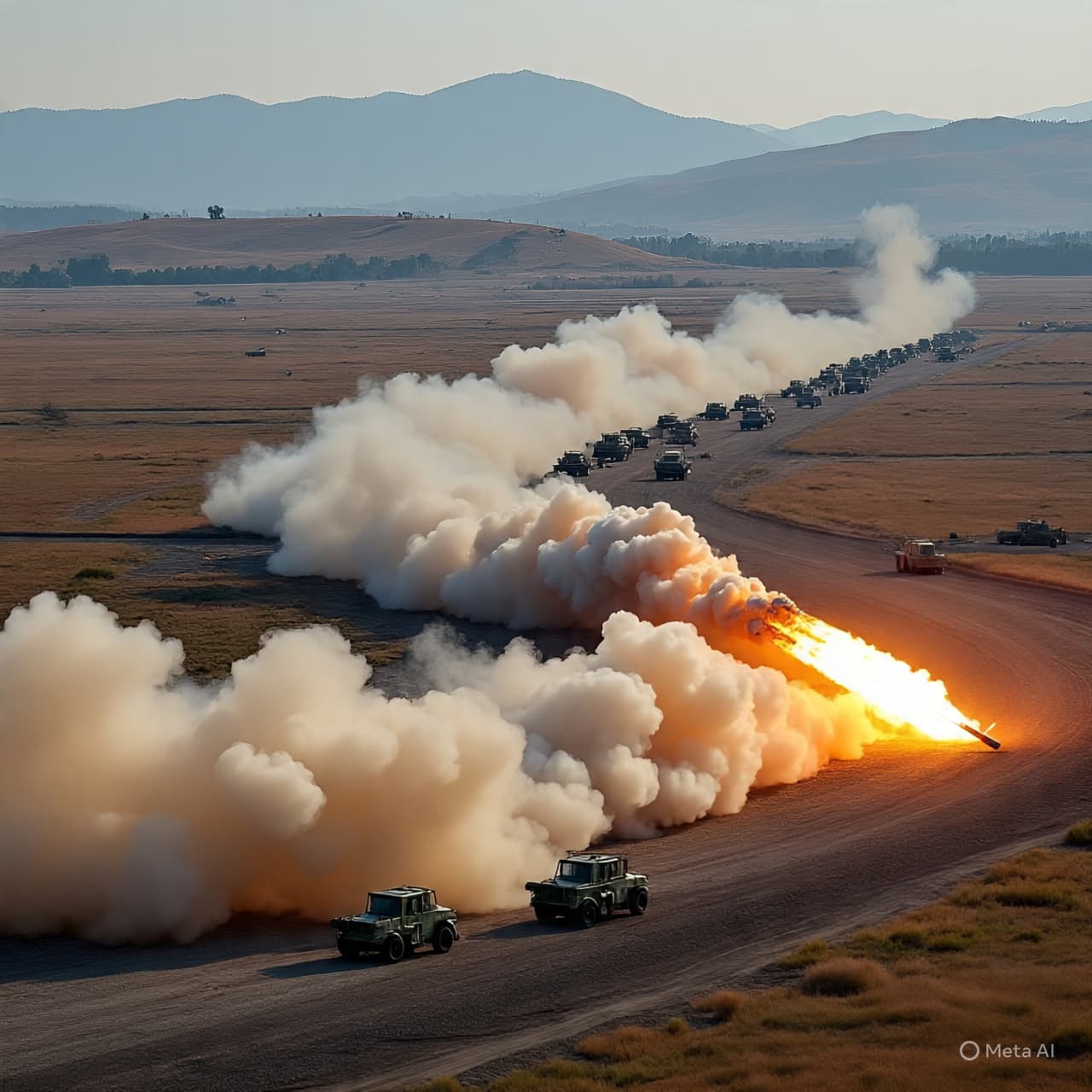
The report, released by the Korean Central News Agency (KCNA), detailed the launch of multiple rocket systems designed for coordinated strikes over long distances. Accompanying photographs depicted projectiles soaring into the sky from mobile launch vehicles strategically positioned across the training ground, showcasing the military's operational readiness.
North Korea routinely conducts weapons tests as part of its military development strategy, often framing these events through state media as demonstrations of national defense preparedness. Such tests are closely monitored by neighboring countries and international observers, who analyze the evolving capabilities of North Korea's missile and artillery systems. The recent drill was no exception, drawing attention from military analysts and security experts alike.
During the reported exercise, Kim Jong Un was said to have closely observed the launches and assessed the performance of the equipment involved. State media characterized the drill as a success, underscoring the importance of maintaining robust defensive forces in the face of perceived external threats. This emphasis on defense readiness aligns with North Korea's broader military doctrine, which prioritizes the development of advanced weaponry.
Multiple rocket launchers are engineered to deliver a rapid succession of projectiles, saturating large areas with artillery fire. Unlike single-launch missile systems, these platforms focus on volume and speed, enabling several rockets to be launched in quick succession. This capability is particularly significant for North Korea, which seeks to enhance its deterrent posture amid ongoing tensions in the region.
Military analysts scrutinize such tests for insights into technological advancements, improvements in range, accuracy, and deployment strategies. Even routine exercises can reveal critical information about the trajectory of North Korea's weapons programs, making them a focal point for regional security discussions.
For neighboring countries and international security observers, each test represents a piece of a larger puzzle, closely monitored amid ongoing concerns about stability in the region. The implications of these military exercises extend beyond the immediate vicinity of the training grounds, reverberating through diplomatic channels and global security dialogues.
As the echoes of the rocket launches fade, the training grounds return to their tranquil state. However, the significance of these tests lingers, serving as a reminder of the complex dynamics at play in the Korean Peninsula and the broader implications for international security.
Published by Banx Network. This article is part of the Banx decentralized media programme, powered by the BXE token on the XRP Ledger.



