
Key Highlights
- Rising Favorability:A Pew Research study shows increasing positive views of China in various regions.
- U.S. Polarization: The United States faces mixed reactions, with criticism over foreign policy.
- Cultural Influence:China's soft power through media and language is reshaping global perceptions.
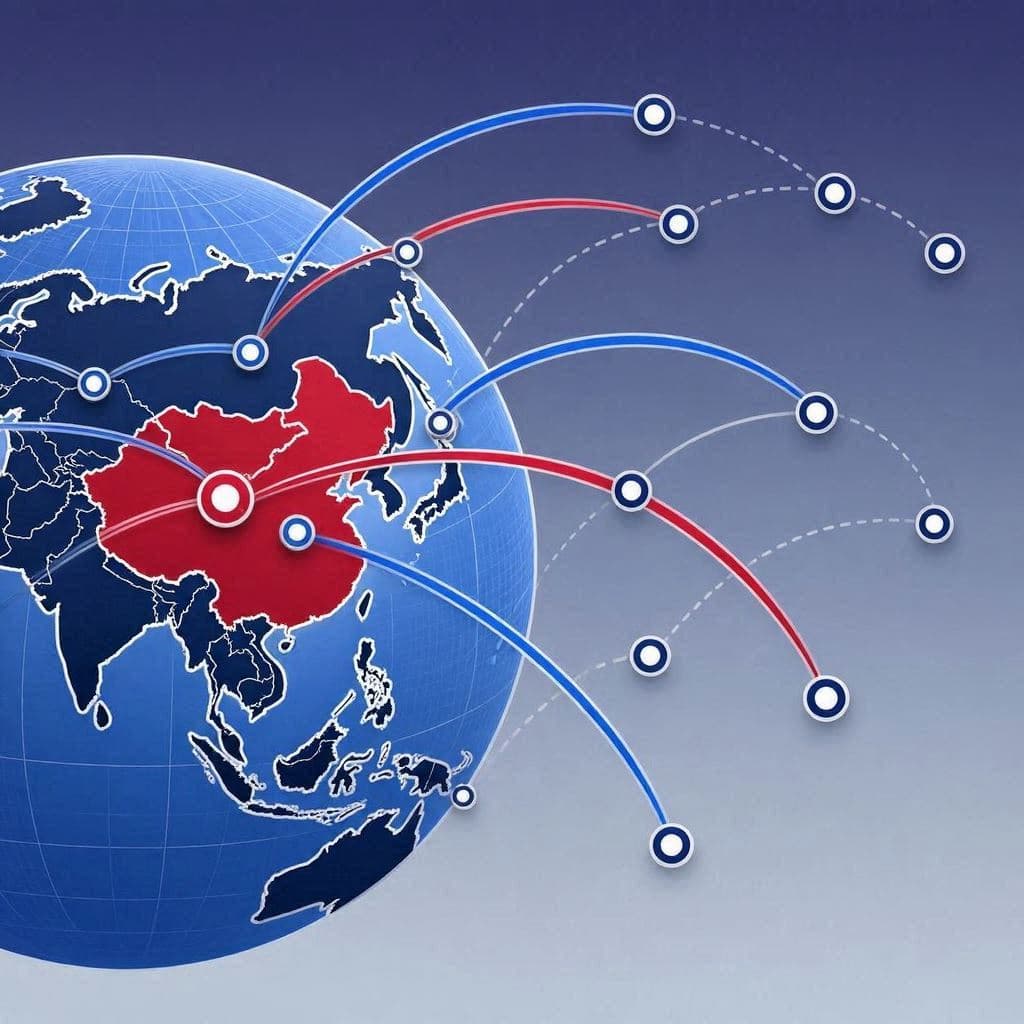
The global landscape of opinion is undergoing a significant transformation, as highlighted by a recent study from the Pew Research Center. This research indicates a notable rise in favorable views of China across various regions, including Southeast Asia, Africa, and Latin America. In contrast, perceptions of the United States are becoming increasingly polarized, reflecting a complex interplay of cultural admiration and criticism of its foreign policies. This shift is not merely a statistical anomaly; it represents a broader change in geopolitical dynamics and the influence of developing nations on the global stage.
The Pew study reveals that many developing countries view China as a valuable partner, largely due to its economic initiatives such as the Belt and Road Initiative. These partnerships often come without the political strings that accompany aid from Western nations, making China an attractive ally for countries seeking rapid development and autonomy. This pragmatic approach resonates with leaders and citizens alike, who are eager for tangible benefits that support their growth without compromising their sovereignty.
Conversely, the United States, while still admired for its cultural exports and democratic ideals, faces growing scrutiny over its foreign policy interventions and perceived inconsistencies. The complexities of American domestic politics further complicate its global standing. For many in developing regions, the U.S. model may seem less relevant or accessible, leading to a divergence in how different regions prioritize their international relationships.
Moreover, China's influence extends beyond economics into the cultural realm. The proliferation of the Chinese language, media, and technology has significantly enhanced its soft power. Initiatives like Confucius Institutes and platforms such as TikTok have fostered cultural exchanges that create familiarity and appreciation for Chinese culture. This holistic approach to influence is reshaping perceptions and contributing to a more favorable view of China in many parts of the world.
However, the Pew study also highlights that opinions vary significantly across demographics and countries. In some Western nations, concerns regarding human rights and trade practices continue to dampen favorability towards China. This underscores the fact that global opinion is not uniform; it is shaped by local contexts, historical relationships, and current events. Understanding these nuances is essential for accurately interpreting the shifting tides of global sentiment.
For China, the increasing favorability serves as a validation of its development model, which emphasizes state-led growth and long-term planning. This model presents an alternative to Western liberal democracy, enriching the global discourse on governance and development strategies. As countries navigate their paths toward modernization, the diversity of governance models becomes a critical aspect of international relations.
As the world becomes more interconnected, the dynamics of power are shifting towards a more multipolar framework. This does not necessarily indicate the decline of the United States but rather a redistribution of influence that requires dialogue, compromise, and shared responsibility among nations. The evolving landscape of international relations presents both challenges and opportunities for cooperation on pressing global issues such as climate change and poverty.
In conclusion, the Pew Research study underscores a significant shift in global perceptions, reflecting the growing influence of China and the changing dynamics of international relations. As nations adapt to this new reality, the hope is that they will collaborate to foster a more inclusive and prosperous world for all.
Published by Banx Network. This article is part of the Banx decentralized media programme, powered by the BXE token on the XRP Ledger.



