
Key Highlights
- A major landslide in Clervaux, Luxembourg, has caused the indefinite closure of a key rail line and adjacent roadway.
- The landslide occurred after heavy rainfall, burying transport routes under tons of debris.
- Commuters are advised to use replacement bus services as geological assessments are underway.
The northern reaches of Clervaux, Luxembourg, are characterized by their dramatic topography, featuring steep, forest-clad ravines and narrow cuts through ancient rock. These transport corridors have long served as vital arteries for the movement of commuters and goods, facilitating daily life in this picturesque region. However, the stability of these infrastructures is not guaranteed, as evidenced by a recent geological event that has dramatically altered the landscape.
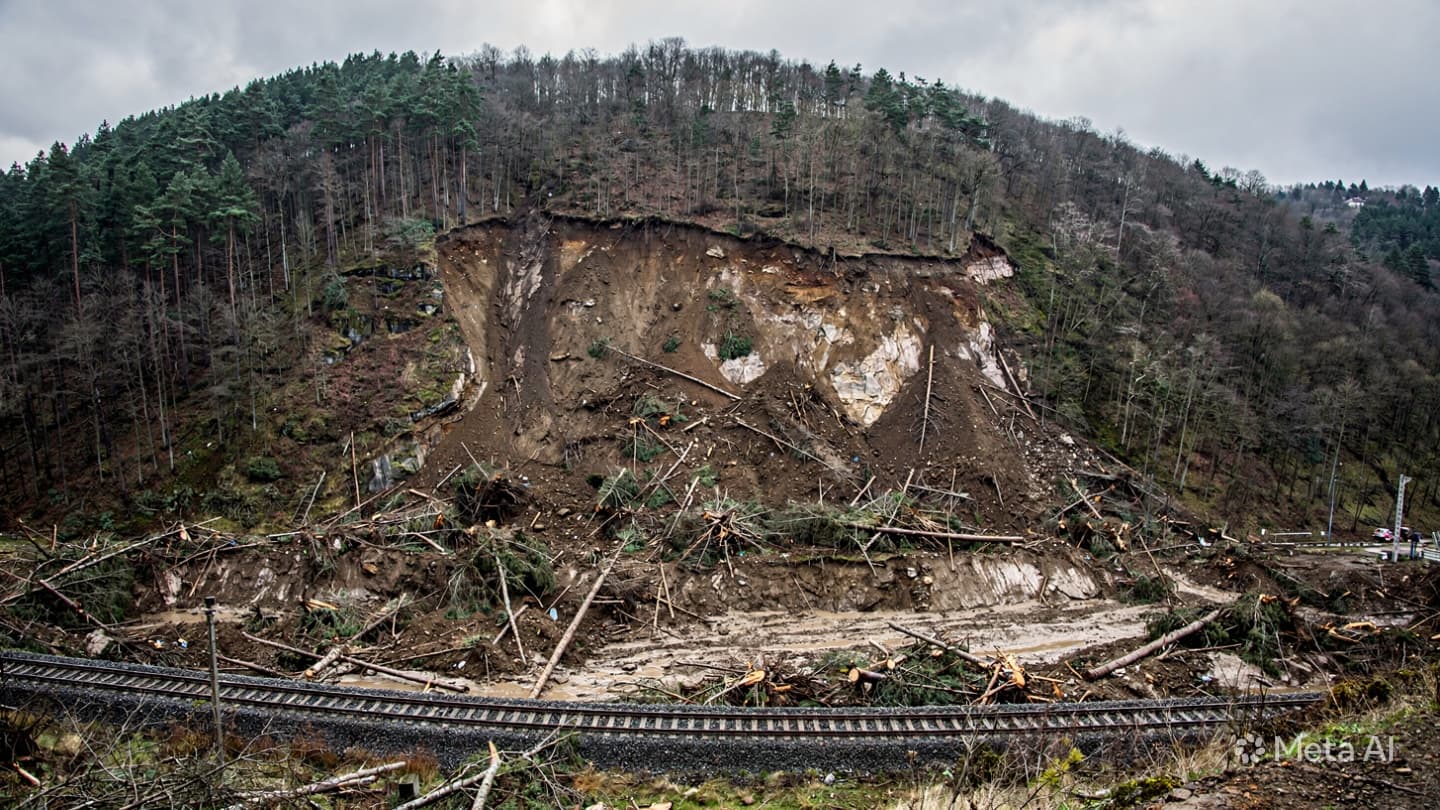
In the early hours following a period of heavy rain, a hillside near Clervaux succumbed to gravity, resulting in a significant landslide. This sudden geological shift buried the highway and railway tracks beneath a thick layer of soil, shale, and uprooted trees, effectively severing a crucial transport link. The scene that greeted transport engineers at dawn was one of stark contrast: the usual bustle of morning commuters was replaced by an eerie silence, punctuated only by the sound of dripping water from the damaged hillside.
The landslide has created a substantial disruption for the local communities that rely on these transport routes. Thousands of residents who depend on the rail line for their daily commutes now face an uncertain future as they navigate alternative travel arrangements. The once predictable journey through the northern valley has transformed into a complex exercise in logistics, with commuters forced to adapt to new, less familiar routes.
Geological experts and clearance crews have been deployed to assess the situation. Their bright jackets stand out against the muted colors of the wet earth and the dense forest, as they carefully evaluate the stability of the hillside. The process of clearing the debris is fraught with caution, as further movement of the earth could pose risks to workers and equipment. The situation demands meticulous planning and execution to ensure safety while restoring access to the affected areas.
Addressing the aftermath of the landslide is not merely about removing debris; it involves a comprehensive assessment of the structural integrity of the surrounding landscape. The Schieburg tunnel area and its adjacent cuts will require thorough surveying and reinforcement to prevent future incidents. Until these measures are implemented, the railway tracks will remain closed, and road diversions will dictate the flow of traffic in the valley.
As the day progressed, the reality of the disruption began to settle in for the residents of Clervaux. Bus fleets were mobilized to provide alternative transport options, navigating the narrow, winding back roads that serve as detours. This shift has turned the daily commute into a slow and patient journey, highlighting the fragility of human infrastructure in the face of natural forces.
In an official statement, the national railway administration and local authorities confirmed the indefinite closure of the northern rail line and adjacent roadway due to the landslide. Fortunately, no vehicles or trains were caught in the debris, and specialized geological teams are actively working to assess the stability of the hillside. Commuters are encouraged to utilize the established replacement bus services until further notice, as the community grapples with the implications of this significant geological event.
Published by Banx Network. This article is part of the Banx decentralized media programme, powered by the BXE token on the XRP Ledger.



