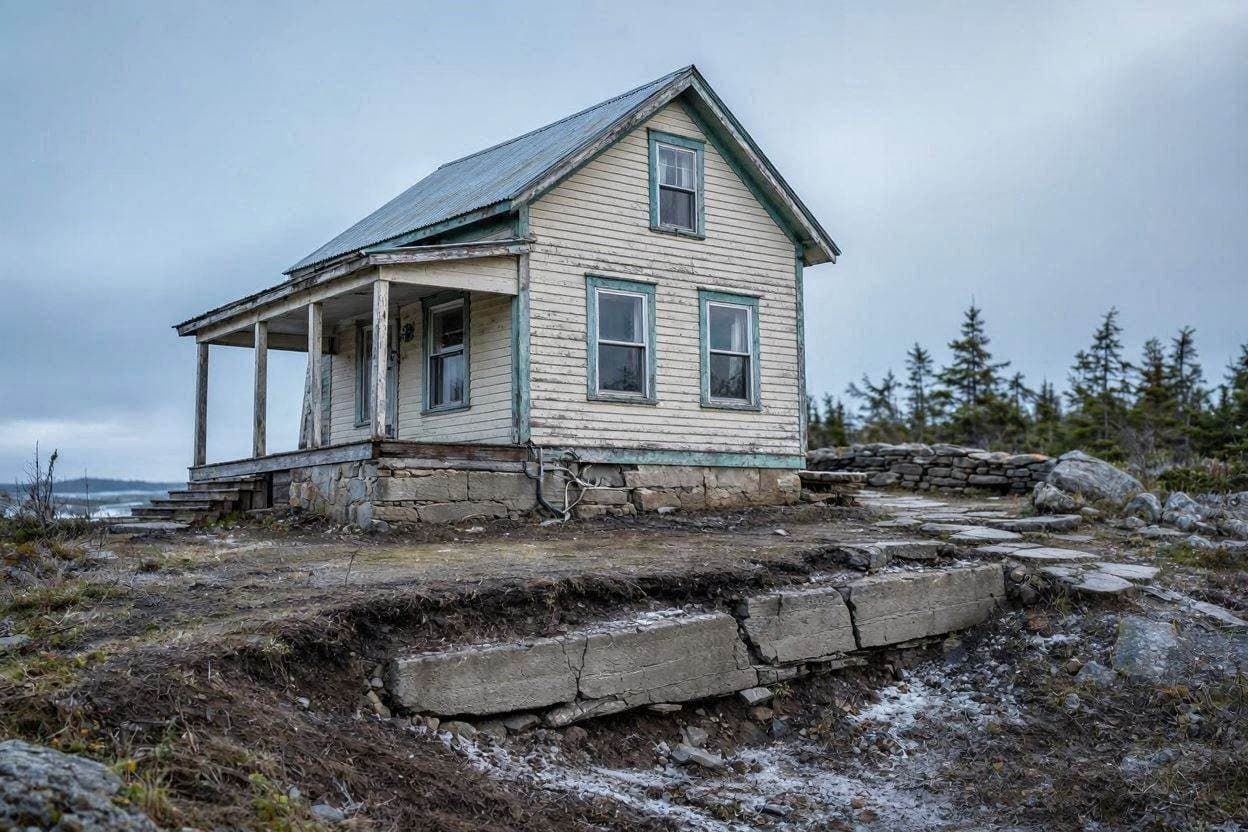
In the remote coastal community of Nain, located on the rugged shores of Labrador, the ground itself is undergoing a quiet but profound transformation. As global temperatures rise, the permafrost that has served as the frozen foundation for this Inuit settlement for millennia is beginning to thaw. For residents, this shift is not merely an abstract climate statistic but a tangible reality that cracks foundations, warps roads, and threatens the stability of their homes. It is a moment that invites reflection on the deep connection between people and place, and the challenges of maintaining community in a changing Arctic.
The thawing permafrost serves as a visible indicator of broader environmental shifts. It highlights the vulnerability of northern infrastructure and the resilience required to adapt to a warming world.
Nain, the northernmost permanent settlement in Newfoundland and Labrador, is built on terrain underlain by ice-rich permafrost. As air temperatures increase, this frozen ground begins to melt, causing the soil to lose its structural integrity. The result is subsidence, or sinking, which can damage buildings, pipelines, and transportation networks. For homeowners, this means uneven floors, cracked walls, and costly repairs that strain limited resources.
The impact extends beyond individual properties. Community infrastructure, including water and sewage systems, is at risk. Disruptions to these essential services can have significant health and safety implications, particularly in a region where access to alternative resources is limited. Local authorities are working to monitor ground stability and implement adaptive measures, such as thermosyphons, which help keep the ground frozen beneath critical structures.
For the Inuit residents of Nain, the land is central to cultural identity and traditional practices. Thawing permafrost affects not only housing but also access to hunting and fishing grounds. Changes in the landscape can make travel more dangerous and alter the availability of traditional foods, impacting food security and cultural continuity. The loss of stable ice and snow cover further complicates winter mobility.
Climate scientists project that permafrost thaw will accelerate in coming decades, posing increasing challenges for Arctic communities. Adaptation strategies must be culturally appropriate and community-led, incorporating traditional knowledge with modern engineering solutions. Engagement with local residents is crucial for developing effective and sustainable responses.
The financial burden of infrastructure repair and maintenance is significant. Federal and provincial governments are providing funding for adaptation projects, but the scale of the challenge often exceeds available resources. Communities like Nain are advocating for greater support and recognition of the unique risks they face due to climate change.
Despite these challenges, the spirit of Nain remains strong. Residents are adapting through innovation and cooperation, sharing knowledge and supporting one another. Community workshops and planning sessions are helping to identify priorities and develop long-term strategies for resilience. The strength of social bonds is a key asset in navigating uncertainty.
Environmental monitoring programs are expanding, using technology to track ground temperature and movement. This data helps inform decision-making and prioritize interventions. By understanding the specific dynamics of local permafrost, engineers can design more effective solutions.
The story of Nain is a microcosm of the global climate crisis. It reminds us that the effects of warming are not distant but immediate and personal. Listening to the voices of those on the front lines is essential for crafting meaningful policy and action.
The thawing permafrost in Nain highlights the urgent need for adaptive infrastructure and community support in the Arctic. It invites a deeper commitment to climate resilience and respect for Indigenous knowledge.
AI Image Disclaimer: The visuals accompanying this article are AI-generated illustrations designed to reflect the themes of Arctic landscape change and community resilience.
Sources: CBC News Government of Newfoundland and Labrador Arctic Institute Natural Resources Canada
Published by Banx Network. This article is part of the Banx decentralized media programme, powered by the BXE token on the XRP Ledger.