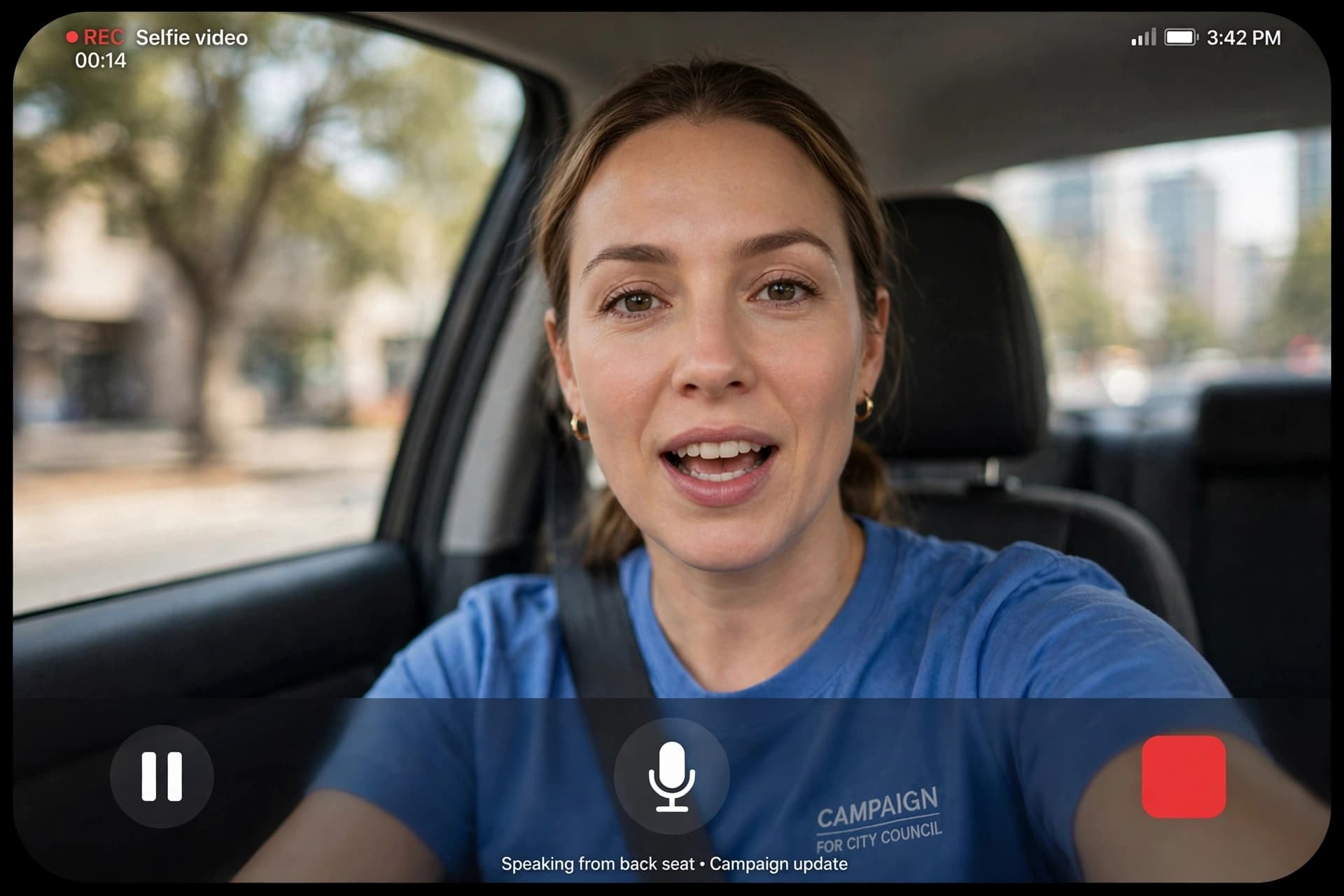
There is a particular kind of silence that follows a federal raid on a lawmaker's home, a quiet that is not peace but the pause before a public response is carefully assembled. For Representative Ilhan Omar, that pause lasted more than a week. Her Washington, D.C., residence was searched by Homeland Security Investigations on October 12 as part of a federal probe into whether she or her late father misstated her age on immigration paperwork decades ago, a question that could affect the citizenship she obtained as a minor . On Tuesday night, she reappeared—not in a press conference, not on the floor of the House, but in a minute-long selfie video shot from the back seat of a moving car.
The video was direct in its purpose. Omar thanked supporters for donations already sent and asked for more, framing the contributions as a way to "fight Trump and his administration for trying to intimidate me and so many other people right before the midterm elections" . She said the administration was "running scared," that she would not be intimidated or silenced, and that she would be out campaigning to "win the House, win the Senate and hold this administration accountable" . She closed with a specific request: "$5, $10, $20" .
The investigation that prompted the search remains focused on a narrow but consequential question. When Omar's father became a U.S. citizen in 2000, she was listed as a minor on the paperwork, which allowed her to derive citizenship. Federal investigators are examining whether she was actually eighteen at the time, which would have precluded that automatic path . Her attorneys have said there is "no legitimate basis" to suggest she violated citizenship laws and have demanded the return of property seized during the search, which reportedly included her passport, phone, and personal computers .
The timing of the search has drawn scrutiny from congressional Democrats, who noted that it occurred less than a month before the midterms and questioned whether the Justice Department was following its customary practice of avoiding public investigative actions against candidates close to an election . Omar's own statement after the raid called it an "outrageous abuse of power" and an "unprecedented escalation in the weaponization of federal law enforcement to target political enemies" . President Trump, speaking from the Oval Office, said Omar "could go to jail" if the allegations were proven, adding that the comment was "just my opinion" .
There is a political calculus in the video that is difficult to ignore. Omar has built a national profile as a progressive critic of the administration, and her fundraising appeal frames the investigation not as a legal matter but as a political attack. Whether that framing resonates with donors will be measured in the coming weeks. Whether it addresses the underlying legal question is another matter entirely. The video did not mention the specific allegations or offer any explanation of the paperwork at the center of the probe.
For now, Omar has broken her silence and returned to the campaign trail. She is scheduled to appear in Minneapolis next week. The investigation continues, the grand jury subpoenas have been issued, and the question of what the documents say remains unresolved. What the video offered was not clarity but a posture: defiance, fundraising, and a promise to fight. The legal process will proceed on its own schedule, indifferent to the midterms and the donations alike.
---
AI Image Disclaimer: The imagery in this article is generated by artificial intelligence and is intended for illustrative purposes only.
Sources: New York Post, Fox News, KFOX, The New York Times, Rti Central Radio
Published by Banx Network. This article is part of the Banx decentralized media programme, powered by the BXE token on the XRP Ledger.