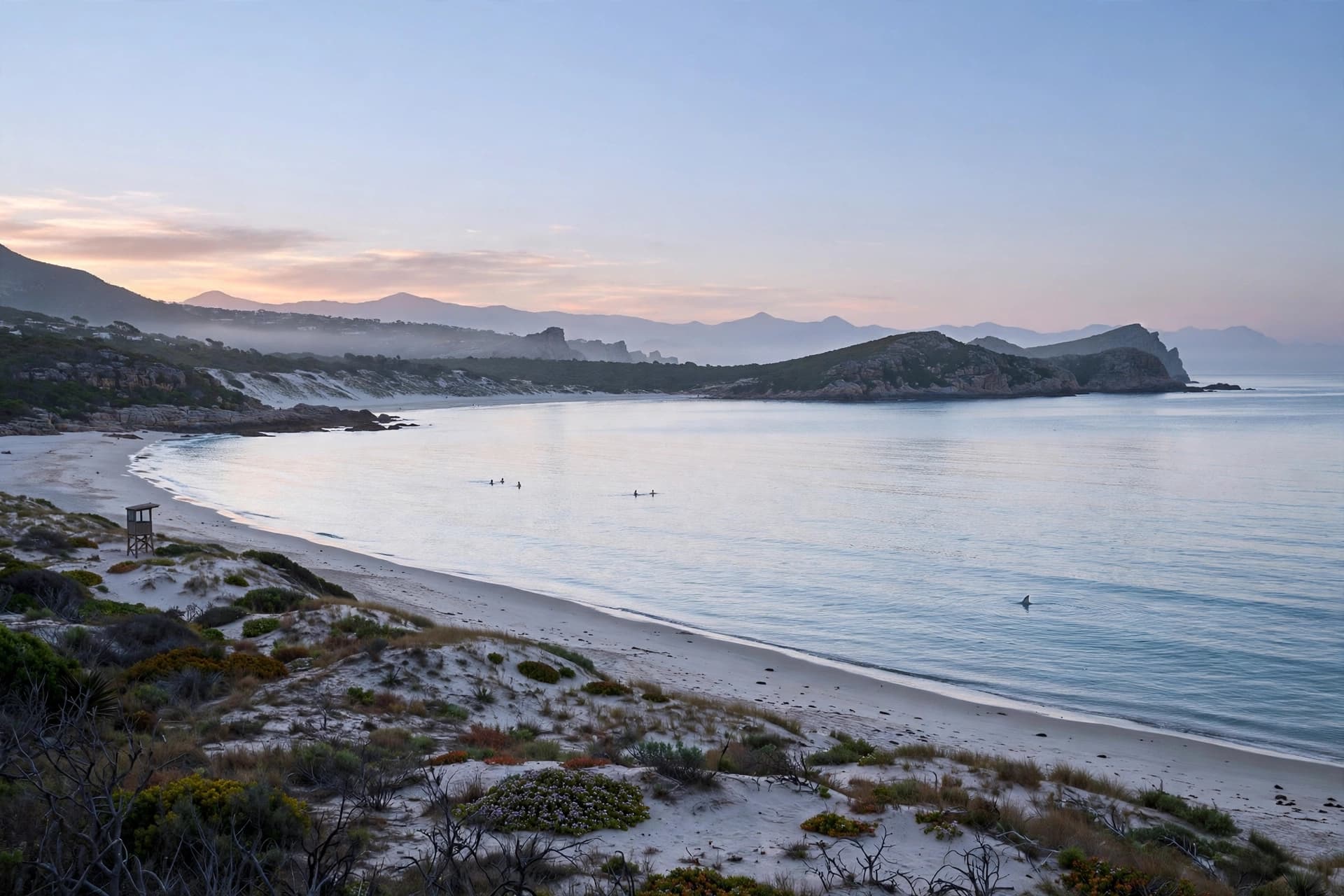
There is a particular stillness that follows a fatal shark attack, a quiet that settles over a beach after the sirens have faded and the water has been cleared. On Tuesday morning, Orient Beach in KuGompo, the Eastern Cape city formerly known as East London, was that beach. A sixty-five-year-old woman had been swimming with a group, as she did regularly, when a shark attacked. She was brought to shore with severe injuries to her right arm and leg. Those who were with her tried to raise a pulse. She died on the sand.
Police were called to the scene around 7 a.m. and found the woman with "open wounds" . Witnesses described hearing her scream and seeing the shark's tail and fin as other swimmers realized what was happening . The municipality closed Orient Beach and nearby Eastern Beach and urged residents to stay out of the water .
The victim was a regular swimmer, part of a community of people who enter the ocean at dawn not for spectacle but for routine, for health, for the simple pleasure of cold water and open sky. Local media identified her as a retired professional, though her name has circulated in some reports as Janine Lochrenberg . She was with a group at the time of the attack, and others in the water saw the shark before the severity of the situation became clear.
There is a detail in the reporting that carries its own quiet weight. The swimmers were wearing so-called shark-repellent anklets, devices marketed as a way to deter sharks through electrical or magnetic signals . The anklets did not prevent the attack. Some products of this kind have been shown in experiments to have no deterrent effect on certain shark species. The presence of these devices is not a failure of the victim but a reminder of how people try to manage risk in spaces they cannot control.
South Africa records an average of about six shark attacks per year, according to the KwaZulu-Natal provincial coastal information portal . The University of Florida's International Shark Attack File counted sixty-five unprovoked bites worldwide in 2025, including nine fatalities, one of them in South Africa . These are not common events. But they are not unknown, and the coastline has a long memory of them.
The immediate response has been practical. Beaches are closed. The public has been warned. Authorities will monitor the water and decide when it is safe to reopen. The shark, if it is still in the area, will move on, as sharks do, following currents and prey and whatever logic governs their movements. The group that swam together on Tuesday morning will not be the same group again.
For the family of the woman who died, the morning began with a swim and ended with a call they will never forget. For the community of KuGompo, the beach will reopen in time, and people will return to the water, as they always do, carrying with them the knowledge that the ocean is not a pool and that its inhabitants do not read our warnings. What remains is a life ended in the place she loved, doing the thing she did every morning, and a town left to reckon with the randomness of it.
AI Image Disclaimer: The imagery in this article is generated by artificial intelligence and is intended for illustrative purposes only.
Sources: ORF, Yonhap News Agency, Daily Mail, Geo.tv
Published by Banx Network. This article is part of the Banx decentralized media programme, powered by the BXE token on the XRP Ledger.