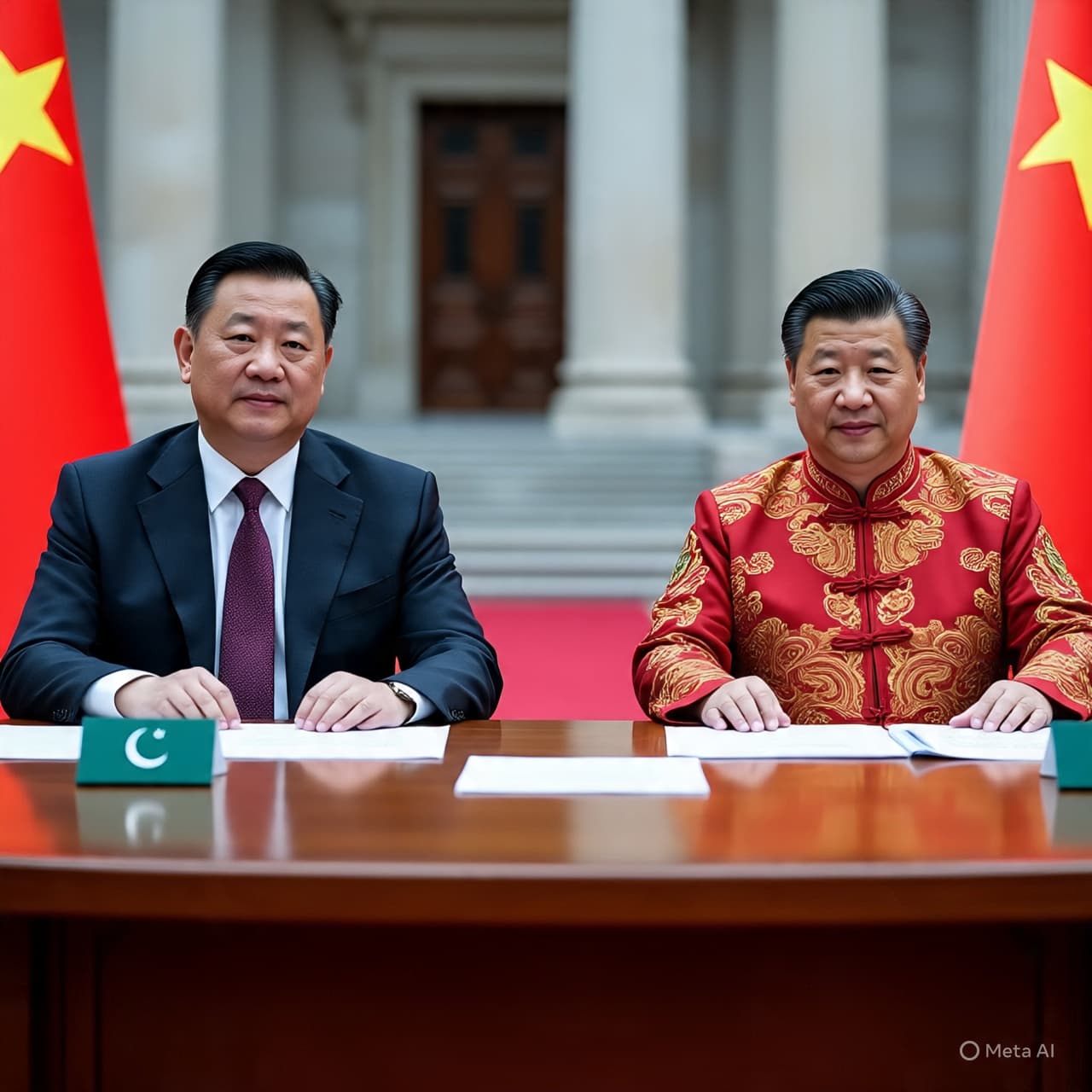
In the ebb and flow of global relations, moments of convergence often come not with fanfare but with a shared sense of urgency — like two neighbours leaning over a fence to reinforce a sagging gate. This week, Pakistan and China found themselves in such a moment in Beijing, where a routine diplomatic meeting opened a wider door into joint security concerns, shared interests, and the pressing need to confront terrorism with a coordinated, kinetic response. From discussions in high‑level corridors emerged an agreement that speaks to both countries’ long‑standing strategic partnership and the evolving nature of threats that transcend borders.
Interior Minister Mohsin Naqvi of Pakistan and China’s Minister of Public Security Wang Xiaohong spent several hours in talks that went beyond ceremonial handshakes, focusing instead on enhancing rapid response mechanisms against terrorism and organised crime. Central to the discussions was the agreement to strengthen and expand their joint rapid response system, aiming to ensure a quicker, concerted reaction to emerging threats that could endanger civilians or key infrastructure. Both sides also discussed police training exchanges, saying that professional capacity building among security forces would be a cornerstone of the new cooperation framework.
Beyond the operational aspects of rapid response, the meeting underscored mutual appreciation. The Chinese minister expressed satisfaction with steps Pakistan has taken to protect Chinese nationals and projects within its borders, especially amid past militant attacks that have shaken confidence in security around major infrastructure initiatives. In turn, Pakistani officials highlighted their commitment to safeguarding foreign citizens and assets, framing civilian protection as a national priority rather than a diplomatic concession.
To support these aims, Pakistan announced the establishment of a Special Protection Unit in Islamabad dedicated to the safety of Chinese nationals and collaborative ventures — a decision that both sides framed as tangible evidence of security cooperation in action. This unit, alongside regular joint meetings of a working group and annual interior ministerial talks, will serve as structural pillars in the enhanced partnership.
The agreement also touched on newer domains of security in the digital age, with both countries expressing interest in jointly addressing cybercrime and exploring Chinese technological support to help Pakistan fortify its National Cyber Crimes Investigation Agency (NCCIA). This blend of traditional and emerging security concerns reflects the complexity of counter‑terrorism in an interconnected era.
As the strategic dialogue between Islamabad and Beijing deepens, this joint commitment to rapid anti‑terror response stands as more than a technical arrangement — it is a reaffirmation of a friendship long described as “ironclad,” rooted in shared security interests and a determination to confront threats collectively rather than in isolation.
AI Image Disclaimer “Visuals are created with AI tools and are not real photographs.”
Sources Radio Pakistan — Pakistan, China agree to strengthen rapid response against terrorism, crime Reuters — China calls for joint counter‑terrorism efforts with Pakistan Geo.tv — Special protection unit being set up in Islamabad for Chinese citizens Pakistan Observer — Pakistan, China agree to deepen cooperation in counterterrorism, policing Reuters — China, Pakistan reaffirm ties as US outreach to Islamabad deepens (context)
Published by Banx Network. This article is part of the Banx decentralized media programme, powered by the BXE token on the XRP Ledger.