
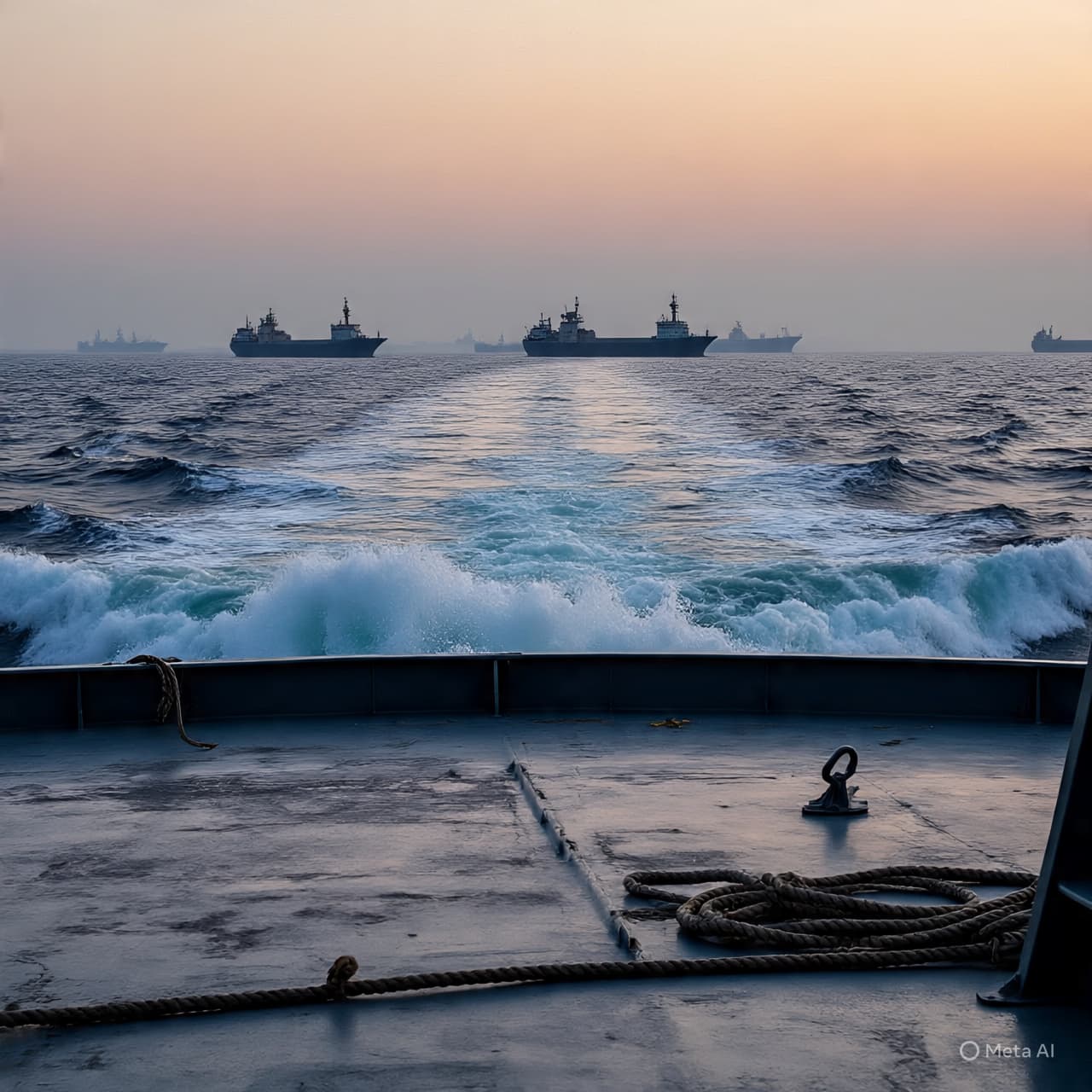
In the salt and amber light of early spring, when the winter shadows still cling to horizons and the world seems to hold its breath between one season and another, the waters of the Strait of Hormuz—that slender artery through which much of the world’s oil quietly pulses—became a quiet stage for the uncertain choreography of diplomacy and brinkmanship.
For weeks, naval vessels and tankers have lain in uneasy silence, their silhouettes etched against troubled seas, as a distant conflict rippled outward from the heart of Iran toward the wider world. In this narrow channel, where the tides rise and fall like ancient memory, the rhythms of commerce and energy once flowed freely; now they sway under the weight of wartime apprehension and political tremors.
Against this backdrop, a deadline was set by President Donald Trump, a line drawn in time meant to compel change. In a flurry of stark language and stern pronouncements, an ultimatum was issued: reopen the strait within a narrow window, or face punitive action against critical infrastructure. The words carried across continents and currencies, through oil markets and anxious capitals, giving shape to the very real specter of escalation.
But as morning broke on the appointed day, the cadence of tension shifted. The deadline, like the morning mist at dawn, was softened and extended. In remarks that blended optimism and caution, the United States signaled that planned strikes on energy facilities would be paused for a period of days, pointing to “productive conversations” with Iranian counterparts as the reason for this pause. Yet from Tehran came a quiet contradiction: officials denied any direct negotiations had taken place, leaving the true state of discourse tangled in the fog of competing narratives.
Thus, the strait—so often a metaphor for global connectivity and shared dependence—stands for now as a mirror of uncertainty. Markets breathed a tentative sigh as oil prices dipped on hopes of de‑escalation; diplomats in distant capitals weighed statements and reassurances; and those who watch the ebb and flow of geopolitics saw in this moment both promise and peril.
In the hush between two tides, with the horizon neither fully clear nor clouded, the world looks on. The strait remains an open question, its waters a testament to how intertwined fate and geography can be. The pause is real, but so too is the fragility of agreements not yet fully shaped—a reflective breath held between what has been threatened and what might yet be resolved.
AI Image Disclaimer Illustrations were created using AI tools and are not real photographs.
Sources (names only) Reuters The National News The Guardian The Washington Post Al Jazeera
Published by Banx Network. This article is part of the Banx decentralized media programme, powered by the BXE token on the XRP Ledger.

.jpg&w=3840&q=75 "Romania Passes Controversial Integrity Law for Officials to Access EU Funds")
