
Key Highlights
- Discovery:Recent analysis of a cave site in Belgium reveals evidence of Neanderthal cannibalism.
- Social Dynamics:Cannibalism appears to be a selective practice targeting outsiders, particularly women and children.
- Research Implications:Findings challenge traditional views of Neanderthal social behavior and identity.
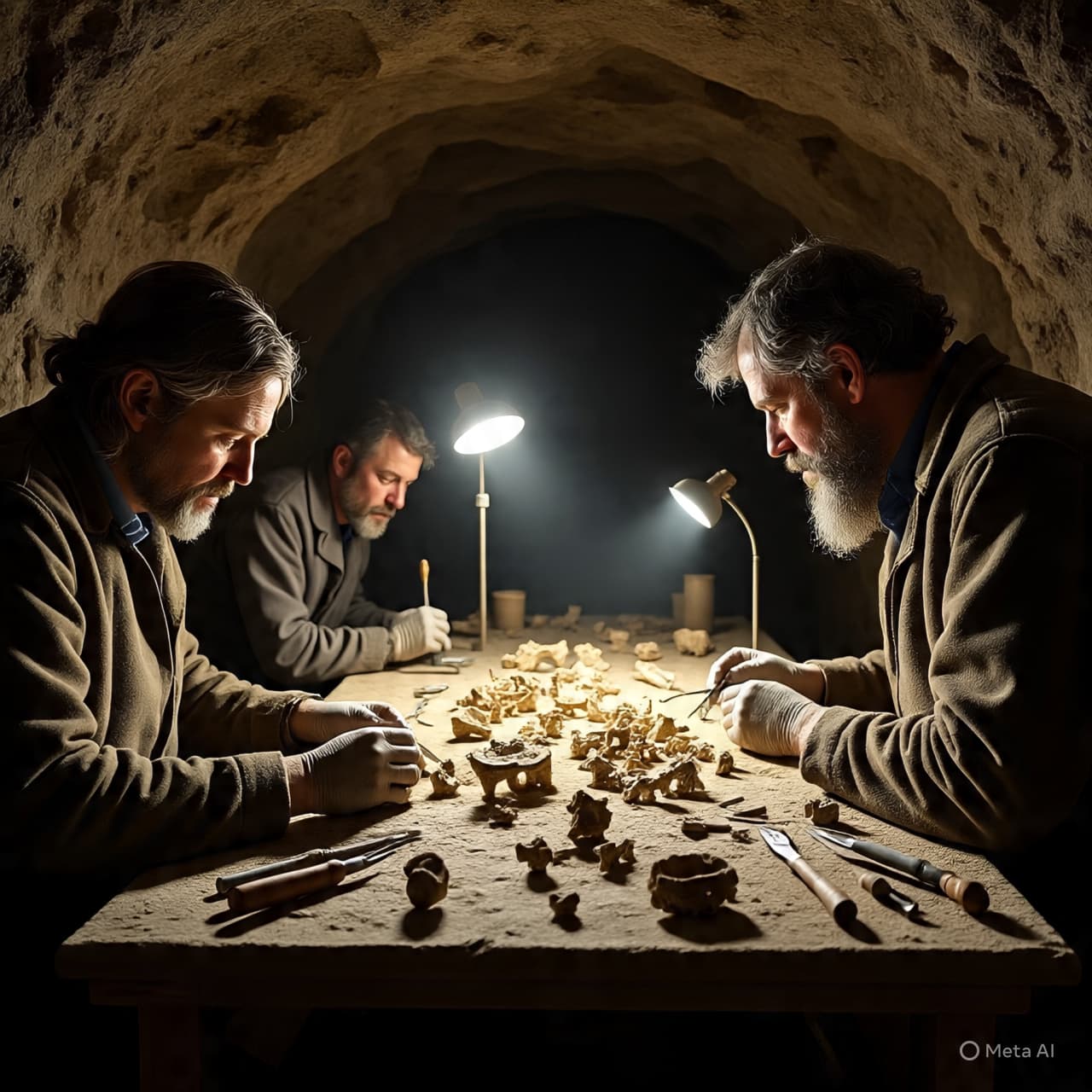
Recent archaeological research at a cave site in Belgium has unveiled a startling aspect of Neanderthal life: the practice of cannibalism. This discovery, based on meticulous analysis of skeletal remains, suggests that cannibalism among Neanderthals was not merely a desperate act of survival but rather a complex social ritual. Researchers have identified distinct patterns in the marks left on bones, indicating that these acts were directed toward individuals who did not belong to the local group, particularly women and children.
The implications of this research are profound. The careful treatment of the bones, akin to that used for hunting game, suggests that cannibalism was embedded within a ritualized framework. This challenges the notion of Neanderthals as simple beings struggling for survival and instead portrays them as possessing a sophisticated social structure. By consuming outsiders, Neanderthals may have been reinforcing their own group identity and boundaries, a practice that resonates with the complexities of human social behavior today.
This revelation forces a reevaluation of our understanding of Neanderthals. They are no longer seen merely as primitive ancestors but as beings capable of intricate social negotiations. The cave in Belgium transforms from a mere refuge into a site that encapsulates the darker aspects of human history, where the lines between survival and violence blur. It highlights the uncomfortable reality that the ability to distinguish between 'us' and 'them' is not a modern phenomenon but a trait deeply rooted in our evolutionary past.
As researchers continue to explore the site, questions arise about the prevalence of such practices. Was cannibalism a rare occurrence or a common aspect of Neanderthal life? How did these early humans communicate their social boundaries, and what does this imply about intergroup violence? The ongoing analysis serves as a reminder that our understanding of the past is dynamic, shaped by new discoveries that reveal the complexities of human and hominin behavior.
The forensic analysis of the skeletal remains has provided compelling evidence of a deliberate pattern of consumption. The presence of percussion and cut marks consistent with marrow extraction and defleshing, particularly on the remains of non-local individuals, indicates that these acts were not driven by starvation. Instead, they reflect a calculated decision-making process, potentially serving as a mechanism for asserting group dominance and social exclusion.
In conclusion, the findings from the Belgian cave site significantly enhance our understanding of Neanderthal social dynamics. They reveal a world marked by intense social negotiation, where the capacity for both creation and destruction coexisted. As we delve deeper into the lives of our ancient relatives, we uncover a rich tapestry of behaviors that challenge our perceptions and invite us to reflect on the complexities of our own social existence.
Published by Banx Network. This article is part of the Banx decentralized media programme, powered by the BXE token on the XRP Ledger.



