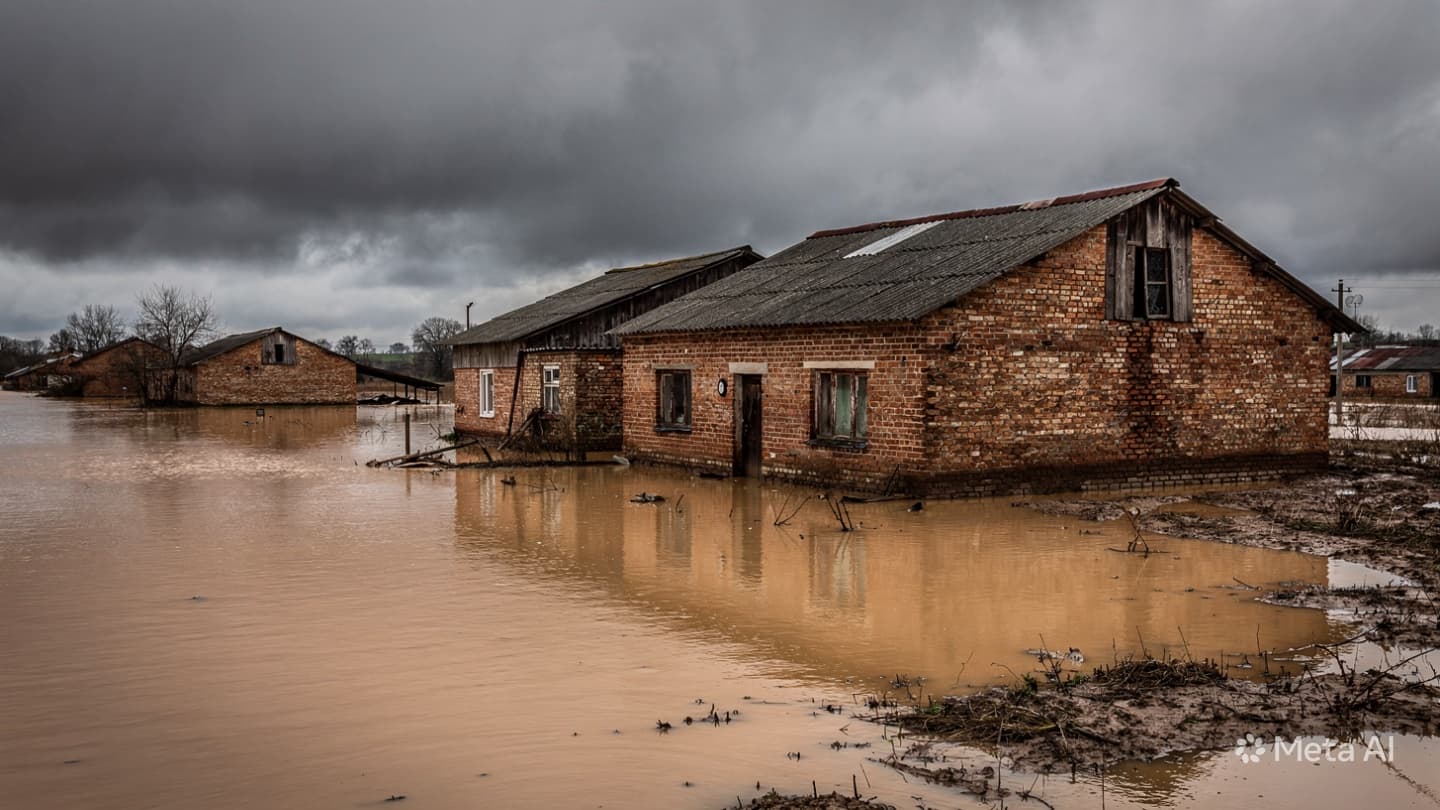
Oaxaca, Mexico—A primary river channel burst through its earthen levees early this morning, unleashing a fast-moving torrent of mud and water into multiple low-lying communities. Civil defense officials have confirmed four drowning fatalities after the sudden inundation swept through several rural residential blocks. The water levels rose with such velocity that many victims were trapped inside ground-floor structures.
The flooding followed forty-eight hours of intense tropical moisture dropping across the southern sierra, saturation levels that the local drainage network could not accommodate. The river gauge crested nearly three meters above the official danger line before the northern section of the retaining wall collapsed. The breach redirected millions of gallons of brown water directly into the adjacent agricultural valley.
Military personnel launched emergency response protocols, utilizing high-clearance transport trucks to navigate flooded roads and reach stranded villagers. Search teams encountered significant obstacles from floating timber and submerged farm equipment that blocked main access intersections. Boat crews are searching the downstream banks for any additional missing individuals.
"The velocity of the overflow bypassed our secondary sandbag lines within fifteen minutes of the breach," a regional civil protection coordinator stated from an elevated road junction. The coordinator confirmed that two of the victims were swept away while attempting to move livestock to higher ground.
Local medical facilities are operating on emergency generator power to treat survivors for severe hypothermia, lacerations, and water contamination exposure. Clean drinking water infrastructure across the affected municipalities has been completely compromised by the muddy runoff, raising immediate concerns about waterborne bacterial contamination among local health monitors.
Disaster response teams are converting church halls and municipal buildings into temporary housing blocks for more than five hundred displaced agricultural workers. Local supply chains are severely strained, with major highways into the state capital blocked by mudslides and eroded asphalt sections. Emergency food drops are being coordinated through military supply chains.
Agronomists report that thousands of acres of staple corn and bean crops are completely submerged under deep, silty water, threatening the seasonal economic output of the region. The loss of storage facilities and seed stocks will likely impact regional food security margins for months to come. Farmers are waiting for water levels to drop to assess the full extent of the structural soil erosion.
Geological survey teams are monitoring the upper hillsides for signs of land instability, as continued saturation could trigger deep mudslides into the narrow valleys below. Local authorities have expanded the mandatory evacuation zone to include all settlements located within five hundred meters of the active river path.
The low-pressure system responsible for the intense downpours is moving slowly toward the western coast, indicating that while the rain may diminish locally, downstream communities face arriving flood crests over the next twenty-four hours. Emergency monitoring stations remain on twenty-four-hour alert.
Published by Banx Network. This article is part of the Banx decentralized media programme, powered by the BXE token on the XRP Ledger.