
Key Highlights
- Over 100,000 customers lost power due to severe thunderstorms.
- Emergency services responded to thousands of calls as trees blocked roads.
- Full power restoration may take up to 48 hours as crews mobilize.
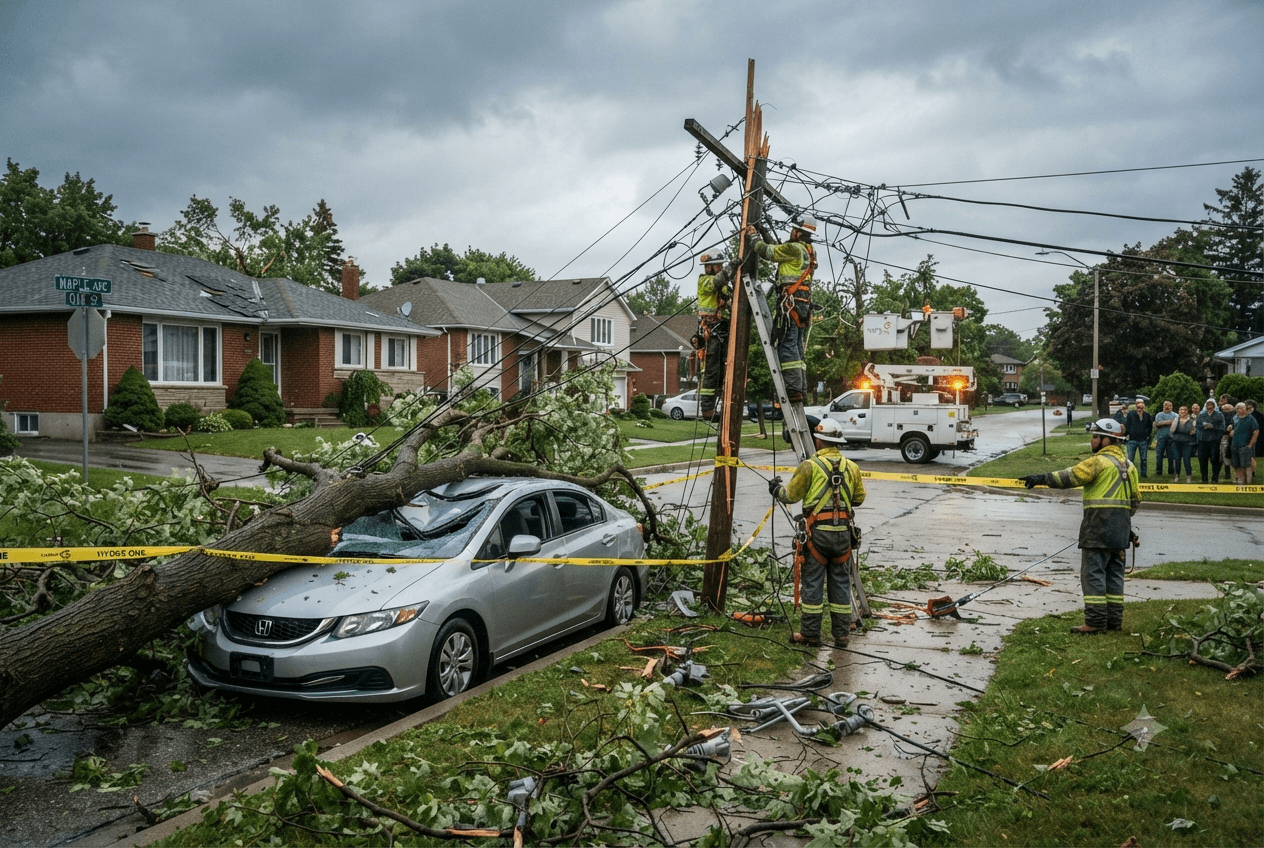
Toronto, Canada—A severe thunderstorm swept through Ontario, bringing with it destructive winds that clocked over one hundred kilometers per hour. The storm, characterized by a squall line that rapidly approached from the lake, darkened the afternoon sky and wreaked havoc across residential neighborhoods. Reports indicate that straight-line winds tore shingles off roofs and uprooted trees, which fell onto parked cars and power lines, igniting electrical fires in some instances.
Emergency dispatch centers were inundated with calls as trees obstructed major roads, prompting swift action from municipal crews. Paramedics transported two individuals to trauma centers after a heavy branch collapsed onto a suburban porch during the storm's peak. Fire trucks and ambulances struggled to navigate blocked thoroughfares, highlighting the urgency of the situation.
The impact on the region's power infrastructure was significant, with utility workers declaring a localized emergency as over a hundred thousand customers experienced outages. Transformer boxes failed in rapid succession, plunging entire commercial areas into darkness. Utility executives warned that full restoration of power could take as long as forty-eight hours due to the extensive damage to distribution lines.
Public transit services were also severely affected, with significant delays reported across regional commuter rail lines. Fallen trees entangled overhead wires, leaving commuters stranded at central stations for hours. Substitute bus services attempted to navigate the gridlocked streets, but traffic lights malfunctioned, leading to minor collisions at busy intersections. Municipal works departments deployed cleanup crews equipped with chainsaws to clear major bus routes by evening.
As homeowners began to assess the damage, many found their properties littered with debris, including broken patio furniture and shattered glass. Insurance adjusters set up emergency hotlines to handle the influx of damage claims from affected neighborhoods. Municipal shelters opened their doors to residents whose homes sustained severe roof damage or who faced prolonged power outages.
In the wake of the storm, community volunteers stepped up to assist vulnerable residents, distributing bottled water and flashlights to those living in darkened high-rise apartments. Meteorological agencies eventually canceled severe weather warnings as the storm front moved eastward toward Quebec. Cleanup operations continued into the night, with residents preparing for a cool evening without power, illuminated only by portable floodlights as they worked to restore their community.
Published by Banx Network. This article is part of the Banx decentralized media programme, powered by the BXE token on the XRP Ledger.



