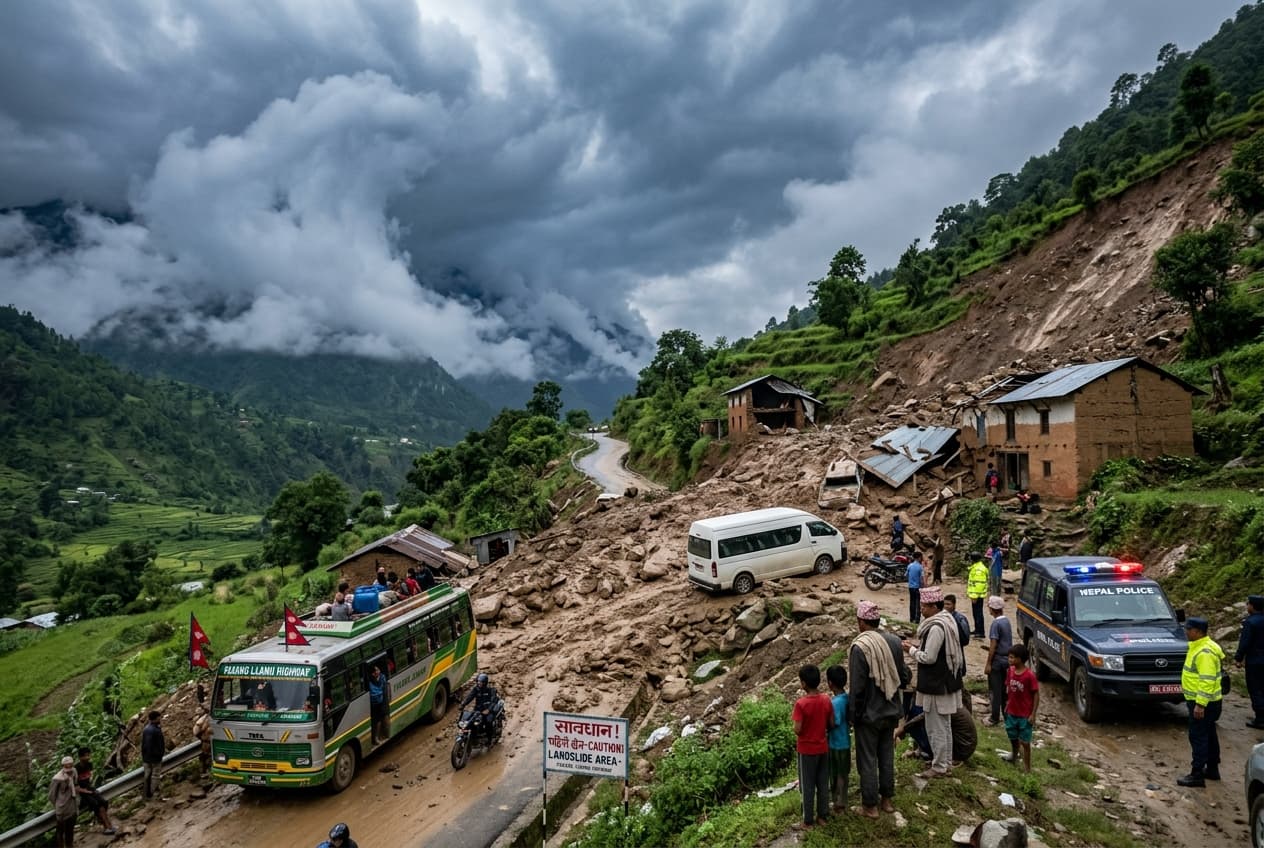
Pokhara, Nepal— Severe monsoon rains triggered mudslides across mountainous Nepal on October 20, killing three villagers and stranding hundreds in remote areas where roads have been washed away.
The rain started Sunday night and did not stop. In Myagdi, Kaski, and Lamjung districts, hillsides saturated by weeks of wet weather gave way. Mud and boulders buried footpaths and houses. Three people, two women and an elderly man, were killed when their homes were hit in separate slides. Their bodies were recovered by neighbors.
Hundreds are stranded. Landslides blocked the Beni-Jomsom highway and several rural roads. Buses and jeeps are stuck. Tourists trekking in the Annapurna region are unable to move. Local officials said about 300 people are cut off in villages north of Pokhara. No helicopters can fly due to low cloud. "We cannot reach them," said a district official. "The roads are gone."
Nepal's monsoon season usually ends in September. This year, heavy rains have extended into October. Meteorologists linked the late surge to a low-pressure system over the Bay of Bengal. Rainfall in Pokhara in the last 24 hours was more than 120 millimeters. Rivers are swollen. The Department of Hydrology warned of further slides.
Rescue is slow. Nepal Army and Armed Police Force teams are clearing debris with excavators. In many places, they work by hand. A volunteer in Myagdi said the mud is waist-deep. Power is out. Mobile networks are down in several valleys. Families are using radios to ask for help. One message received in Pokhara said a whole hamlet is without food for two days.
The three dead were from farming families. They lived in stone houses perched on terraced slopes. Such houses offer little resistance to slides. Nepal's rural housing is vulnerable. Building codes exist but are rarely enforced in remote areas. Deforestation and road cutting without retaining walls make slopes unstable.
The home ministry said relief materials are being prepared but cannot be delivered until roads reopen. The chief district officers have asked residents near rivers and steep slopes to evacuate to schools and community halls. Many are reluctant to leave livestock. Schools in affected districts have been closed.
Tourism, a lifeline for these areas, has been hit. Trekking agencies said dozens of foreign tourists are stuck in lodges. Food supplies are running low. One guide said lodges are charging high prices for rooms because they cannot resupply. No injuries among tourists have been reported.
Rain is forecast to continue for another day. The government said it is monitoring 15 high-risk landslide zones. No estimate has been given for when roads will reopen.
Published by Banx Network. This article is part of the Banx decentralized media programme, powered by the BXE token on the XRP Ledger.