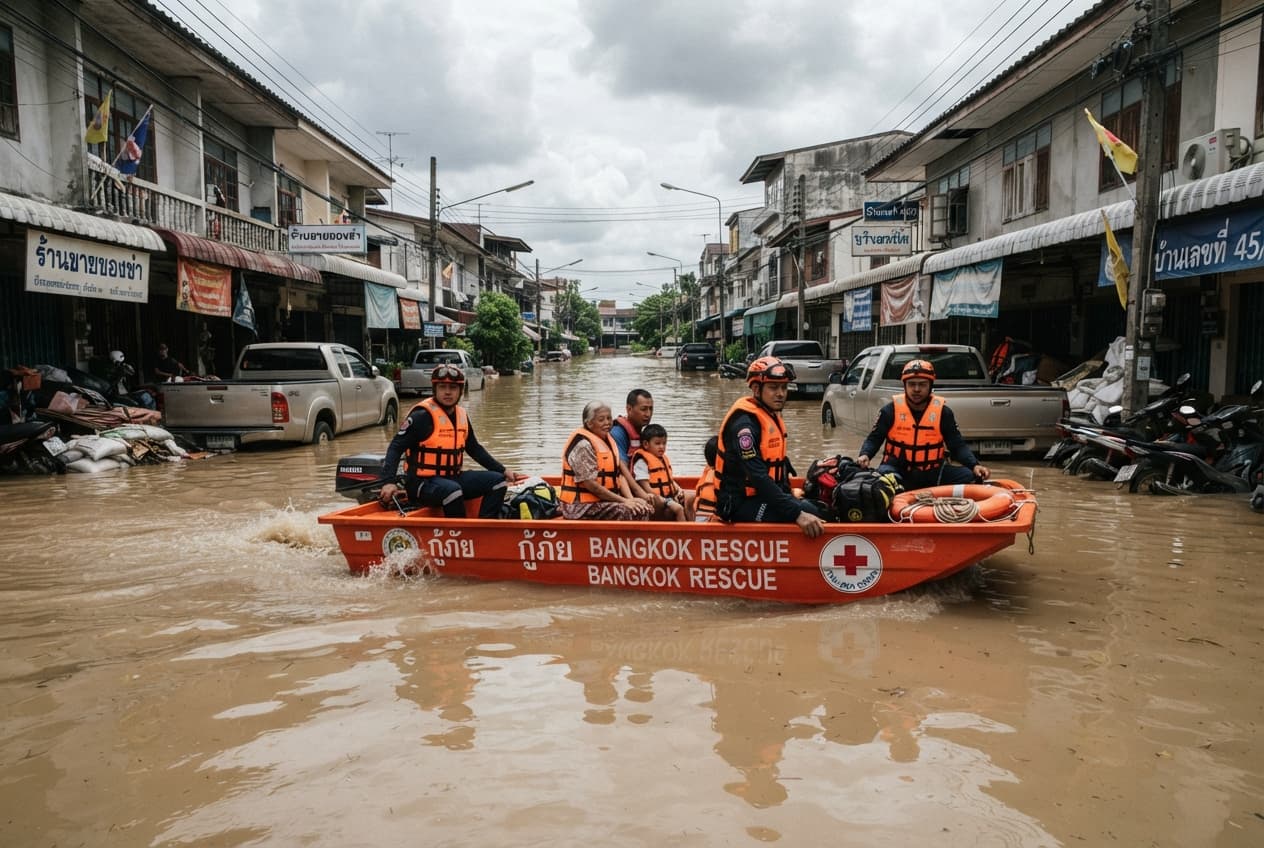
Bangkok, Thailand—Monsoon rains hit central and northern provinces with unrelenting force across the past forty-eight hours, causing widespread severe flooding that has confirmed twenty-three people dead and thrown the lives of more than two million residents into complete chaos. Torrential downpours broke drainage systems and forced dam operators to discharge excess water into already swollen river basins.
Submerged expressways and inundated secondary routes severed critical transit lines connecting the capital to industrial corridors. Emergency service units dispatched inflatable boats and heavy machinery into residential zones where water levels reached waist-deep. In several suburban sectors, power grids were deliberately cut to avoid mass electrocution hazards as transformers submerged under gray, debris-choked water.
Local authorities in low-lying districts declared formal disaster zones after overflow from regional reservoirs surged down main arteries. Highway officials confirmed that dozens of critical highway sections remain completely impassable, halting freight shipments and public transit lines throughout affected economic hubs. Evacuation centers set up inside converted athletic arenas and school halls quickly filled past intended capacity.
Rescue crews faced persistent rain while attempting to navigate fast-moving currents inside submerged neighborhoods. Elderly residents and livestock remained stranded on rooftops, waiting for flat-bottom boats to tow them out of isolated pockets. Field workers reported severe shortages of potable water and clean food rations in regions where ground logistics collapsed entirely.
Public health agencies warned of high water-borne infection risks as raw sewage mixed with standing groundwater across inundated residential blocks. Medical staff established makeshift triage stations on elevated concrete overpasses to handle minor injuries and dispense chronic medication to evacuated citizens.
Department officials reported that regional reservoirs continue to hold dangerous volumes, forcing controlled water releases that threaten downstream communities along the Chao Phraya basin. Factory operators along industrial estates scrambled to pile sandbags around delicate machinery, hoping to prevent a total industrial shutdown similar to previous historical inundations.
Disaster management personnel stated that current drainage pumps are working at maximum physical capacity but remain severely outpaced by continuous rainfall. Field officers confirmed that many rural agricultural plots sit under meters of standing water, destroying seasonal crops and wiping out rural livelihoods.
Relief efforts remain heavily fractured as secondary rivers overflow into secondary feeder channels, cutting off ground communications with outer villages. Weather forecasters project additional atmospheric disturbances over the central plains, offering zero respite for emergency teams working around the clock.
Published by Banx Network. This article is part of the Banx decentralized media programme, powered by the BXE token on the XRP Ledger.