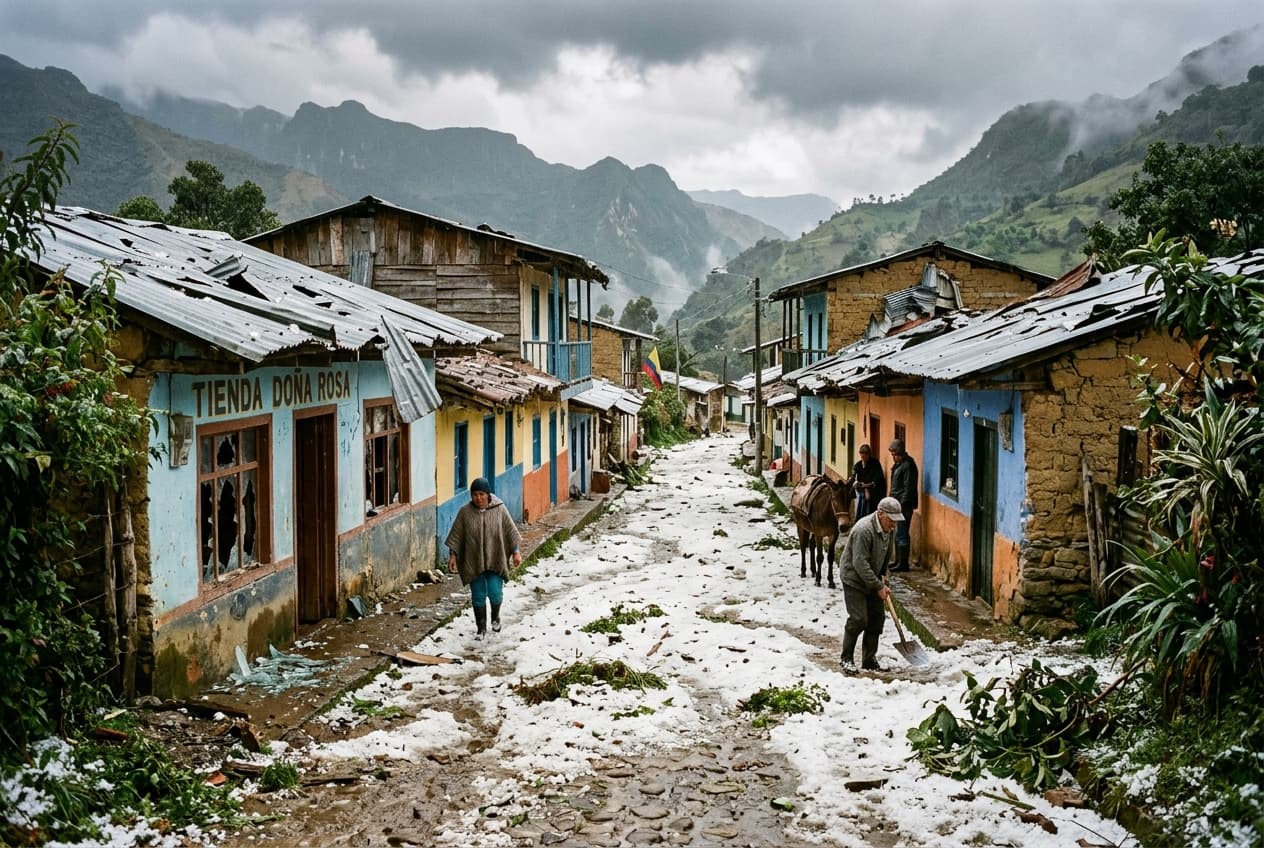
Bogota, Colombia— A severe hailstorm ripped through rural communities in central Colombia Thursday, shattering roofs and injuring 15 residents as ice the size of golf balls pounded homes for nearly an hour.
The storm hit around 2:30 p.m. local time in Boyaca department, in highland villages near Tunja, according to El Tiempo and local disaster officials. Hail accumulated up to 15 centimeters deep in places, caving in tin and tile roofs, breaking windows, and knocking out power. People ran for cover as ice smashed through ceilings.
Fifteen injuries were confirmed by evening, most from cuts caused by falling roof debris and shattered glass. Three children were among the injured after a school classroom roof collapsed. None were listed as life-threatening, but two elderly residents were hospitalized with head injuries. More than 80 houses were damaged, 22 severely.
"We heard it coming like gunfire on the roofs," a farmer in Soraca told local radio. "Then the roof gave way. We hid under the table, ice coming inside the house. The crops are gone."
That crop loss is immediate. The hail shredded potato, onion, and strawberry fields that were weeks from harvest, a core income source in Boyaca. Greenhouses collapsed under the weight. Local agriculture officials said initial estimates put losses at more than 200 hectares. Livestock were also injured.
The hailstorm was triggered by a strong convective cell that formed as hot, humid air from the Magdalena Valley collided with cold air over the Andes, a setup that has produced more severe hail events in recent years. The weather service had issued a thunderstorm warning, but not for hail of this intensity. Radar showed the cell stalled over the villages for 45 minutes.
Disaster crews moved in with tarps and plastic sheeting to cover exposed homes before nightfall, as rain was forecast to follow the hail. The departmental government opened two shelters in Tunja and said it would distribute zinc roofing sheets Friday. Power utility crews worked to restring lines torn down by falling branches and ice load.
Boyaca's governor requested aid from the national disaster agency, citing limited municipal budgets. Rural housing in the area is often built with thin roofing and no ceiling, leaving families vulnerable to exactly this type of event. Building codes exist, but enforcement is spotty.
By nightfall, villages were dark except for emergency lights, with families huddled under tarps as ice melted into mud inside their homes.
More storms were forecast for Friday afternoon.
Published by Banx Network. This article is part of the Banx decentralized media programme, powered by the BXE token on the XRP Ledger.