Key Highlights
- Tens of thousands of homes submerged in central Thailand due to severe flooding.
- Emergency evacuations and transport disruptions reported across multiple provinces.
- Agricultural damage expected to impact local economies significantly.
Bangkok, Thailand—Swollen rivers burst their banks across central Thailand on Thursday morning, submerging tens of thousands of homes beneath muddy floodwaters. Continuous monsoon downpours saturated regional drainage basins over forty-eight hours, overwhelming municipal floodgates and forcing emergency evacuations. Disaster mitigation authorities confirmed that low-lying residential sectors across multiple provinces are sitting under two to three meters of water.
Water management officials opened secondary spillways along the Chao Phraya River basin after main storage reservoirs reached maximum operational capacity overnight. The sudden discharge sent a high-velocity surge through agricultural communities and residential suburbs before emergency crews could deploy sandbag barricades. Transport agencies suspended inter-city train services as submerged rail tracks cut off routes between the capital and northern provinces.
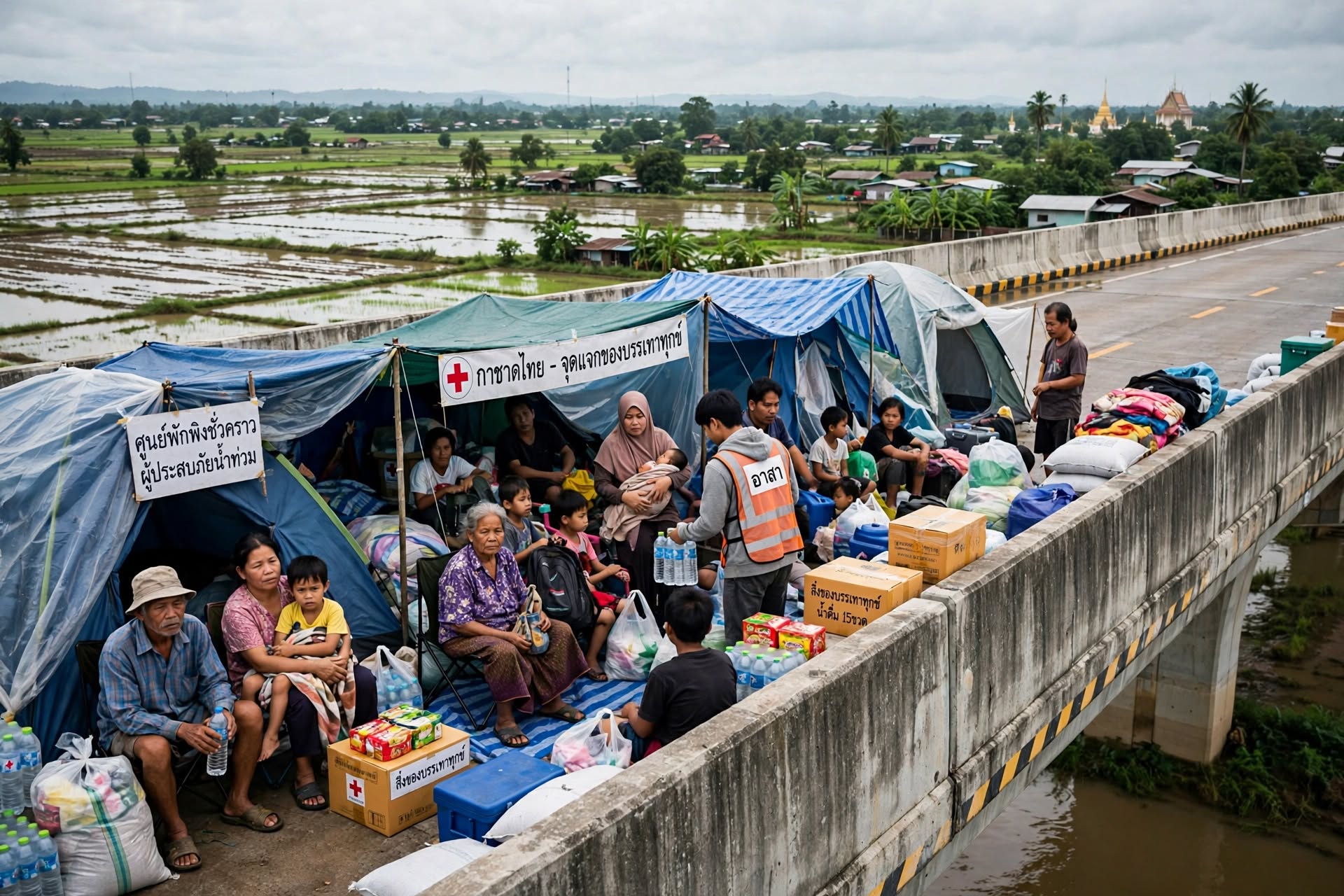
Naval rescue units deployed flat-bottomed motorboats to navigate submerged streets, pulling stranded residents from second-story balconies and rooftops. Medical response teams set up temporary field units on elevated highway ramps to treat hypothermia and distribute clean drinking water. Municipal authorities shut down regional power substations across flooded districts to prevent underwater electrocutions, leaving entire sub-districts without electricity.
Industrial park directors ordered manufacturing facilities to halt production lines as floodwaters approached outer security perimeters. Logistics operators reported severe supply chain disruptions, with hundreds of heavy delivery trucks stalled along flooded secondary access routes. Factory workers stacked sandbags along perimeter walls while industrial pumps operated continuously to keep primary assembly floors clear.
Community leaders inside flooded districts reported severe shortages of dry rations, cooking fuel, and fresh drinking water. Local relief committees organized volunteer distribution networks, using plastic kayaks and improvised bamboo rafts to haul supplies directly to isolated households. Public health inspectors warned that prolonged water stagnation increases the risk of waterborne disease outbreaks in densely populated urban settlements.
Agricultural officers reported that vast tracts of mature rice paddies remain completely inundated across the central farming belt. Farmers attempted to pump water out of fields using diesel-powered pumps, but surrounding drainage canals remained too high to receive discharge. Economic analysts estimate agricultural damages will cause substantial financial losses for smallholder farming families across the region.
Government ministers convened an emergency task force meeting at the national flood control center to coordinate inter-agency relief operations. Authorities instructed provincial governors to mobilize military logistical units and convert public school compounds into temporary shelter centers. Meteorological officials advised that additional tropical weather systems could bring further rainfall across the central plains over the coming days.
Engineering teams continue monitoring river embankment walls along major urban centers, reinforcing weak sections with stone fill and sandbags. Heavy drainage pumps continue discharging millions of liters of water back into main channels as tide levels permit. Rescue personnel and emergency managers will maintain round-the-clock monitoring operations until river levels drop safely.
Published by Banx Network. This article is part of the Banx decentralized media programme, powered by the BXE token on the XRP Ledger.