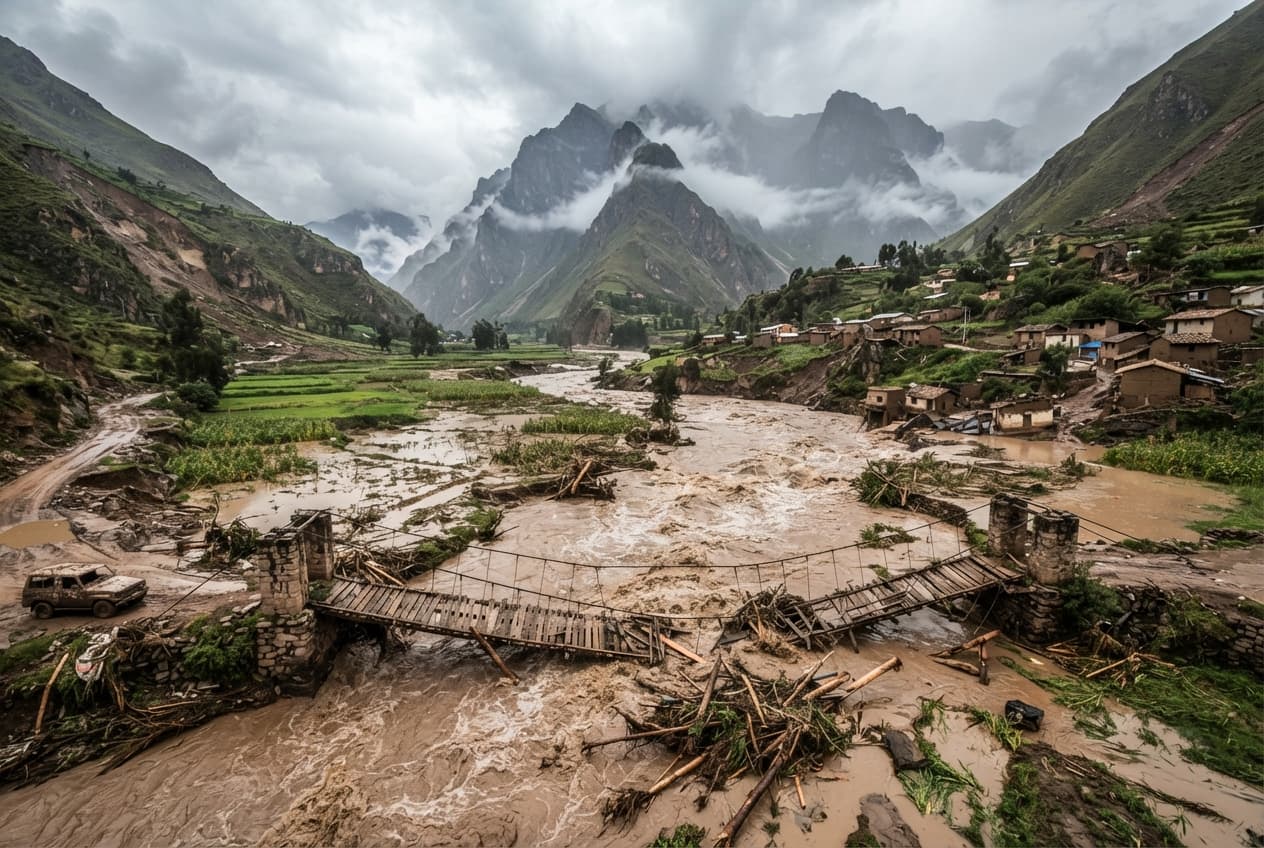
Cuzco, Peru—Raging torrents of mud, rocks, and glacial meltwater tore through rural valleys across the Andean highlands early Thursday, obliterating adobe homes and leaving hundreds of families stranded. Regional emergency operations centers confirmed that swollen rivers breached their natural banks following torrential overnight precipitation in the high-altitude cordillera. The sudden deluge swept away critical bridges, cutting off vital trade and transport routes linking remote mountain settlements to urban centers.
Local municipal officials reported that the wall of water struck without adequate prior warning, giving residents only minutes to flee to higher ground. Civil defense representatives stated that agricultural terraces and irrigation canals suffered catastrophic structural failures under the massive hydraulic pressure. Mud and debris currently clog narrow valley floors, burying livestock, machinery, and community infrastructure beneath feet of silt.
Rescue squads equipped with ropes and inflatable boats deployed to the worst-affected sectors at first light. First responders face immense hazards attempting to cross turbulent, debris-laden channels to reach isolated survivors trapped on isolated riverbanks. Medical outposts in the valley sustained heavy water damage, leaving injured citizens without immediate access to professional trauma care.
National highway police established total roadblocks along several affected stretches of the Andean corridor to prevent vehicle entrapment. Engineers warned that saturated mountain foundations continue to threaten further slides as unstable riverbanks erode beneath ongoing rainstorms. Power substations near the riverbanks suffered direct hits, plunging entire municipal districts into darkness.
Temporary relief camps are being hastily established in local sports stadiums located above the flood plain. Municipal authorities are struggling to secure sufficient potable water tanks and blankets for families who lost everything within minutes. Regional coordinators emphasize that airborne logistics will be mandatory to supply isolated hamlets cut off by destroyed road infrastructure.
Agricultural cooperatives in the region estimate millions of dollars in losses as staple crops and livestock pastures vanished beneath the surging torrents. Farmers watched helplessly from mountain ledges as years of cultivation and irrigation investments were swept downstream. Local economic stability hangs in a precarious balance as primary trade arteries remain completely severed.
Government ministers convened an emergency session in the capital to review damage assessments transmitted from regional governors. Civil protection agencies activated contingency funds to procure heavy machinery for clearing blocked river channels before secondary storms arrive. Bureaucratic delays in emergency procurement continue to frustrate local mayors operating on the ground.
Heavy equipment operators began clearing mud from strategic highway bottlenecks, though progress remains painfully slow amid continuous rainfall. Search teams continue combing riverbanks downstream for any sign of missing persons reported by local community leaders. The immediate threat of further overflows remains critical as weather radars indicate persistent precipitation blanketing the high peaks.
Published by Banx Network. This article is part of the Banx decentralized media programme, powered by the BXE token on the XRP Ledger.