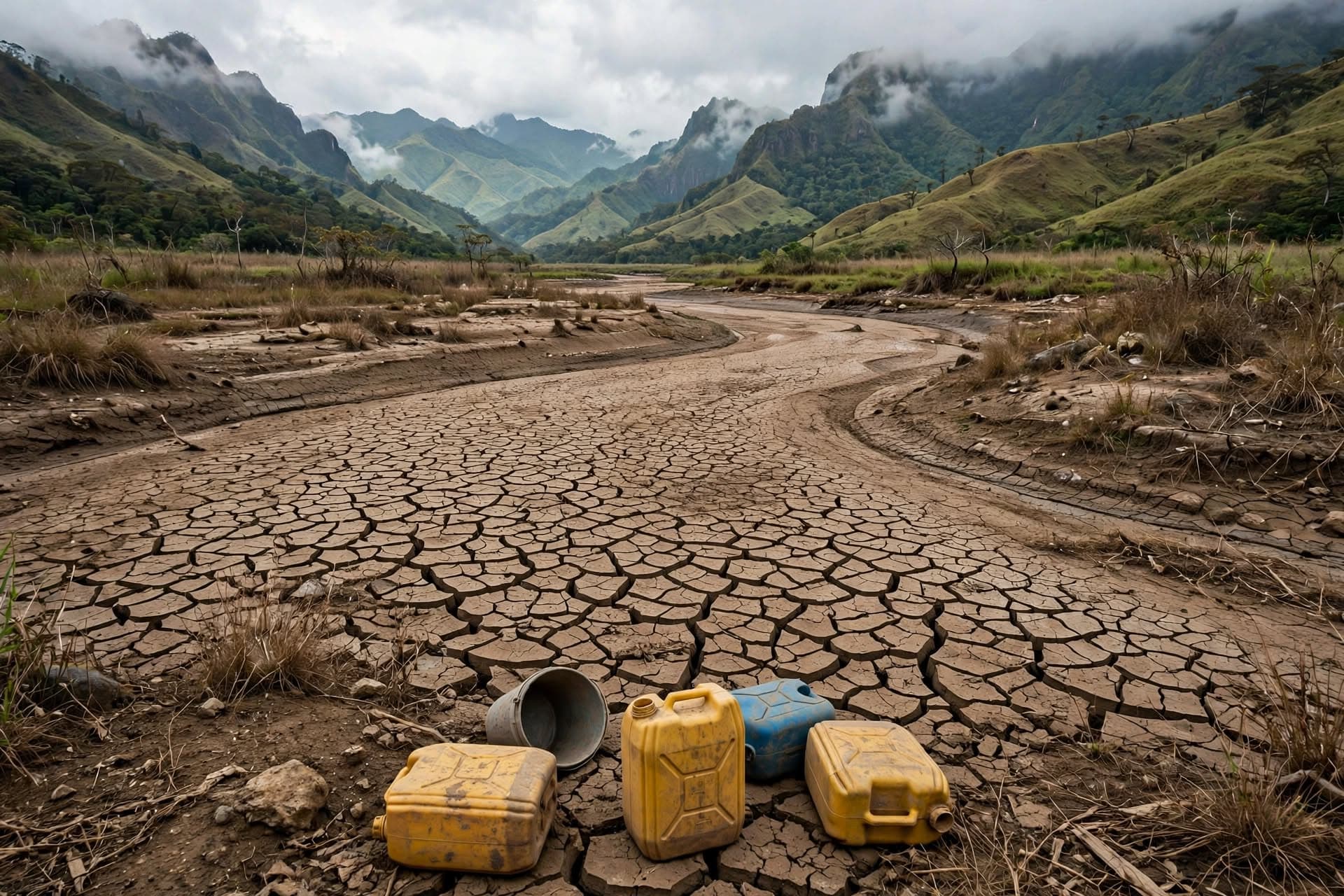
Mount Hagen, Papua New Guinea— The gardens died first. Since mid-2026, El Nino has sat over Papua New Guinea, and by October 30, 2026, the highlands were dry and burned by frost. Rivers that fed taro and sweet potato plots in Tambul, Chimbu, Southern Highlands and Hela were reduced to cracked beds. In Kosipe village in Goilala, frost fell almost every night for four months. When the sun rose, the leaves were black.
The numbers are stark. The PNG government declared a National Humanitarian Crisis in June 2026 and set up an ENSO Task Force under the National Disaster Centre. OCHA's October 1 snapshot put El Nino conditions across the country since mid-year, peaking October to December. NOAA gave a 63 percent probability of a very strong event.
In rural highland areas, families cut to one meal a day. CARE International said in Western Highlands that food gardens had shrivelled and schools were closing early because there was no water. Oxfam PNG called PNG the Pacific's worst-hit country. Its field teams estimated up to 3 million people affected nationwide, with 1.9 million in the highlands alone.
The double hit is the killer. El Nino brings drought in the day and frost at night above 1,800 meters. Sweet potato, the staple, cannot survive both. Frost burns the vines. Drought stops the tubers. Pests move in. Markets empty. Prices for rice, where it reaches, have doubled in some districts.
"We have no water to cook, no food from the garden," said a community leader from Hela province, speaking to aid workers last week. "Children are getting sick." Health clinics report more diarrhea cases as people drink from stagnant sources. Power cuts have hit Mount Hagen because hydropower dams are low.
Government response has been cash. Under NEC Decision No. 154/2026, K10 million per province and K5 million per district was released for emergency response. But in places like Goilala and Tambul, roads are bad and cash does not turn into food quickly. The National Weather Service's August bulletin rated National Capital District and Gulf Province as extreme drought, with several highland provinces on severe alert.
Aid groups say the logistics chain is broken. Helicopters are needed for some valleys, but funding is limited. The same drought hits Indonesia and Timor-Leste, so regional food stocks are tight. The World Food Programme is assessing, but large-scale distribution has not started in the most remote wards.
As of October 30, 2026, no rain was forecast to break the pattern. The ENSO Task Force was meeting in Port Moresby. In the highlands, people were waiting by dry creeks. Gardens that should have been harvested in September were empty.
Published by Banx Network. This article is part of the Banx decentralized media programme, powered by the BXE token on the XRP Ledger.