

Key Highlights
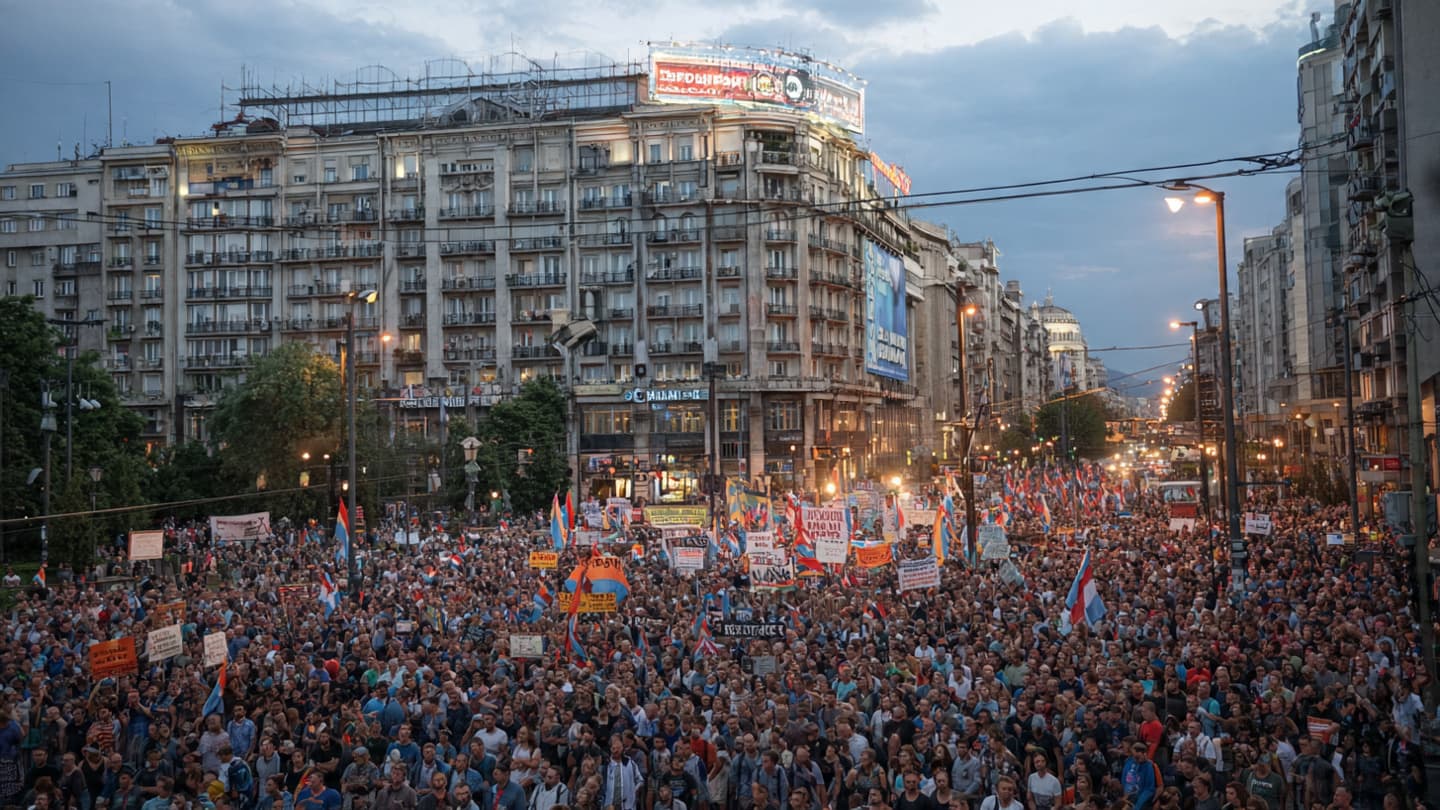
- Tens of thousands protested in Serbia, expressing political discontent.
- Demonstrators included students, civil society groups, and citizens.
- Key issues raised included governance, media freedom, and accountability.
Recent protests in Serbia have drawn tens of thousands of demonstrators into the streets, reflecting a surge of public frustration with the government. These large-scale antigovernment rallies have taken place in major urban centers, particularly in the capital, Belgrade, where participants carried banners and chanted slogans critical of the current political leadership. The demonstrations signal a continuation of the political tensions that have characterized Serbia's landscape in recent years.
The protests have attracted a diverse group of participants, including students, civil society organizations, and citizens disillusioned with the government's handling of various issues. Organizers of the rallies have emphasized that the demonstrations are a response to growing concerns over governance, transparency, media freedom, and public accountability. The political climate in Serbia has been increasingly polarized, with opposition groups frequently accusing the ruling government of consolidating power and undermining democratic institutions.
In response to the protests, government officials have defended their leadership, dismissing accusations from political opponents as exaggerated. Serbian authorities argue that opposition movements are attempting to destabilize the country through ongoing public demonstrations. This defensive stance reflects a broader trend in which governments facing public dissent often frame protests as threats to national stability.
Historically, large-scale protests have been a recurring theme in Serbia's political narrative. The country has seen waves of civic activism tied to various issues, including elections, corruption, and social justice. The current protests are part of a long tradition of public mobilization in Serbia, where citizens have taken to the streets to voice their demands for change.
Serbia's geopolitical position adds another layer of complexity to the situation. The country maintains historical ties with both Western nations and Russia, making its domestic political developments a focal point for regional and international observers. As such, the protests are not only significant for Serbia but also for the broader European context, where similar movements have emerged in response to economic pressures and political dissatisfaction.
The recent demonstrations in Serbia highlight the ongoing struggle for political discourse within the country. While it remains uncertain whether these protests will lead to immediate political change, they underscore the persistent public dissatisfaction that continues to shape national conversations. As citizens rally for their voices to be heard, the implications of these protests may resonate far beyond Serbia's borders, reflecting a wider trend of civic engagement across Europe and beyond.
Published by Banx Network. This article is part of the Banx decentralized media programme, powered by the BXE token on the XRP Ledger.




