
Key Highlights
- Incident:A tower crane collapsed in Seoul, killing three people.
- Injuries:Five additional individuals are hospitalized with serious injuries.
- Investigation:Authorities are probing the contractor's safety practices.
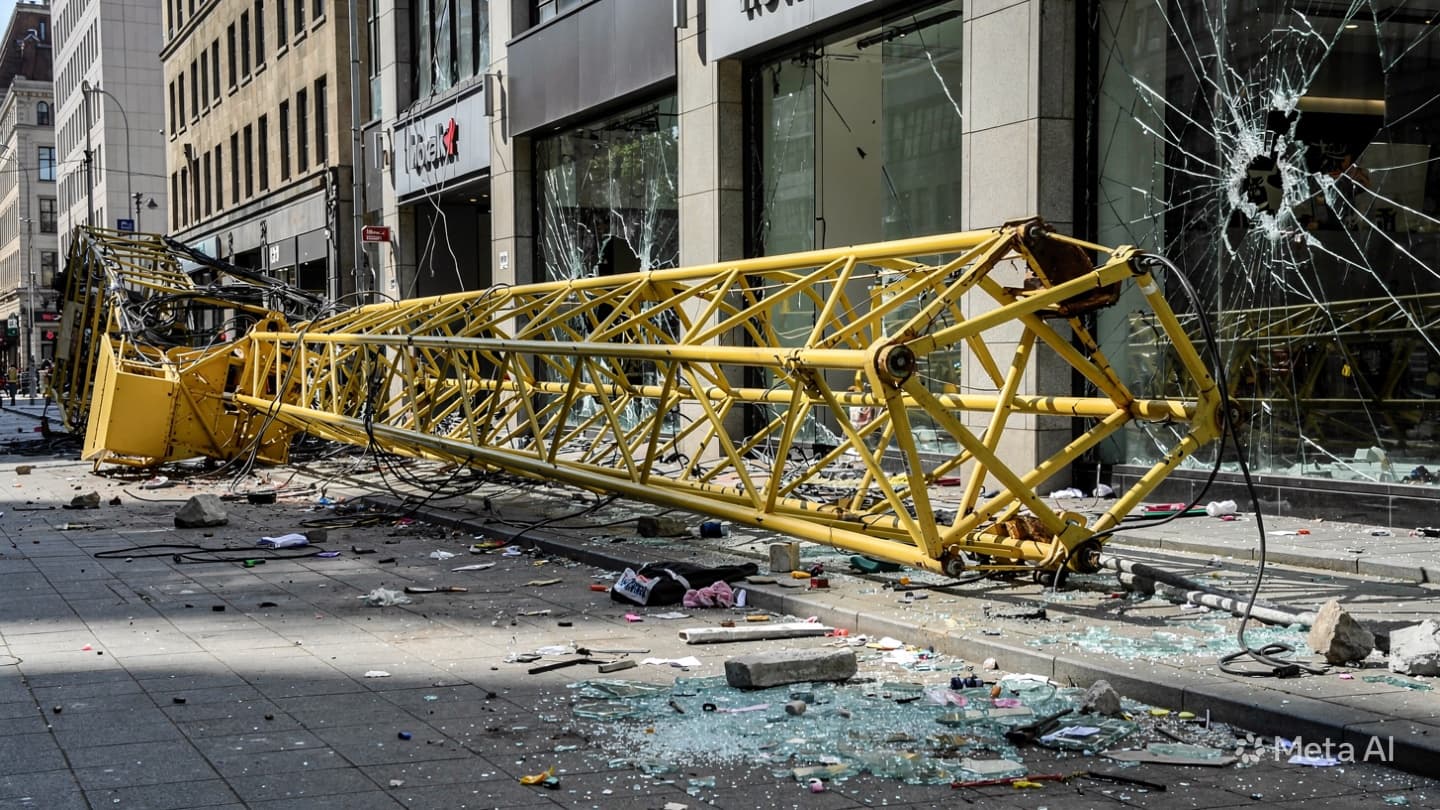
A towering industrial construction crane suffered a catastrophic structural failure Thursday afternoon, toppling over onto a packed commercial pedestrian street in Seoul, South Korea, and killing three people. The crane was executing a heavy steel girder lift at a high-rise redevelopment project when the primary support mast snapped at 4:15 p.m. The massive lattice framework plummeted across the safety barriers, slicing through low-hanging storefront awnings and striking pedestrians below.
Metropolitan rescue squads and emergency medical personnel flooded the bustling retail district within minutes of receiving dozens of frantic emergency calls. First responders encountered a chaotic scene filled with broken glass, crushed storefront displays, and structural debris scattered across the wide granite walkway. Two victims died instantly from severe impact trauma, while a third pedestrian succumbed to critical internal injuries during emergency transport to a nearby hospital.
The director of the metropolitan disaster management headquarters addressed the media from behind a secure police cordon that sealed off the entire retail avenue. He confirmed that five additional shoppers are undergoing emergency treatment at a nearby university hospital, including two individuals who were pinned beneath a heavy section of the fallen metal jib before rescue crews used hydraulic lifts to free them. The swift response of emergency services was crucial in managing the aftermath of this tragic incident.
District business owners described the sudden collapse as a deafening metallic boom that shook the foundations of adjacent retail structures. Witnesses stated that the area was exceptionally crowded with afternoon shoppers and students when the shadow of the falling steel structure swept across the street, leaving little time for individuals to seek cover inside the doorways of nearby shops. The emotional toll on the community is palpable, as many grapple with the shock of the event.
A forensic structural engineer examining the fractured metal joints noted that the crane's primary turntable assembly showed visible signs of advanced metal fatigue along the high-stress weld lines. He suggested that the automated load-limit sensors might have failed to register an over-capacity strain as the arm extended across the perimeter wall, causing the support base to warp under the uneven torque. This technical analysis raises serious questions about the safety measures in place at the construction site.
In response to the tragedy, angry consumer safety groups gathered near the municipal construction office, demanding a sweeping suspension of all heavy machinery permits across the central redevelopment zone. Activists stated that city regulators continually allow large-scale commercial contractors to operate heavy overhead equipment directly above active pedestrian corridors without establishing adequate safety exclusion paths. Their calls for reform highlight the ongoing concerns about construction safety in urban areas.
The Ministry of Employment and Labor has launched a comprehensive investigation into the general contractor’s workplace safety record. Preliminary documentation reveals that the sub-contracted crane company had faced minor administrative fines earlier this year for skipping mandatory monthly ultrasound testing on its heavy hoisting mechanisms. This oversight raises alarms about the regulatory environment governing construction safety in South Korea.
Municipal transit police closed four major intersections surrounding the commercial hub for eight hours to permit heavy recovery vehicles to cut apart the tangled steel beams. The prolonged closure halted urban bus routes and delivery vehicles, creating extensive traffic delays that gridlocked the surrounding central districts during the evening commute. As work crews utilize dual heavy-duty mobile cranes to slowly lift the main lattice boom sections off the damaged commercial structures, the community remains on edge, hoping for answers and accountability.
Intermittent rain showers are beginning to slick the metal surfaces, complicating the balancing maneuvers and requiring safety technicians to continuously adjust the rigging lines to prevent a secondary slide. The situation remains fluid as authorities work to clear the site and ensure the safety of the surrounding area.
Published by Banx Network. This article is part of the Banx decentralized media programme, powered by the BXE token on the XRP Ledger.



