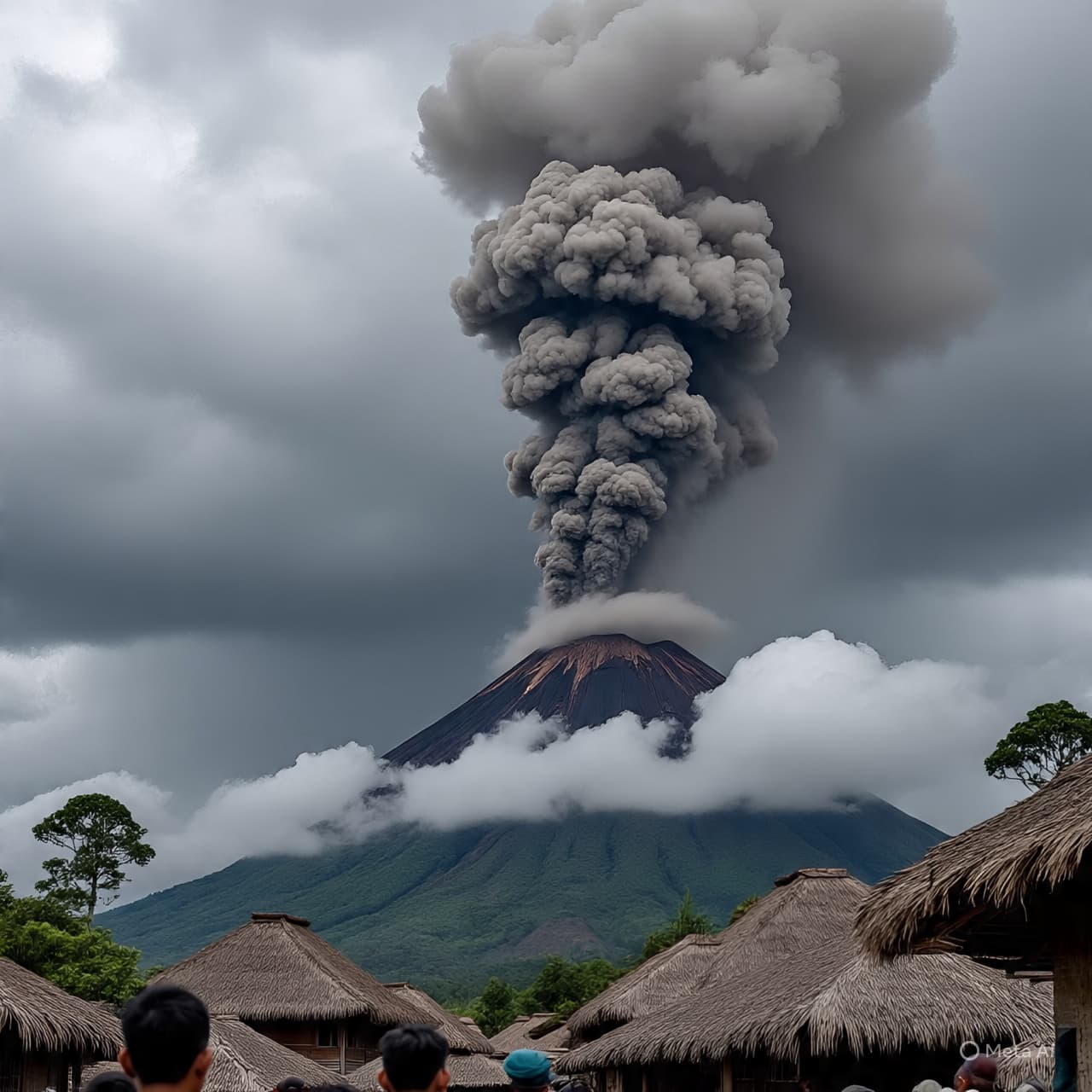
In the soft morning light of East Java, villagers in Lumajang woke to a sky thick with ash, as Mount Semeru trembled and released a cloud of fiery force. What began as distant rumblings became a visceral reminder that nature’s quiet can shift quickly into urgency.
Semeru, the tallest volcano on Java, erupted with dramatic intensity. According to Indonesia’s geology agency, it unleashed searing clouds of hot ash, rock, lava, and gas that flowed up to 7 km down its slopes, while a dense ash column rose about 2 km into the sky. In response, authorities raised the volcano’s alert level to the highest, signaling serious risk for nearby communities.
Over 300 residents from three vulnerable villages in Lumajang district were evacuated to safer shelters, as the danger zone was expanded to an 8-kilometer radius around the crater. Officials also warned people to avoid areas along the Besuk Kobokan River — a known path for hot volcanic flows and gas — underscoring how the threat is not just in the air, but on the ground as well.
Smoke and ash swept through valleys and over forests, footage on social media showed, turning familiar landscapes into ashen gray scenes. Faces streaked with volcanic dust, some residents fled under rain, some took refuge in temporary shelters, as uncertainty rippled in the thin, smoky air.
At the same time, a group of about 178 people — including climbers, guides, porters, and park officials — found themselves stranded at the Ranu Kumbolo monitoring post, positioned on Semeru’s northern slope. Officials say they are currently safe, though bad weather complicated rescue and evacuation efforts.
This is not the first time Semeru has stirred with menace. Over 2025, its activity has been consistently high — for instance, in late October alone, the volcano erupted 124 times in 24 hours. Earlier in the year, authorities had already issued warnings: in March, Semeru erupted with ash columns reaching 800 meters.
Despite its long history of eruptions — and years of warnings — many still live in its shadow. Semeru’s slopes are fertile, drawing people to plant and dwell, even as the risk remains.
In the face of this eruption, the delicate balance between human settlement and natural force is once again tested. The volcano’s roar is a reminder that the land is alive, and that living alongside it demands constant vigilance, respect, and preparedness.
AI Image Disclaimer Visuals are created with AI tools and are not real photographs.
Sources: The Guardian Detik Jatim Kompas.com
Published by Banx Network. This article is part of the Banx decentralized media programme, powered by the BXE token on the XRP Ledger.