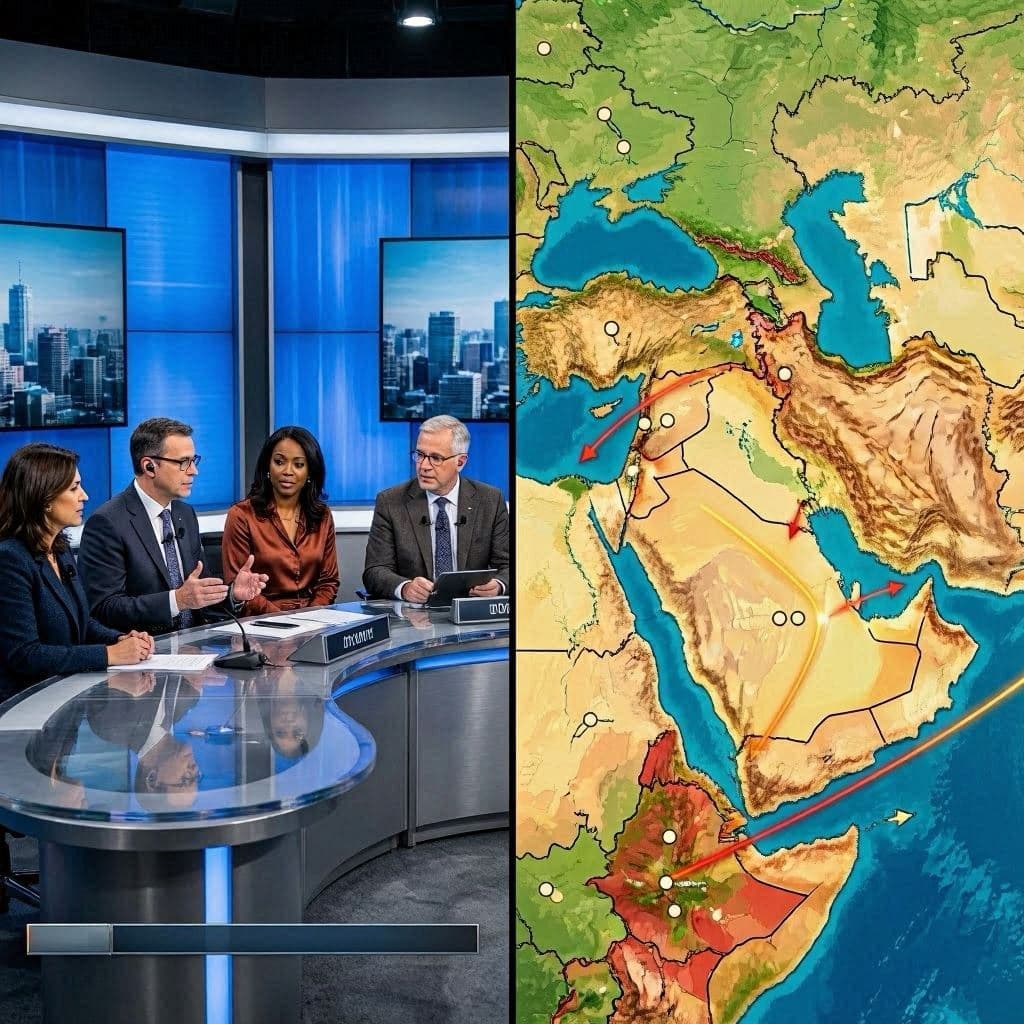
In the complex theater of modern media, where news and opinion often intertwine, a notable shift has emerged from one of America’s most influential conservative networks. Prominent voices on Fox News are increasingly urging President Donald Trump to de-escalate tensions with Iran and seek an exit from the ongoing conflict. This counsel, coming from allies who have historically supported a hawkish stance, reflects a growing concern about the political and economic costs of prolonged military engagement. It is a moment that invites reflection on the delicate balance between national security imperatives and domestic political realities.
Body: The call for de-escalation stems from fears that a protracted war could become a significant liability for the Republican Party, particularly as midterm elections approach. Pundits argue that while strength is valued by the base, endless conflict without clear objectives can erode public support. The rising cost of living, exacerbated by higher energy prices due to regional instability, has become a central issue for voters. By advocating for a diplomatic off-ramp, these commentators are aligning national strategy with the immediate concerns of American households.
President Trump has responded to these pressures with a mix of firm rhetoric and openness to negotiation. He has stated that Iran has "come a long way" in talks but warned that failure to reach a deal could result in severe consequences. This dual approach allows him to maintain a posture of strength while leaving the door open for a resolution that avoids further military escalation. The administration’s strategy appears to be one of maximum pressure coupled with a willingness to deal, a nuance that resonates with both hawks and doves.
The influence of media figures on presidential decision-making should not be underestimated. In an era where public opinion is shaped in real-time by cable news and social media, the views of trusted pundits can serve as a barometer for the political climate. When key allies begin to question the wisdom of continued conflict, it signals a potential shift in the broader political consensus. For the White House, listening to these voices is a way to gauge the mood of its core constituency.
Economically, the stakes are high. The threat to shipping lanes in the Strait of Hormuz has already caused fluctuations in oil prices, impacting everything from gasoline costs to global supply chains. A resolution would bring stability to markets and provide relief to consumers. For many Americans, the abstract geopolitics of the Middle East translate directly into the price at the pump, making peace a tangible economic benefit.
Diplomatically, the push for de-escalation aligns with efforts by international partners to prevent a wider regional war. European and Gulf states have been working behind the scenes to facilitate dialogue, recognizing that a full-scale conflict would have devastating humanitarian and strategic consequences. The US, as a global leader, plays a pivotal role in these efforts, and a shift toward diplomacy could strengthen alliances and restore confidence in American leadership.
However, the path to peace is fraught with challenges. Trust between Washington and Tehran remains low, and past agreements have failed to produce lasting stability. Any new deal must address core issues such as nuclear proliferation, regional proxy activities, and human rights. Crafting such an agreement requires patience, skill, and a willingness to compromise, qualities that are often in short supply in polarized political environments.
Closing: The urging of Fox News pundits for President Trump to exit the Iran conflict highlights the intersection of media influence, political strategy, and national interest. As the administration weighs its options, the desire for stability and economic relief grows stronger. Whether through diplomacy or continued pressure, the goal remains a secure and prosperous future for the United States.
AI Image Disclaimer: Please note that any accompanying visuals for this article are AI-generated representations intended for illustrative purposes only.
Sources: The Hill Fox News AOL
Published by Banx Network. This article is part of the Banx decentralized media programme, powered by the BXE token on the XRP Ledger.