The universe is vast beyond comprehension, a tapestry of billions of galaxies stretching into the infinite dark. For centuries, humans have tried to chart this expanse, drawing maps of the stars based on what little could be seen with the naked eye. Today, technology has allowed us to see further and clearer than ever before. Scientists have created the largest two-dimensional map of the universe to date, composed of 5.6 trillion pixels and detailing nearly 4 billion cosmic objects. This achievement invites reflection on our growing understanding of the cosmos and the power of data to reveal hidden structures. It is a testament to the collaborative spirit of modern science.
The map was generated using data from the Dark Energy Spectroscopic Instrument (DESI) and other surveys, capturing light from distant galaxies and quasars. Each pixel represents a piece of the cosmic puzzle, contributing to a comprehensive view of the large-scale structure of the universe. By analyzing the distribution of these objects, researchers can study the effects of dark energy and dark matter. Knowledge expands through detail.
Creating such a massive dataset required advanced computational techniques and international collaboration. Teams of astronomers, data scientists, and engineers worked together to process and verify the information. The resulting map is not just an image but a tool for discovery, allowing scientists to test theories about the evolution of the universe. Collaboration drives progress.
For the public, the scale of the map is difficult to grasp. Four billion objects represent a fraction of the estimated billions of galaxies in the observable universe. Yet, it is the most detailed snapshot we have ever possessed. It serves as a reference for future observations, helping to identify new phenomena and refine existing models. Context provides clarity.
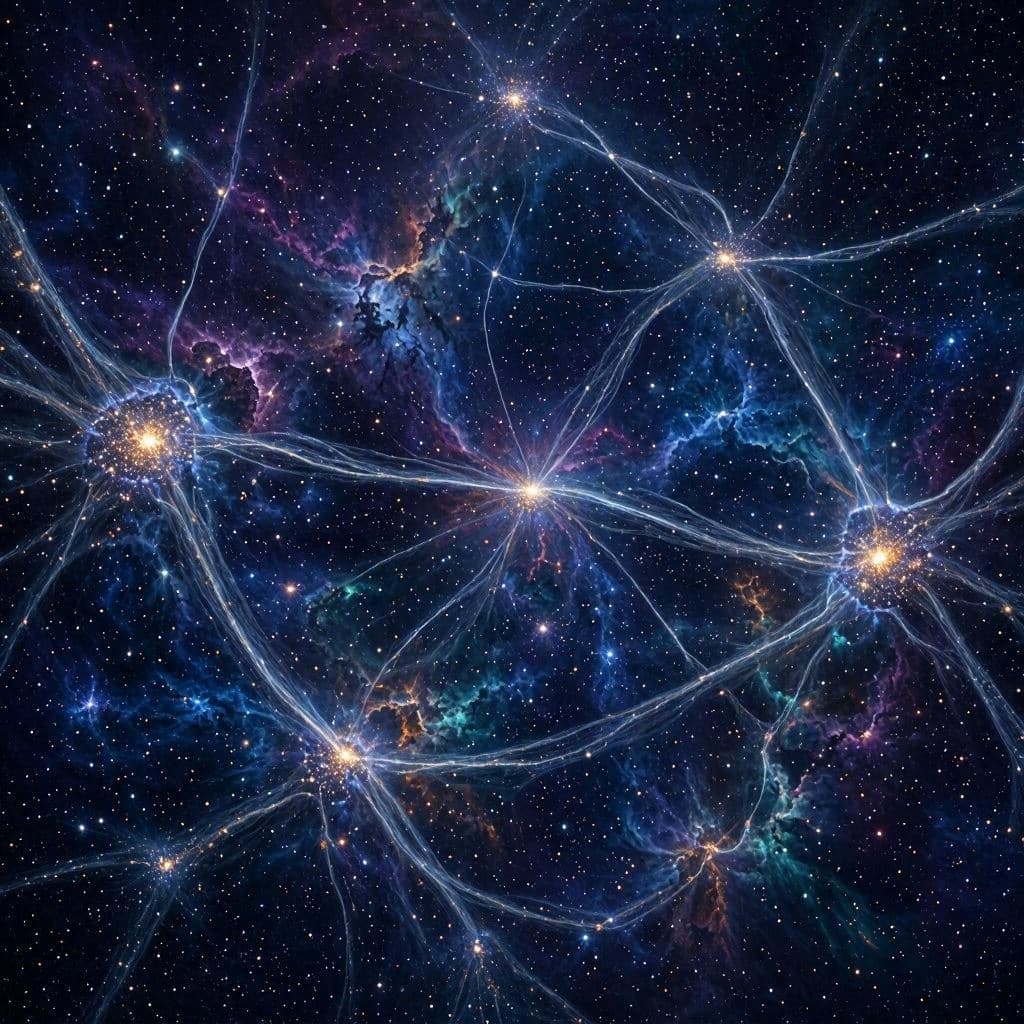
The map also highlights the uniformity and complexity of the cosmos. Galaxies are not randomly scattered but arranged in filaments and clusters, separated by vast voids. This web-like structure is a result of gravitational forces acting over billions of years. Understanding this architecture helps us comprehend our place in the grand scheme. Order emerges from chaos.
As research continues, the map will be updated with new data, increasing its resolution and depth. Future instruments will add even more detail, pushing the boundaries of what we can see. The journey of exploration is ongoing. Curiosity knows no limits.
Scientists have created the largest 2D map of the universe, featuring 5.6 trillion pixels and nearly 4 billion cosmic objects. The map aids in studying dark energy and the large-scale structure of the cosmos. The hope is for continued discoveries and deeper understanding.
AI Image Disclaimer: Visuals associated with this article are AI-generated to illustrate the themes of cosmology and data visualization.
Sources: ScienceDaily Phys.org DESI Collaboration
Published by Banx Network. This article is part of the Banx decentralized media programme, powered by the BXE token on the XRP Ledger.