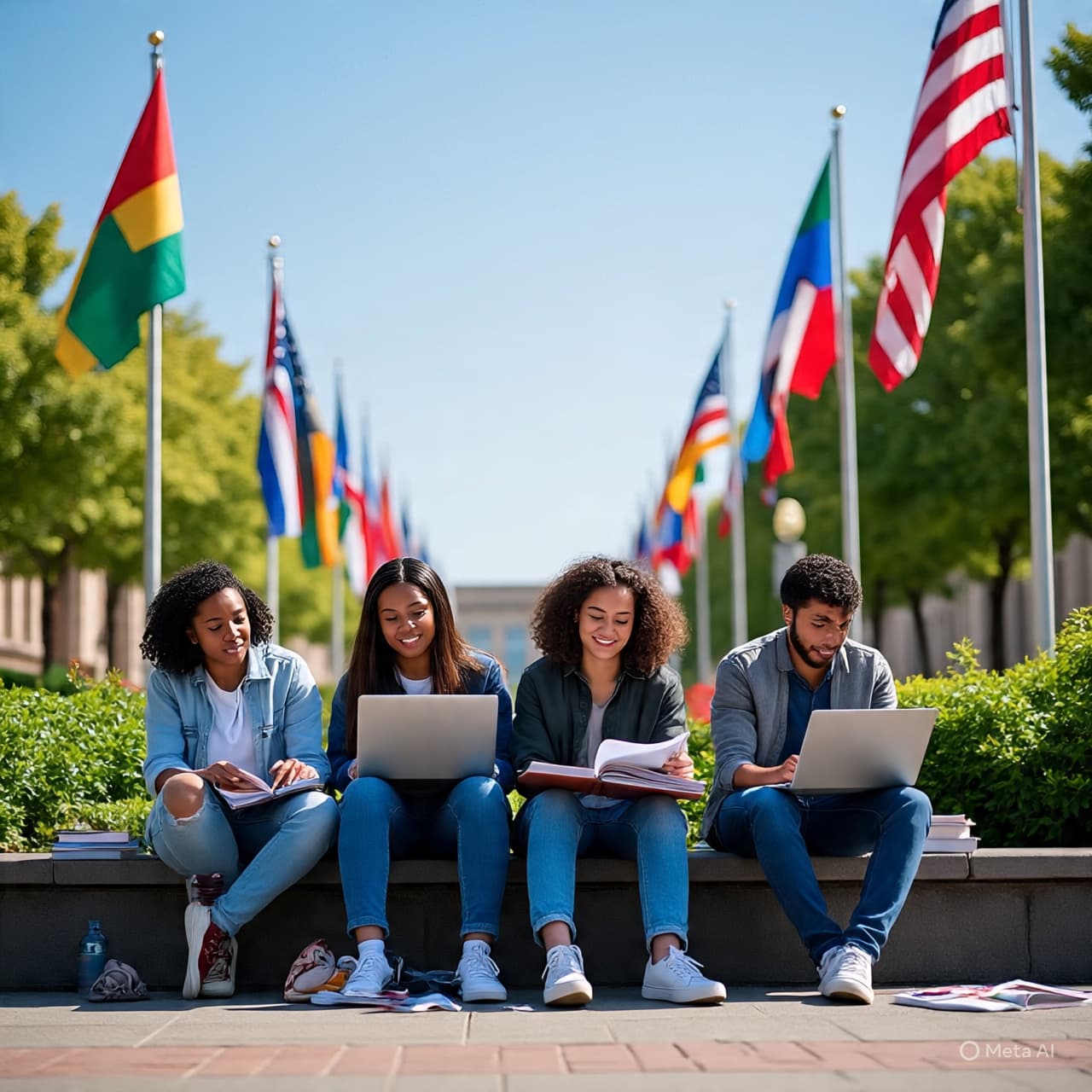
In the soft light before class begins, campus walkways often hum with a particular cadence: rapid conversation in multiple languages, backpacks slung with purpose, the exchange of snacks and study tips between students who have come halfway round the world. That hum has changed shape in recent seasons — not disappearing, but shifting in tone and geography — and those changes are now visible in datasets and dean’s offices alike.
Overall U.S. international student totals rose in the latest Open Doors and SEVIS snapshots after several years of post-pandemic recovery, buoyed especially by a surge of students from India and other parts of Asia. Yet beneath that headline growth, patterns are fragmenting: new enrollments are declining in many schools, arrivals in recent months have dropped compared with a year earlier, and the distribution of students across states and fields of study is evolving. These trends are reflected in aggregated enrollment tables and government SEVIS records documenting year-to-year changes.
One clear shift is origin diversification. While China and India remain dominant sources, India’s rapid growth in recent years has reshaped the balance — contributing a far larger share of first-time undergraduate and graduate students than a decade ago. At the same time, several other countries have been sending proportionally more students, altering which campuses host sizable international cohorts. This change affects everything from housing demand to the languages offered in campus centers.
Another trend is the contraction in new enrollments reported by many colleges this fall. Multiple institutional surveys and analyses signal steep declines in first-time arrivals for the most recent academic term, driven largely by visa delays, policy uncertainty, and a chilling political climate that some students say makes the U.S. less welcoming. The result: fewer freshmen arriving from abroad at certain community colleges and regional campuses even while total enrolled headcounts hold steadier thanks to continuing students and trainees on practical-training programs.
Field of study is also shifting. STEM and technology programs continue to draw large shares, particularly among graduate students, but rising undergraduate interest in business, computer science, and nursing — along with growth in short-term exchange and pathway programs — is changing campus mixes. Practical training pathways (OPT/CPT) remain a major factor in retention and in student decision-making; when those pathways look less certain, prospective students can reconsider destination choices.
Geography within the U.S. is adjusting as well. Traditional hubs—large research universities in the Northeast and California—still host major international populations, yet growing numbers now choose Midwest and Southern public universities that offer lower tuition and clear routes to internships. Smaller institutions, however, have reported sharper volatility, making recruitment and budgeting more difficult.
Economically, international students continue to be a significant contributor to local and national economies, but recent shifts in new enrollments translate into measurable revenue changes for campuses and surrounding businesses. Analysts and trade groups warn that policy uncertainty and reductions in new visa issuance could trim that economic benefit if the current pattern persists.
For universities, the practical challenges are clear: recruiting pipelines need diversification, student services must adapt to different language and employment expectations, and institutions must prepare for more abrupt fluctuations in incoming cohorts. For students, the decisions about where to study are increasingly shaped not only by program quality and cost but by immigration pathways and perceptions of welcome.
In sum, the landscape of foreign student enrollment in the U.S. is not collapsing but reconfiguring. Numbers that once indicated simple growth now reveal a more complex story of winners and losers, of policy effects and market responses, and of students making cautious choices amid uncertainty. The coming year will reveal whether this is a temporary rebalancing or the start of a new normal.
AI image disclaimer “Visuals are created with AI tools and are not real photographs.”
Sources Institute of International Education SEVIS / Student and Exchange Visitor Program NAFSA: Association of International Educators The Washington Post The Guardian
Published by Banx Network. This article is part of the Banx decentralized media programme, powered by the BXE token on the XRP Ledger.