There are moments in history when progress does not roar but rustles. It moves not with the thunder of machines, but with the quiet chemistry of living cells. In fields stretching from the American Midwest to the rice paddies of Southeast Asia, the future of food security may not depend solely on larger tractors or wider farmland, but on something far more delicate: the invisible signals plants send within themselves.
Plant hormones—small but powerful chemical messengers—govern nearly every stage of a plant’s life. They decide when a seed should awaken, how roots should reach for water, how leaves respond to heat, and when fruit should ripen. In a world increasingly shaped by climate instability, scientists are exploring whether adjusting these internal signals—what some describe as plant hormone therapy—could strengthen crops against drought, heat, salinity, and disease.
The idea is neither futuristic nor fantastical. Researchers have long studied hormones such as auxins, gibberellins, cytokinins, abscisic acid, and ethylene. These compounds regulate growth patterns, stress responses, and productivity. What is changing now is the precision. Advances in molecular biology and biotechnology are allowing scientists to better understand how these hormones interact, and how subtle adjustments might improve resilience without fundamentally altering the plant’s identity.
In periods of drought, for example, abscisic acid plays a crucial role in helping plants conserve water by closing stomata—tiny pores on leaves. By enhancing or fine-tuning this hormonal response, researchers believe crops may endure longer dry spells without severe yield loss. Similarly, manipulating cytokinins may help delay leaf aging, extending the photosynthetic life of crops during stressful conditions.
Global food security remains one of the defining challenges of our time. According to international agricultural bodies, climate change is already reducing yields in some regions while global demand continues to rise. Extreme weather events, soil degradation, and water scarcity add further strain. In this context, plant hormone therapy is being explored not as a silver bullet, but as part of a broader strategy that includes sustainable farming, improved irrigation, and crop diversification.
There is also a pragmatic appeal to hormonal treatments. In some cases, applying hormone-based formulations externally—through sprays or seed treatments—may provide benefits without requiring extensive genetic modification. In other cases, breeding or gene-editing approaches aim to adjust internal hormone regulation pathways to produce crops that are naturally more resilient.
Yet as with any agricultural innovation, questions accompany promise. How scalable are these treatments for smallholder farmers? What are the long-term ecological implications of widespread hormone application? Can regulatory frameworks keep pace with scientific advances? Researchers and policymakers alike are proceeding with caution, aware that food systems are intricate ecosystems in themselves.
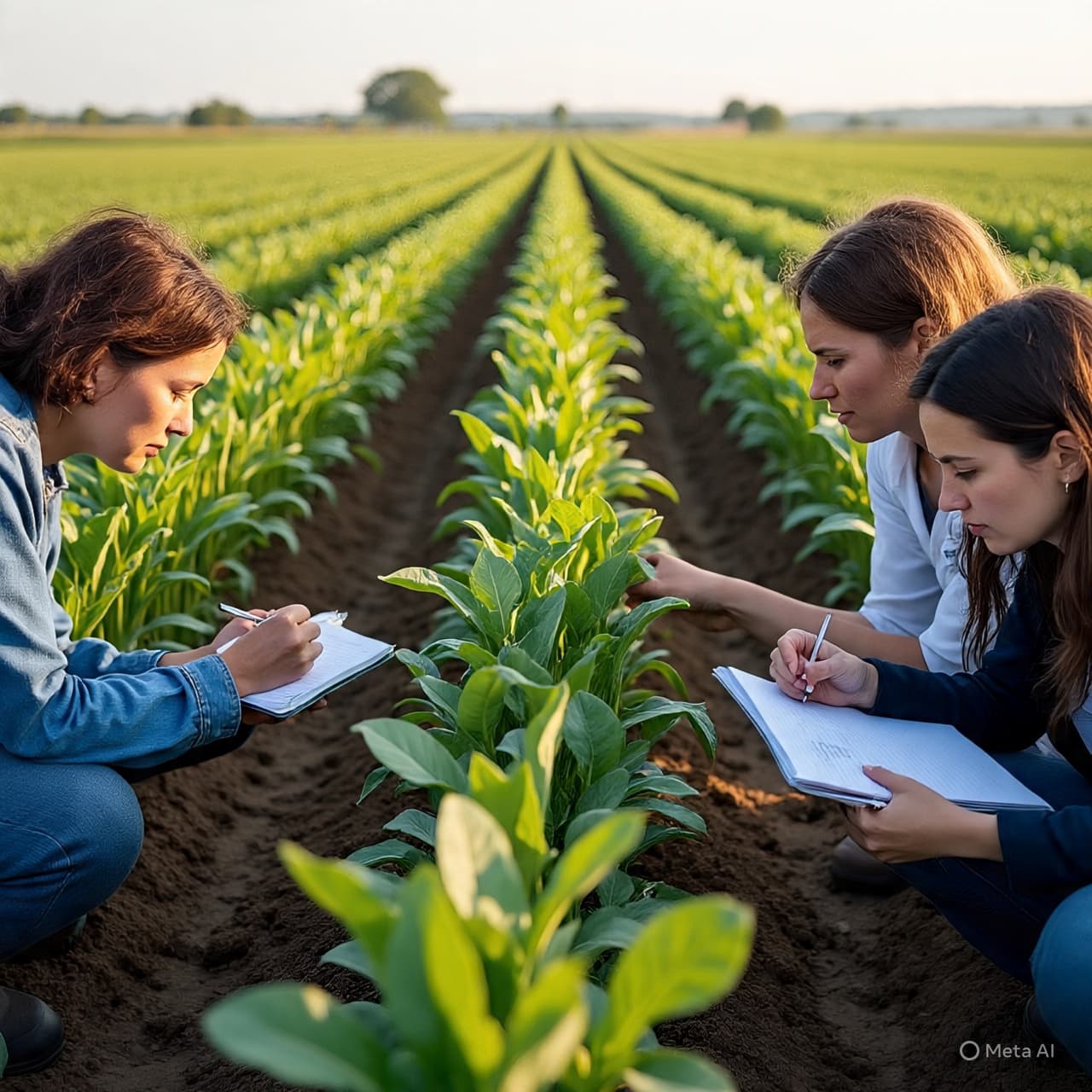
Still, the quiet optimism persists. In laboratories and experimental fields, scientists observe crops that remain greener under heat stress, roots that grow deeper into parched soil, and yields that hold steady where once they faltered. These incremental gains may not command headlines like sweeping technological revolutions, but they suggest that resilience can be cultivated from within.
Food security has always been a dialogue between humanity and the earth. Perhaps the next chapter will be written not in louder machinery, but in a better understanding of the chemical language plants have spoken all along.
In the end, plant hormone therapy represents an evolving area of agricultural research aimed at improving crop performance under environmental stress. While further testing, regulation, and field validation are ongoing, scientists view hormonal management as one promising tool among many to support stable food production in a changing climate.
AI Image Disclaimer Visuals are created with AI tools and are not real photographs.
SOURCE CHECK Nature Science The Guardian Reuters Food and Agriculture Organization (FAO)
Published by Banx Network. This article is part of the Banx decentralized media programme, powered by the BXE token on the XRP Ledger.