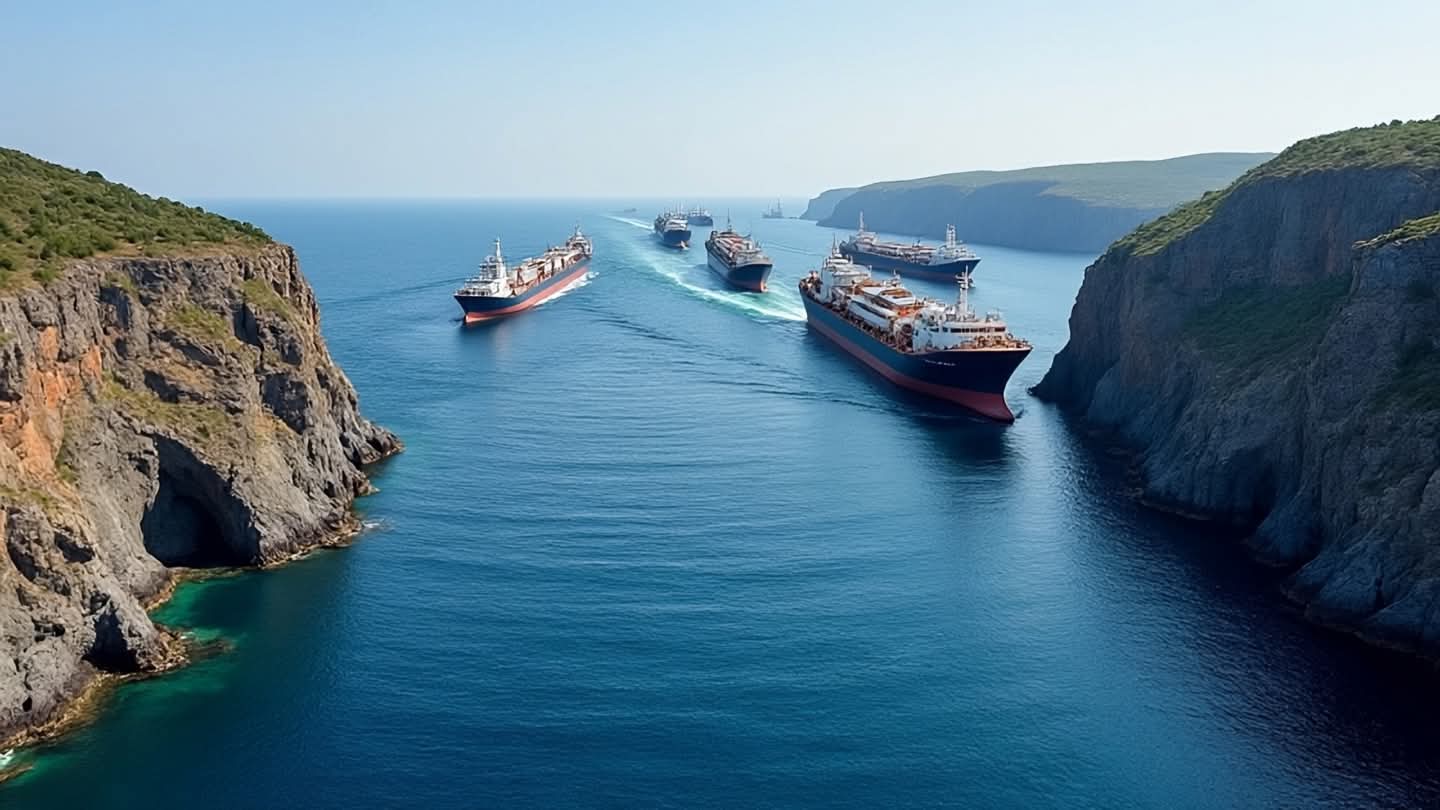
The Strait of Hormuz is a narrow artery of global commerce, where the flow of oil and goods sustains economies far beyond its shores. It is a place of strategic importance, often at the center of geopolitical tensions and diplomatic maneuvering. Recently, former President Donald Trump made a bold claim that all mines have been cleared from this vital waterway, a statement that carries significant weight in the context of regional stability and international trade. Whether fact or political rhetoric, the assertion highlights the enduring focus on this critical passage.
Trump’s declaration comes amid ongoing concerns about security in the Middle East, where threats to shipping lanes can have immediate global economic impacts. The clearing of mines, if accurate, would represent a significant achievement in maintaining open lines of communication and commerce. However, verification of such claims requires careful scrutiny, as the region remains volatile and subject to rapid changes.
Naval experts note that mine clearance is a complex and dangerous operation, requiring specialized equipment and extensive coordination. While efforts to secure the strait have been ongoing, the complete removal of all threats is a high bar to meet. The statement may reflect optimism or a strategic message aimed at reassuring markets and allies, but it must be weighed against current intelligence reports.
For global energy markets, the promise of a safe Strait of Hormuz is comforting. Any disruption in this chokepoint can lead to spikes in oil prices and supply chain delays. Therefore, announcements regarding its security are closely watched by investors and policymakers alike. Confidence in the safety of the strait is essential for economic stability.
Critics argue that such declarations should be backed by transparent evidence and international cooperation. Without independent verification, claims of total clearance may be viewed with skepticism by some nations and observers. Diplomacy in the region often involves a mix of public statements and private negotiations, making it difficult to ascertain the full picture.
The U.S. Navy has maintained a presence in the region to deter aggression and ensure freedom of navigation. Their efforts are part of a broader strategy to protect international waters from hostile actions. While progress has been made, the threat of asymmetric warfare, including mining, remains a concern for military planners.
As the situation evolves, the international community will continue to monitor the strait’s status. The balance between political messaging and operational reality is delicate, requiring constant vigilance. The stakes are high, not just for the region, but for the global economy.
Donald Trump’s statement on the clearing of mines in the Strait of Hormuz underscores the importance of this waterway. While the claim brings hope for stability, ongoing verification and international cooperation remain key to ensuring lasting security.
AI Image Disclaimer: Please be aware that images used in this context are AI-generated and are intended for illustrative purposes only.
Sources: Reuters Associated Press Al Jazeera Bloomberg
Published by Banx Network. This article is part of the Banx decentralized media programme, powered by the BXE token on the XRP Ledger.