Key Highlights
- SEC Proposal:Ripple's XRP could replace SWIFT, unlocking $1.5 trillion.
- Nostro Accounts:$27 trillion globally, with $5 trillion in the U.S.
- Transaction Savings:Annual savings of $7.5 billion on fees.
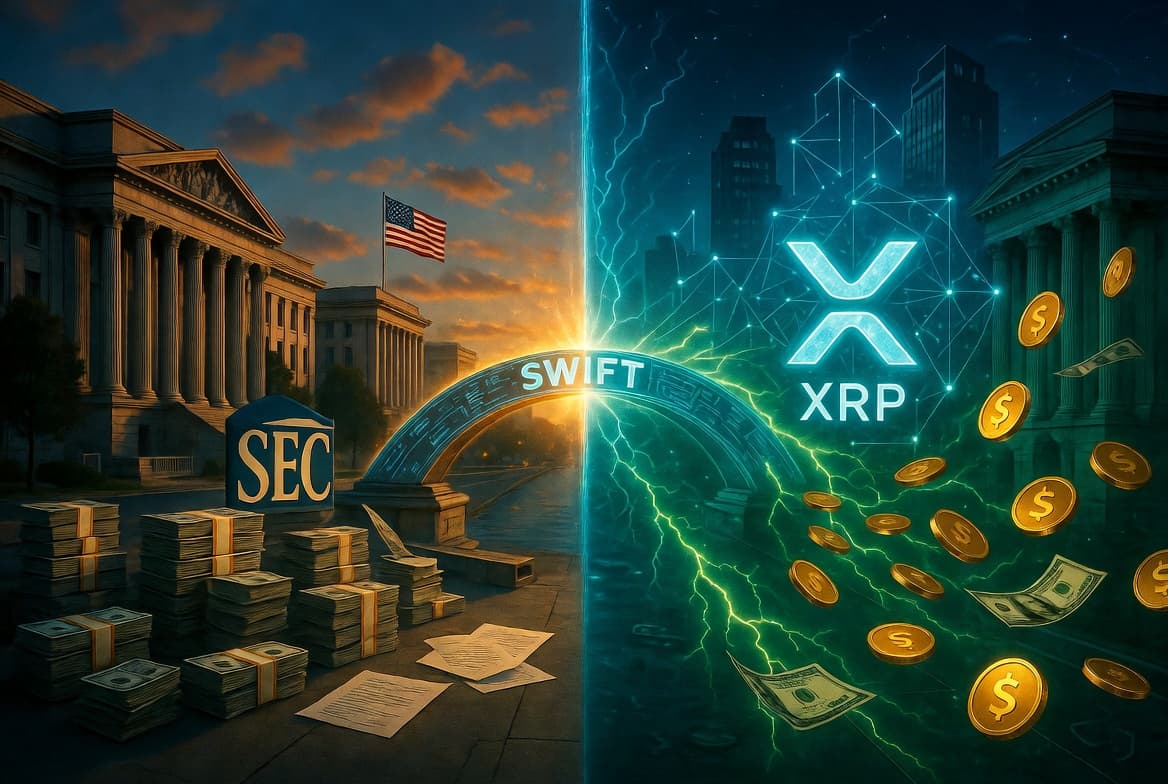
The recent proposal from the SEC suggests a transformative role for Ripple’s XRP token in the financial landscape, potentially replacing traditional Nostro accounts that support the SWIFT system. This shift could free up an estimated $1.5 trillion in capital currently tied up in the U.S. banking system, a significant figure that underscores the potential impact of adopting blockchain technology in cross-border payments.
According to the economic analysis presented by Staudinger, the global Nostro accounts total around $27 trillion, with the U.S. holding a substantial share of $5 trillion. By utilizing XRP, which is characterized as an ultra-fast and low-cost “bridge asset,” banks could reduce their reliance on pre-funded liquidity in these accounts. The proposal estimates that using XRP could release approximately 30% of this capital, translating to $1.5 trillion, while also saving banks around $7.5 billion annually in transaction fees.
The document outlines two potential timelines for implementation: a standard plan over 24 months, which would involve regulatory approvals and pilot programs, and an accelerated plan that could see implementation in as little as 6 to 12 months, contingent on a presidential executive order and immediate regulatory clarity classifying XRP as a payment asset rather than a security.
However, it is crucial to note that this proposal is a public submission and not an official position of the SEC. The agency merely publishes contributions received through its Crypto Task Force as part of an open consultation process. This means the document was not authored or endorsed by the SEC, and it remains one of many proposals submitted for consideration.
Despite the cautious framing, the publication of this proposal has generated considerable excitement within the XRP community, with many interpreting it as an endorsement of XRP's potential to replace SWIFT. Conversely, skeptics, including voices from Bitcoin-focused outlets, have pointed out that the optimistic calculations may overlook the complexities of the current financial system and the competition XRP faces from other strategic assets.
As we look ahead to 2026, the current landscape reveals that while the SWIFT system remains dominant, it is evolving. SWIFT has adopted ISO 20022 and is actively testing tokenized solutions, indicating a willingness to innovate. Ripple, on the other hand, continues to expand its On-Demand Liquidity service in various countries, yet XRP has not achieved widespread adoption among U.S. banks. Furthermore, no concrete actions, such as a presidential executive order or a Federal Reserve mandate, have emerged following Staudinger’s proposal.
The ongoing SEC vs. Ripple lawsuit has reached a resolution, providing XRP with greater regulatory clarity in the United States. This clarity is essential for fostering trust and encouraging banks to explore the potential of XRP as a viable alternative to traditional cross-border payment methods.
The proposal highlights a critical issue within the financial sector: the inefficiencies and high costs associated with traditional cross-border payments. Nostro accounts indeed tie up significant capital that could be utilized more effectively. As the financial landscape continues to evolve, the question remains: does XRP have the potential to disrupt the SWIFT system in the long term, or will it serve merely as a complementary tool in the broader ecosystem of cross-border payments? Readers are encouraged to share their thoughts in the comments below.
Published by Banx Network. This article is part of the Banx decentralized media programme, powered by the BXE token on the XRP Ledger.