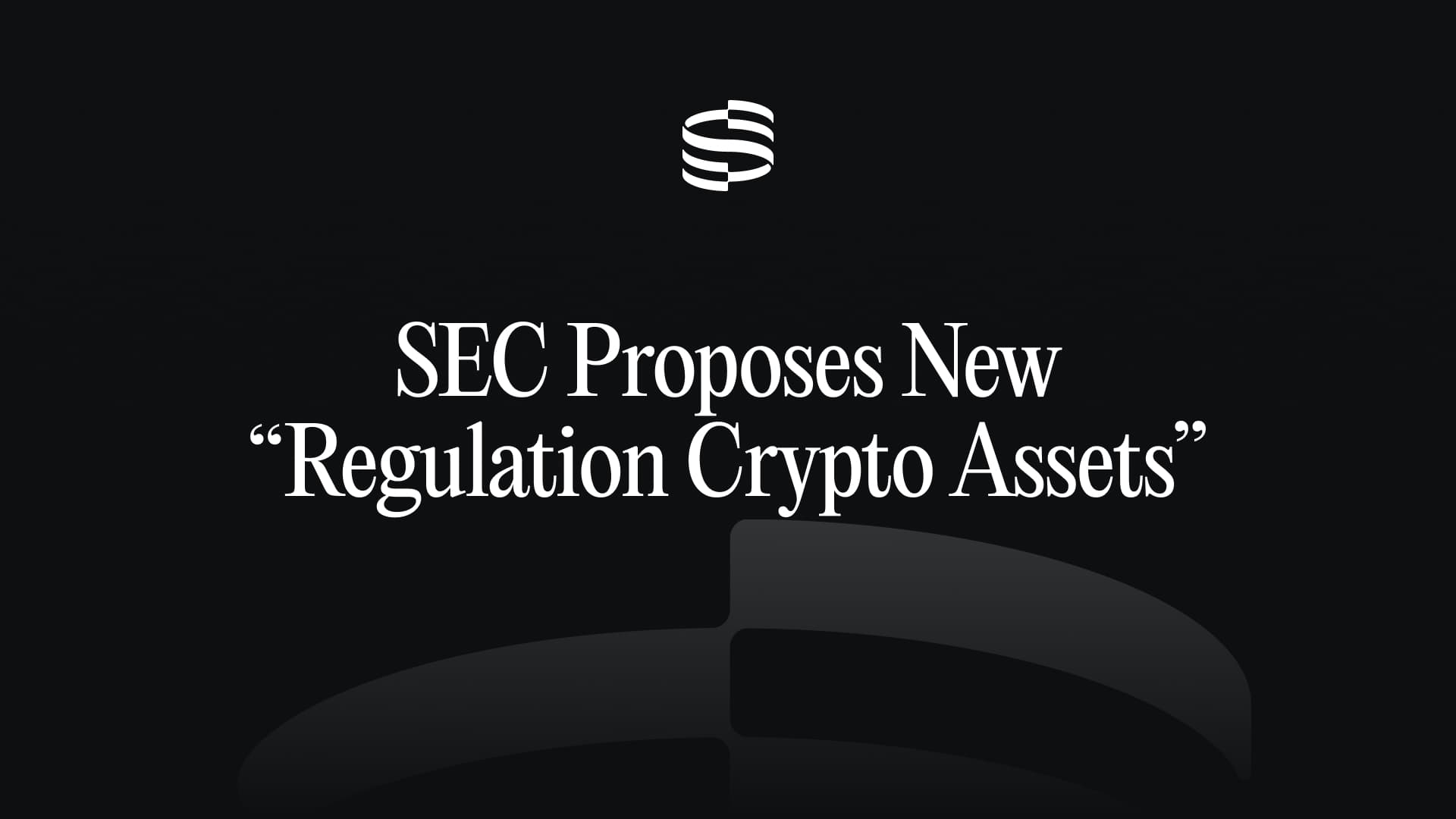
The U.S. Securities and Exchange Commission is moving toward a regulatory framework that could give crypto businesses a clearer route into the traditional financial system. A post from Securitize highlights the SEC’s proposed “Regulation Crypto Assets” rules, describing the initiative as an important step toward facilitating capital formation while accommodating innovation in crypto markets. For years, one of the industry's biggest complaints has been regulatory uncertainty. Companies developing tokenized securities, blockchain-based financial products and digital investment platforms have often faced difficulty determining which rules apply to their activities. The proposed framework could begin addressing that problem by establishing clearer parameters for investment contracts connected to digital assets. The significance goes beyond cryptocurrency exchanges. If regulatory boundaries become easier to understand, financial institutions could have greater confidence when experimenting with blockchain infrastructure. Asset managers, fintech companies and issuers could potentially build products around digital ownership without having to navigate an entirely uncertain regulatory environment. The comments highlighted in the screenshots also point toward a broader shift in Washington. Rather than treating blockchain technology as something existing entirely outside traditional finance, regulators appear increasingly focused on determining how it can operate within established financial rules. That could be especially important for tokenization. Financial assets such as stocks, bonds and funds can potentially be represented digitally, creating markets that operate with faster settlement, programmable transactions and broader accessibility. But these advantages only become commercially meaningful if the underlying products can operate within a recognized legal framework. The SEC proposal therefore matters not simply because it addresses crypto. It could influence how traditional financial institutions approach blockchain over the coming years. Clearer rules may reduce the cost of compliance and encourage companies that previously avoided digital assets to begin experimenting with tokenized products. At the same time, regulation will not eliminate risk. Investors will still need to distinguish legitimate financial products from speculative tokens, and companies will still face obligations around disclosure, investor protection and market integrity. The emerging picture is one in which crypto is becoming increasingly connected to regulated finance. Instead of asking whether blockchain belongs inside the financial system, policymakers are increasingly being forced to determine exactly how it should fit.
Published by Banx Network. This article is part of the Banx decentralized media programme, powered by the BXE token on the XRP Ledger.