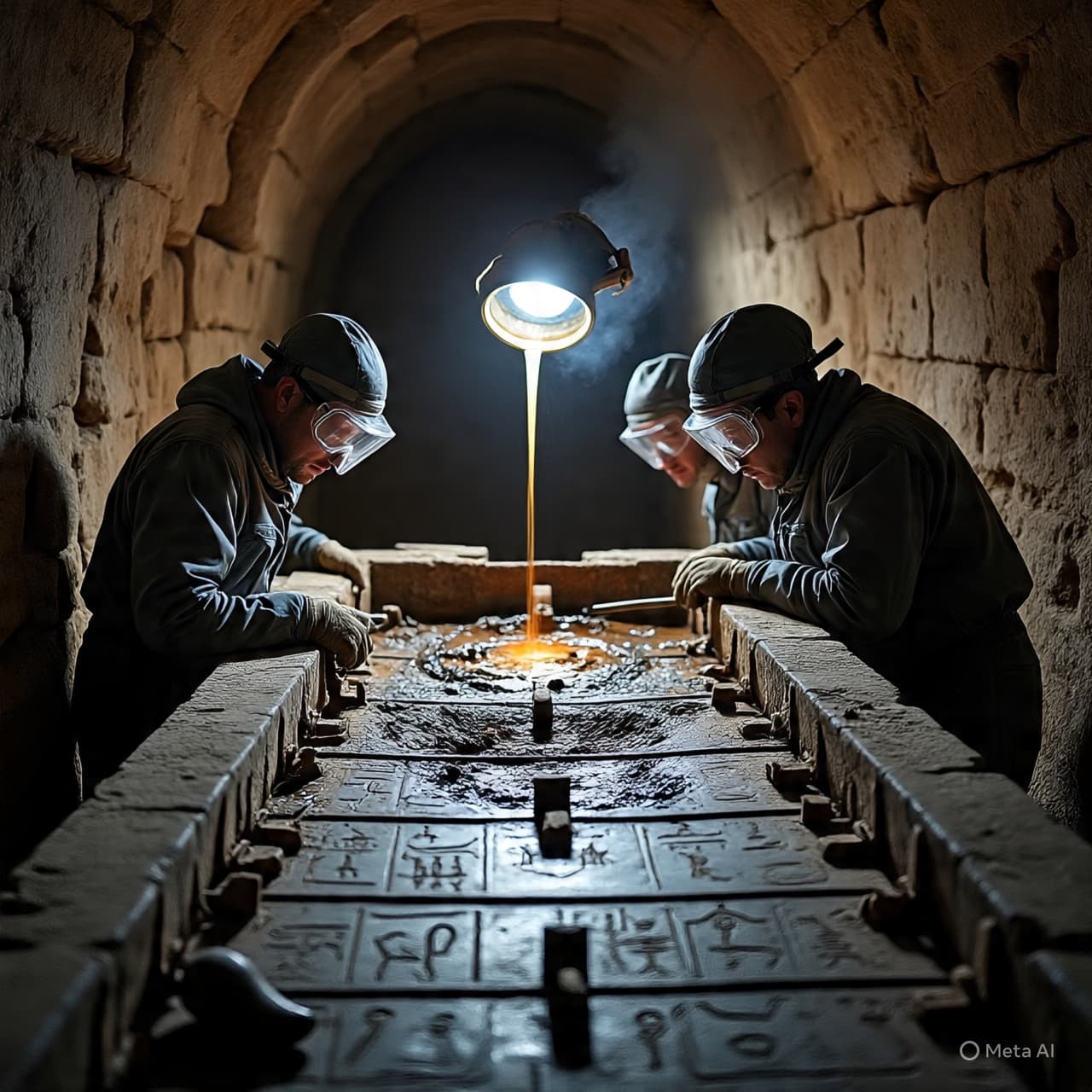
The sarcophagus was found during a large-scale excavation by the Budapest History Museum, nestled among the ruins of a neighborhood once abandoned and later repurposed as a burial ground. What makes this find especially rare is that the coffin was completely sealed — fixed with metal clamps and molten lead — suggesting it had never been disturbed or looted.
When researchers carefully lifted the lid, they revealed a skeleton of a young woman encircled by dozens of artifacts. Among her grave goods were two intact glass vessels, small bronze figurines, around 140 coins, and personal items: a bone hairpin, amber jewelry, and fragments of fabric woven with gold thread. The richness and care of her burial leave little doubt among experts that she was a woman of high social status.
“This probably means that the deceased was well-to-do or of a higher social status,” said Gergely Kostyál, a specialist in Roman-era archaeology and co-leader of the excavation. He and his team note that in the fourth century, it was common to reuse earlier sarcophagi, making a virgin, never-used coffin especially significant.
Inside, the archaeologists also discovered about 4 cm of mud. This layer is being carefully sifted — researchers hope that even smaller objects, such as earrings and other jewelry, may still be preserved within. Meanwhile, anthropologists are examining the woman’s remains to learn more about her age, health, and origins.
For Gabriella Fényes, the lead archaeologist on the project, the discovery is not just a scientific triumph — it’s deeply human. “The deceased was buried very carefully by her relatives,” she said. “They must have really loved who they buried here.”
AI Image Disclaimer “Images are AI-generated illustrations, meant for concept only.”
Sources: CBS News ABC News Daily Sabah Times Union British Brief
Published by Banx Network. This article is part of the Banx decentralized media programme, powered by the BXE token on the XRP Ledger.